Zanzibar Gem (ZZ Plant)
Zamioculas zamiifolia
Plant Overview
The Zanzibar Gem (Zamioculcas zamiifolia), often simply known as the ZZ Plant, is one of the most resilient and adaptable tropical indoor houseplants grown today. Native to eastern Africa, including Kenya, Tanzania, and Zanzibar, it naturally grows beneath the sparse woodland canopy where periods of rainfall are followed by extended dry seasons. Its remarkable ability to store water within its thick underground rhizomes has enabled it to survive these changing conditions and has made it equally well suited to modern indoor environments.
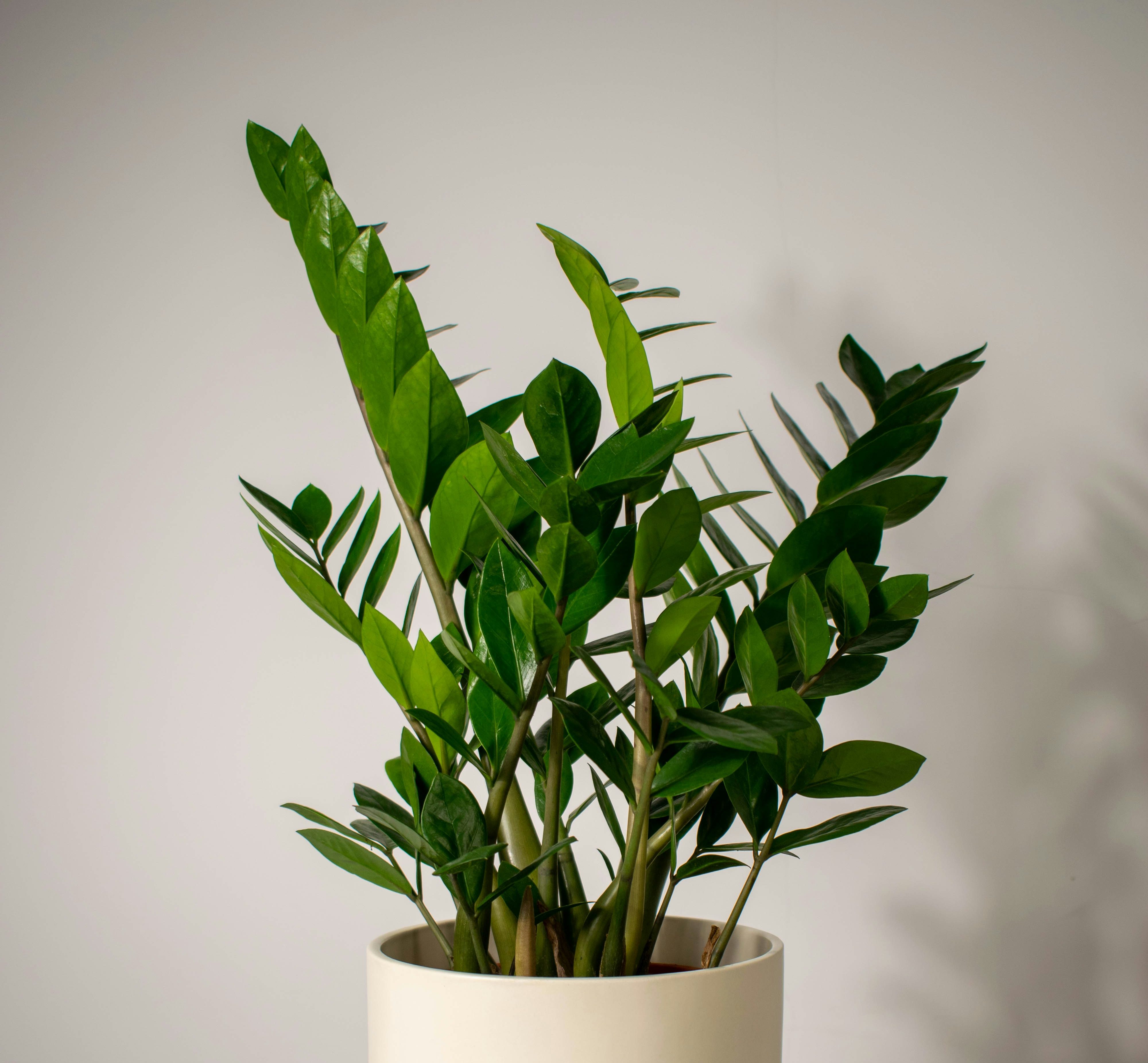
Over recent decades, the Zanzibar Gem has become one of the most widely grown houseplants around the world. It is admired not only for its resilience but also for its understated elegance. Glossy, feather-like foliage rises from the soil in graceful arches, creating a sculptural form that complements almost any interior style.
Unlike plants that rely on abundant flowers or rapid growth to capture attention, the Zanzibar Gem possesses a quiet confidence. It develops slowly and deliberately, producing new stems only when conditions are favourable. Each fresh shoot begins as a tightly folded spear before gradually unfolding into a perfectly balanced arrangement of polished leaflets.
Its steady rhythm of growth reflects its natural habitat. The plant wastes little energy, responding patiently to changing conditions and demonstrating that resilience often comes not through speed, but through thoughtful adaptation.
Appearance & Growth Habit
Zanzibar Gem is an evergreen perennial that grows from large underground rhizomes, producing upright stems that gradually form dense clumps of elegant foliage. Indoors, mature plants generally reach between 60 centimetres and 1 metre in height and spread, although growth is typically slow and compact.
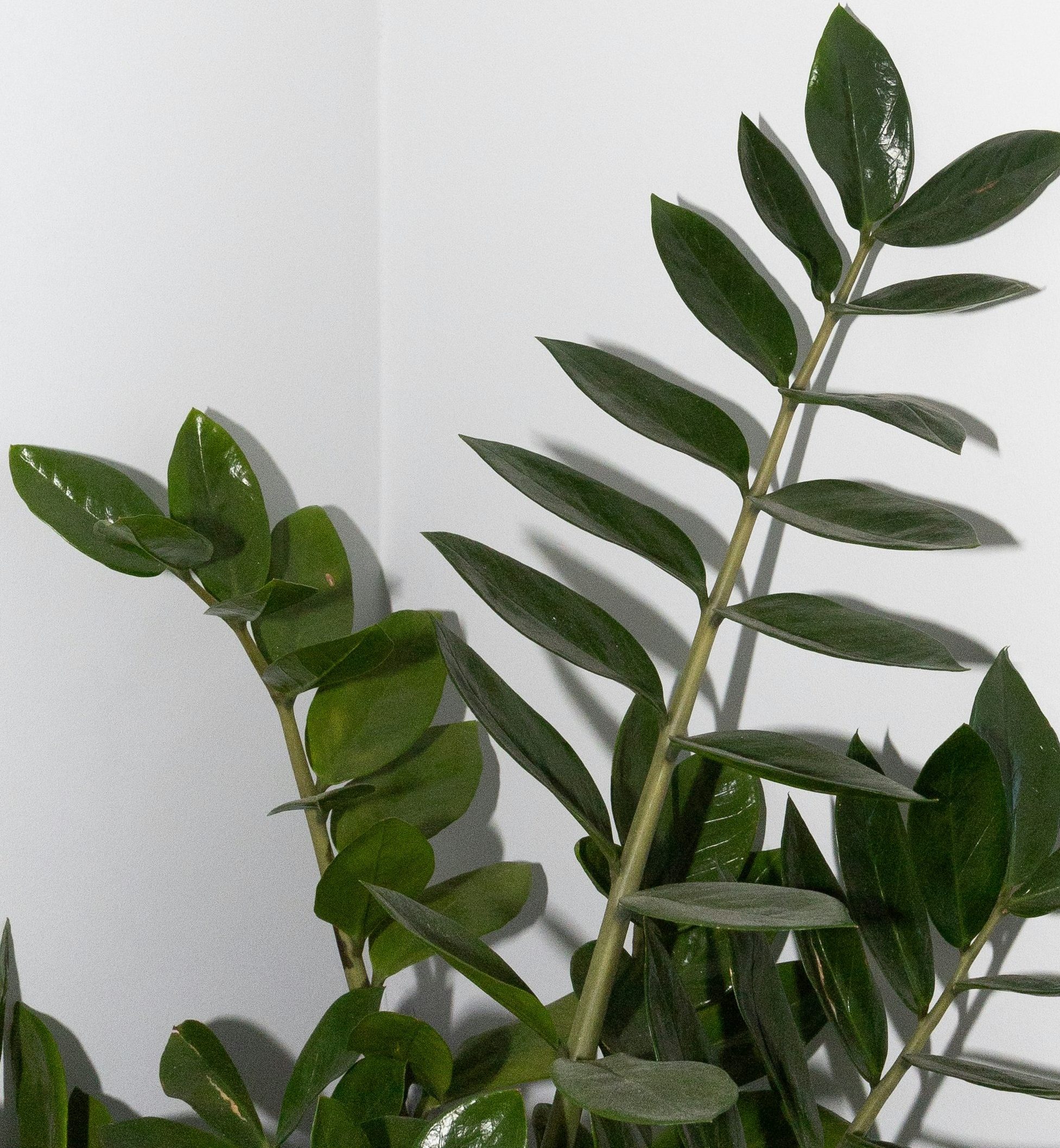
Each fleshy stem supports numerous paired leaflets arranged in a feather-like pattern. The leaflets are thick, smooth, and highly glossy, their deep green surfaces reflecting available light and giving the plant its distinctive polished appearance. This glossy texture contributes greatly to its ornamental value and allows the foliage to remain attractive throughout the year.
New stems emerge directly from the rhizomes as bright green shoots before slowly darkening as they mature. The process of a new stem unfurling is gradual, often taking several weeks before the leaflets fully expand and settle into their characteristic arching form.
Flowering is uncommon indoors. When it does occur, the plant produces small, pale spathes close to the base of the foliage, although these are generally hidden from view and are far less significant than the handsome leaves.
Its naturally symmetrical growth habit allows the Zanzibar Gem to develop into an elegant specimen that remains balanced without requiring regular pruning.
Growing Conditions
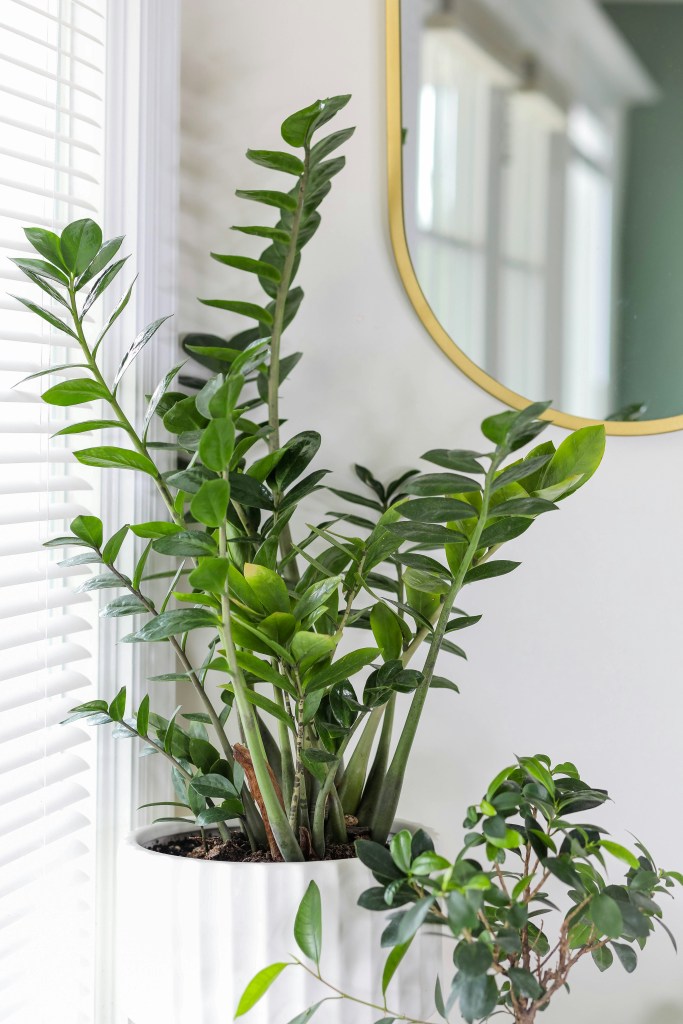
As a tropical indoor houseplant, the Zanzibar Gem is exceptionally adaptable to a wide range of indoor conditions. It grows well in bright, indirect light but is equally capable of tolerating lower light levels, making it one of the most versatile foliage plants for homes and offices.
Direct afternoon sunlight should generally be avoided, as it may scorch the glossy leaves. Bright filtered light encourages stronger growth, although even shaded rooms often support healthy, if slower, development.
The plant performs best in a free-draining potting mix that allows excess moisture to escape readily. Its water-storing rhizomes make it highly tolerant of occasional drought, while prolonged water-logging is far more likely to cause problems.
Warm indoor temperatures between 18°C and 28°C suit the plant well. Moderate household humidity is entirely adequate, and the plant adapts comfortably to the relatively dry air found in many centrally heated homes.
Care & Maintenance
The Zanzibar Gem is widely regarded as one of the easiest houseplants to maintain. Watering should be infrequent but thorough, allowing the potting mix to dry almost completely between applications. Its underground rhizomes store considerable moisture, enabling the plant to tolerate missed waterings with ease.
A balanced liquid fertiliser applied every four to six weeks during spring and summer supports healthy growth, although the plant remains attractive even with minimal feeding. Fertiliser should be reduced during autumn and winter when development naturally slows.
The glossy leaflets benefit from occasional cleaning with a soft, damp cloth to remove dust and maintain their reflective appearance. This simple task also helps maximise the plant’s ability to capture available light.
Repotting is only required every few years, as the plant is content to become moderately root-bound. Larger clumps may be divided during repotting, with each section producing a new plant from its rhizomes.
The Zanzibar Gem is generally free from significant pest and disease problems. Most issues arise from excessive watering rather than neglect. It should be noted that all parts of the plant contain calcium oxalate crystals and should be kept away from pets and young children.
Seasonal Notes
Although indoor conditions soften the influence of the seasons, the Zanzibar Gem continues to respond to natural changes in daylight.
Spring often brings the appearance of fresh shoots emerging from beneath the soil. Their bright green colour contrasts beautifully with the mature foliage before gradually deepening as they harden.
Summer is usually the period of strongest growth. Warm temperatures and longer days encourage the production of additional stems, gradually increasing the fullness of the plant.
Autumn introduces a slower rhythm as available light decreases. Existing foliage remains glossy and vibrant while new growth becomes less frequent.
Winter is a season of quiet stability. The evergreen stems continue to provide structure and colour indoors, asking for little more than occasional watering. Even during this resting period, the plant retains its composed appearance, carrying the promise of renewed growth when the days begin to lengthen once again.
Uses
Zanzibar Gem is one of the most versatile tropical indoor houseplants for homes, offices, reception areas, hotels, and other interior spaces. Its upright habit allows it to fit comfortably into corners, beside furniture, or as a feature on plant stands, where its glossy foliage introduces texture without creating visual clutter.
Its refined architectural form complements both contemporary and traditional interiors, pairing naturally with timber, ceramics, natural fibres, and modern furnishings. The deep green foliage provides year-round interest and creates a calming contrast against lighter backgrounds.
Zanzibar Gem is also recognised as one of the classic air-purifying indoor plants, following research demonstrating that certain houseplants can remove selected airborne compounds under controlled conditions. While individual plants have only a modest influence on the air quality of a typical home, incorporating healthy tropical houseplants into indoor environments can contribute to a fresher, more welcoming atmosphere while strengthening our everyday connection with nature.
Perhaps the greatest lesson offered by the Zanzibar Gem is found in its unhurried pace. Weeks may pass with little visible change before a new shoot quietly appears, unfolding leaf by leaf until it joins the familiar canopy. Its growth is steady rather than hurried, reminding us that some of the most enduring transformations are those that take place gradually, almost unnoticed, over time.