WINTER ROSE (Hellebore)
Helleborus orientalis

Plant Overview
Winter rose, botanically known as Helleborus orientalis, is one of the most treasured flowering perennials for bringing beauty, softness, and quiet seasonal atmosphere to the garden during the colder months of the year. Flowering from late winter into early spring, hellebores emerge at a time when much of the garden is still dormant, offering subtle colour, texture, and life during a season often associated with stillness and rest.
Despite their common name, winter roses are not related to roses. Their name instead reflects the soft, layered appearance of their flowers, which resemble simple single roses or gently ruffled blooms. Their understated beauty and ability to flower through winter have made them deeply admired within woodland gardens, shaded borders, and reflective garden spaces.
Winter roses possess a calm and contemplative presence within the landscape. Their nodding flowers encourage closer observation, inviting people to slow down and notice delicate details such as petal markings, subtle colour variations, seed structures, and the return of early pollinators at the edge of winter. In many gardens, hellebores quietly mark the seasonal transition between winter and spring, reminding us that renewal often begins gently and gradually long before dramatic seasonal change becomes visible.
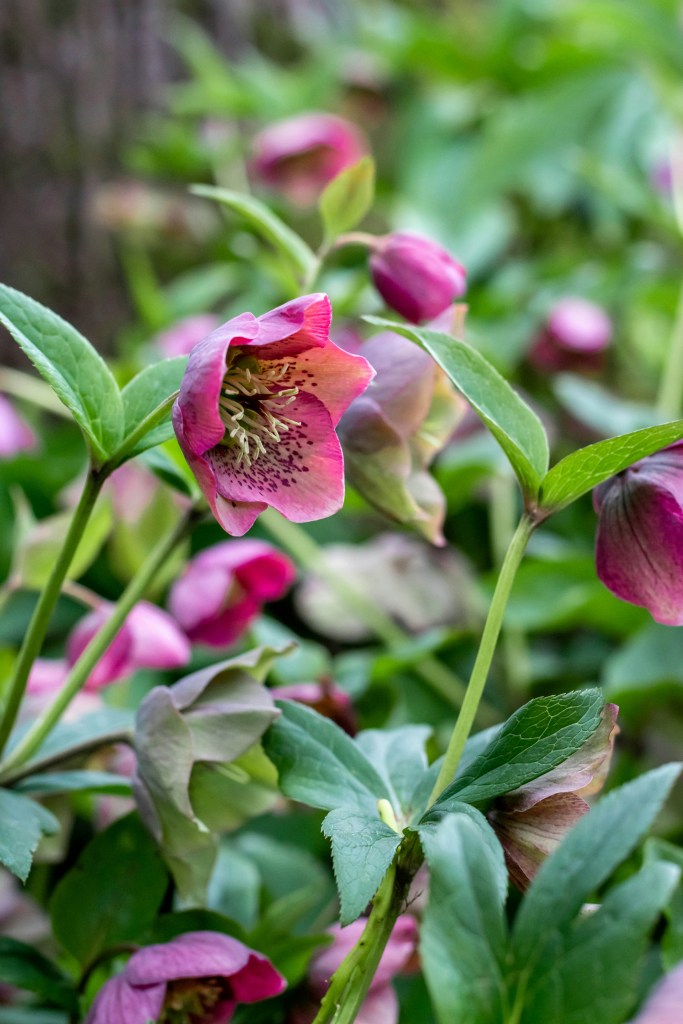
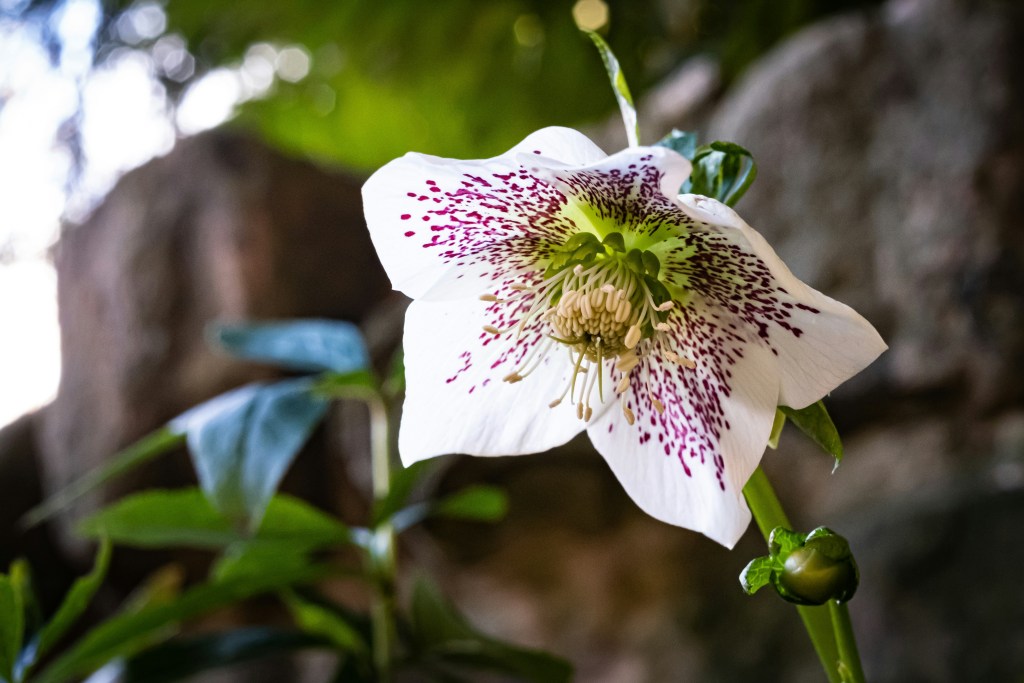
Available in shades of creamy white, blush pink, burgundy, plum, soft green, near black, and speckled combinations, Helleborus orientalis contributes softness and seasonal depth to the winter landscape while pairing beautifully with mosses, ferns, bulbs, and woodland-style planting schemes.
Appearance & Growth Habit
Winter roses form elegant low-growing clumps of leathery evergreen foliage that provide year-round texture and structure within the garden. The leaves are deeply divided, rich green in colour, and slightly glossy, creating a beautiful contrast against the softer tones of winter flowering plants.
The flowers emerge on upright stems above the foliage during late winter and early spring. Their blooms are often outward-facing or gently nodding, encouraging intimate viewing and closer engagement with the plant itself. Flower forms vary from simple single blooms to semi-double and fully double varieties, depending on the cultivar.
One of the most captivating qualities of hellebores is the subtle complexity of their colouring. Flowers may feature delicate speckling, contrasting centres, soft veining, or muted tonal variations that shift gently in changing winter light. These details reward slow observation and become increasingly beautiful when viewed closely.
Mature plants generally reach between 40 and 60 centimetres in height and width, gradually forming dense clumps over time. Once established, hellebores are long-lived perennials that slowly expand within the landscape, creating increasingly beautiful seasonal displays with age.
Their growth habit feels natural, grounded, and quietly architectural, allowing them to integrate seamlessly into woodland gardens and layered planting spaces focused on atmosphere and seasonal immersion.
Growing Conditions
Helleborus orientalis thrives best in partial shade, dappled woodland light, and sheltered garden positions where the soil remains fertile, moisture-retentive, and well-drained. These plants perform particularly well beneath deciduous trees where they benefit from winter light and summer shade, replicating the natural conditions of woodland environments.
Woodland gardens, shaded borders, courtyard gardens, and reflective planting spaces all provide ideal environments for hellebores. They appreciate soil enriched with compost, leaf mould, or well-rotted organic matter and respond well to healthy biologically active soils.
Although winter roses prefer consistent moisture, particularly while establishing, they dislike waterlogged conditions and require good drainage to remain healthy long-term. Once settled into the garden, they become relatively resilient and dependable plants capable of tolerating cold temperatures, frost, and unsettled winter weather.
Their ability to flower through difficult seasonal conditions contributes greatly to their emotional appeal within the landscape. At a time when many plants have retreated into dormancy, hellebores quietly continue growing and flowering, offering softness and life within the winter garden.
Because they are shade tolerant and relatively low-maintenance, winter roses are especially valuable for bringing seasonal interest to quieter parts of the landscape where many flowering plants struggle to thrive.
Care & Maintenance
Winter roses are considered low-maintenance plants once established and require only occasional seasonal care to maintain their health and appearance. In late winter, many gardeners remove older foliage before flowering begins in order to showcase emerging blooms more clearly and improve airflow around the plant.
Adding compost or organic matter around the base of plants each year helps support healthy growth, improve soil structure, and maintain long-term plant vitality. During extended dry periods, supplemental watering may occasionally be beneficial, particularly for younger plants or those growing beneath trees where moisture competition can occur.
After flowering, spent blooms may be removed if a tidier appearance is preferred, although many gardeners choose to leave seed heads in place for seasonal texture and the possibility of gentle natural self-seeding. Over time, hellebores may slowly naturalise within suitable environments, creating soft drifting colonies that feel increasingly established and integrated within the garden.
These plants are generally resistant to most pests and diseases, though overcrowded conditions or poor airflow can occasionally contribute to fungal issues. Healthy spacing, good soil, and seasonal maintenance usually keep plants thriving with minimal intervention.
As mature clumps develop over time, winter roses become increasingly beautiful and reliable, offering consistent seasonal interest year after year with very little ongoing care.
Seasonal Notes
Winter rose is one of the most important plants for creating seasonal transition within the garden. Flowering during late winter and early spring, it provides colour, softness, and emotional warmth during a time when many landscapes can feel quiet, dormant, and still.
The appearance of hellebore flowers often coincides with the first subtle signs of seasonal change, including lengthening daylight, emerging bulbs, returning pollinators, and the gradual awakening of woodland gardens. Their blooms persist for an extended period, slowly ageing into softer muted tones while continuing to provide beauty well into spring.
Winter roses combine beautifully with snowdrops, cyclamen, ferns, woodland bulbs, primroses, mosses, and early spring flowering plants. Together, these combinations create layered seasonal gardens filled with texture, softness, movement, and quiet atmosphere.
Beyond their ornamental value, hellebores encourage reflection and seasonal awareness. Their flowering reminds us that renewal often begins quietly and beneath the surface long before it fully reveals itself.
Uses
Winter Rose is an exceptionally versatile garden plant and can be used in a wide range of settings. It is particularly effective in woodland gardens, beneath deciduous trees, shaded borders, courtyard gardens, and mixed perennial plantings. Its refined appearance also makes it well suited to contemporary garden designs where texture and subtle seasonal interest are valued.
The flowers are excellent for close observation and are often best appreciated when planted near pathways, entrances, or seating areas where their intricate details can be admired. Their long flowering season makes them valuable companions to early bulbs and other late-winter perennials.
Beyond its ornamental value, Winter Rose contributes to the emotional atmosphere of a garden. Flowering during the quietest season of the year, it encourages observation, patience, and appreciation for subtle change. Its blooms remind us that even in the depths of winter, nature continues its cycles of renewal, offering beauty, resilience, and the promise of the season ahead.