Swiss Cheese Plant
Monstera adansonii
Plant Overview
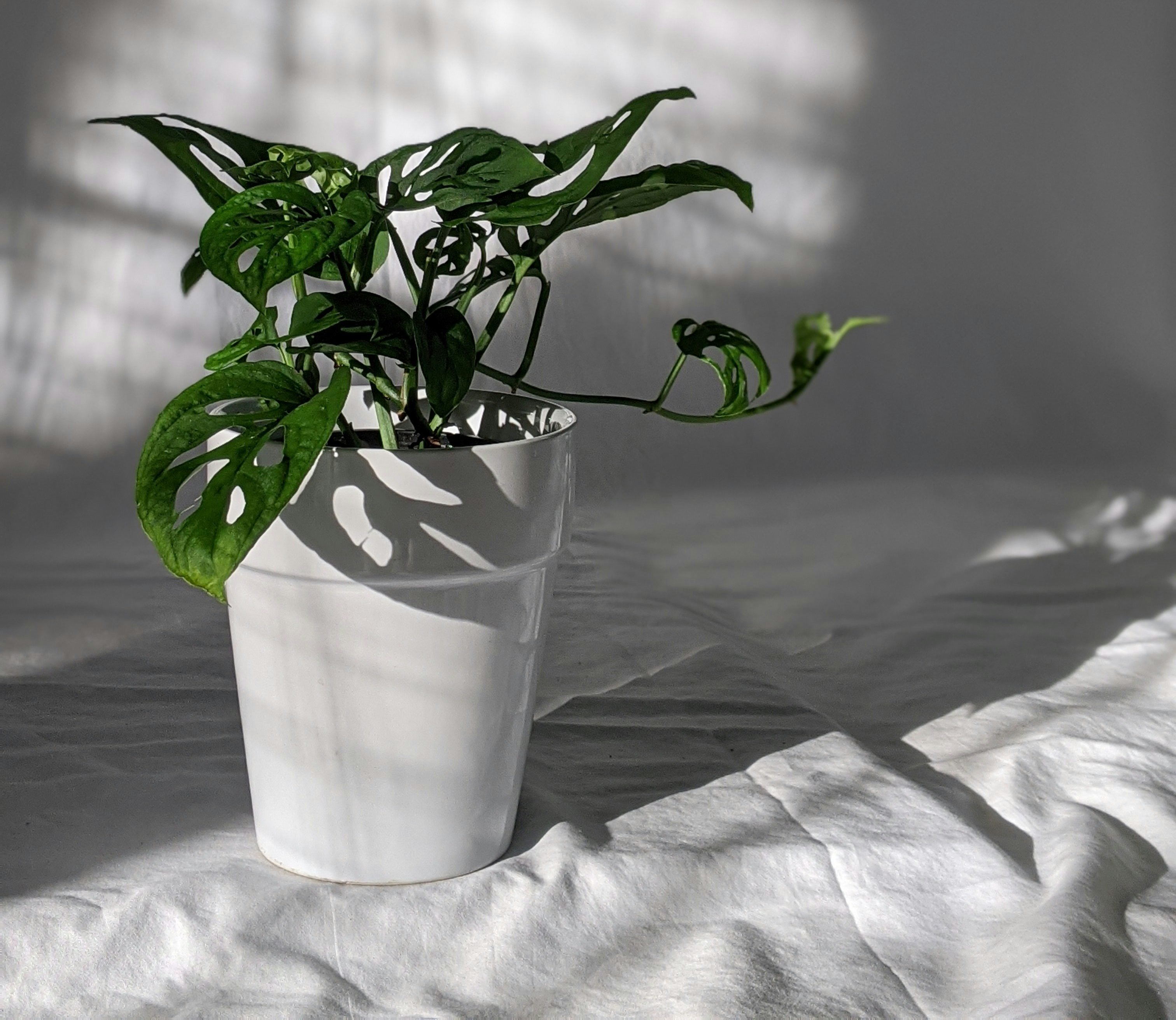
The Swiss Cheese Plant (Monstera adansonii) is a graceful tropical indoor houseplant admired for its distinctive perforated leaves and climbing growth habit. Native to the rainforests of Central and South America, it naturally grows beneath the forest canopy, climbing trees with the aid of aerial roots as it searches for filtered sunlight. Its elegant foliage and manageable size have made it one of the most popular indoor plants for modern homes.
Unlike its larger relative, Monstera deliciosa, Monstera adansonii retains a lighter, more delicate appearance. Its slender vines and finely textured leaves create an airy quality that lends itself well to shelves, hanging baskets, and climbing supports. As the plant matures, each new leaf reveals an intricate pattern of natural openings, giving rise to its familiar common name.
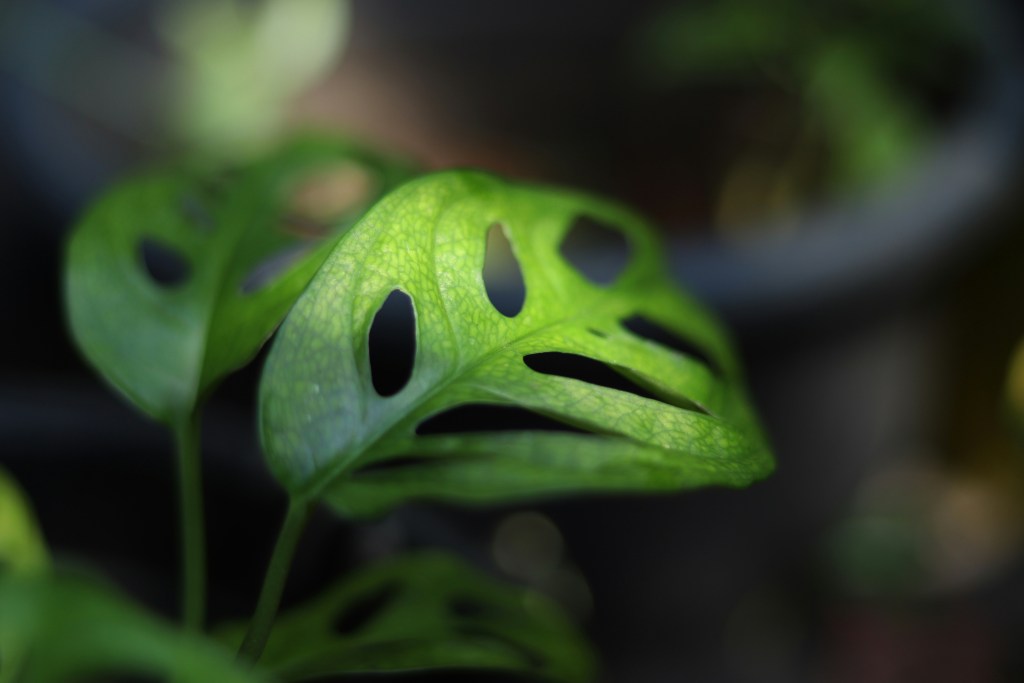
These perforations are more than simply ornamental. In its rainforest habitat, the openings help reduce wind resistance during tropical storms while allowing dappled light to reach lower leaves. What appears at first to be an unusual feature is, in fact, a thoughtful adaptation to life beneath the forest canopy.
Watching the plant mature is a gradual and rewarding experience. Each unfolding leaf is unique, carrying its own arrangement of openings and subtle variations in shape. Over time, the plant quietly transforms the space around it, bringing a sense of lush greenery that feels both vibrant and calming.
Appearance & Growth Habit
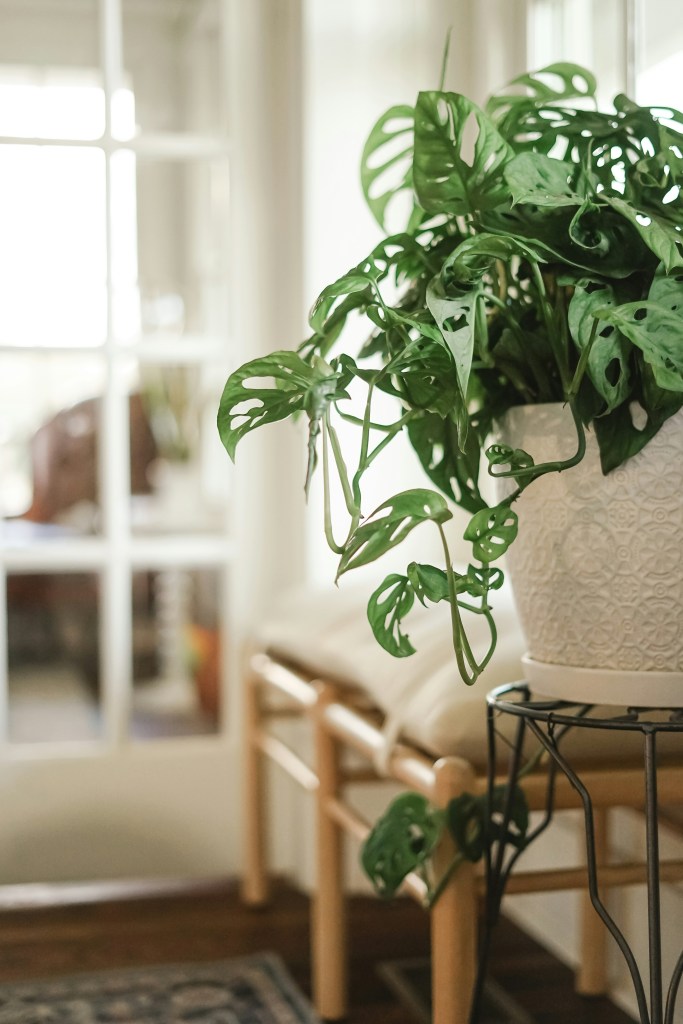
Swiss Cheese Plant is an evergreen climbing vine that produces slender stems capable of trailing or ascending with support. Indoors, vines commonly grow between 1.5 and 3 metres in length, depending on growing conditions and the availability of a climbing structure.
The leaves are oval to heart-shaped and display the distinctive natural holes, or fenestrations, that characterise the species. Unlike Monstera deliciosa, the leaves remain fully enclosed around the edges, with the openings occurring within the blade rather than extending to the margins. Mature leaves typically measure between 15 and 30 centimetres in length and display a rich, glossy green surface.
Aerial roots emerge from the nodes along the stems, allowing the plant to anchor itself to tree trunks or climbing supports. When provided with a moss pole or coir pole indoors, the plant often produces larger foliage and a more upright habit, closely resembling its natural growth pattern.
Flowering is uncommon indoors and generally insignificant compared with the ornamental value of the foliage. Instead, the continual production of beautifully patterned leaves provides year-round interest.
Growing Conditions
As a tropical indoor houseplant, Swiss Cheese Plant thrives in bright, indirect light that resembles the filtered conditions beneath a rainforest canopy. Bright positions encourage stronger growth and larger leaves, while prolonged direct sunlight may scorch the delicate foliage.
The plant performs best in a fertile, free-draining potting mix that retains moderate moisture without becoming waterlogged. A mixture containing composted bark, perlite, and quality potting compost provides excellent aeration while supporting healthy root development.
Warm temperatures between 18°C and 28°C are ideal. The plant appreciates moderate to high humidity, although it adapts well to average indoor conditions when cared for consistently.
Providing a climbing support encourages more vigorous growth and allows the plant to express its natural habit. Vines left to trail remain attractive, but climbing specimens often develop noticeably larger and more mature leaves.
Care & Maintenance
Swiss Cheese Plant is relatively easy to care for and responds well to consistent attention. Water thoroughly when the upper few centimetres of the potting mix have dried, allowing excess moisture to drain freely. Avoid leaving the roots in saturated soil, as this may lead to root rot.
A balanced liquid fertiliser applied every four weeks during spring and summer supports healthy foliage production. Feeding can be reduced during autumn and winter when growth naturally slows.
The leaves benefit from occasional cleaning with a soft, damp cloth to remove dust and maintain their healthy appearance. Clean foliage also maximises the plant’s ability to capture available light.
Pruning may be carried out to control size or encourage branching. Healthy stem cuttings containing a node and aerial root root readily in water or potting mix, making propagation both straightforward and rewarding.
Like many members of the arum family, Swiss Cheese Plant contains calcium oxalate crystals and should be kept away from pets and young children, as ingestion may cause irritation.
Seasonal Notes
Although indoor conditions reduce the dramatic influence of the seasons, Swiss Cheese Plant continues to respond to changing daylight throughout the year.
Spring usually brings renewed growth, with fresh shoots and tightly rolled leaves emerging from the growing tips. Watching each leaf gradually unfurl reveals the characteristic perforations as they develop.
Summer is the period of strongest growth. Warm temperatures and abundant daylight encourage longer vines and increasingly mature foliage, particularly on plants growing vertically.
Autumn brings a slower pace as available light decreases. Existing foliage remains lush while new growth becomes less frequent, allowing the plant to settle into a quieter rhythm.
Winter is a season of gentle rest. The evergreen vines continue to soften indoor spaces with their flowing form, while occasional new leaves provide subtle reminders that growth rarely stops completely, even during the quieter months of the year.
Uses
Swiss Cheese Plant is highly versatile as a tropical indoor houseplant, equally suited to hanging baskets, shelves, plant stands, or climbing supports. Its cascading vines soften architectural lines, while vertically trained specimens create striking living features within homes and workplaces.
Its elegant foliage complements a wide range of interior styles, pairing naturally with timber, stone, woven fibres, and contemporary furnishings. The finely divided leaves create texture without overwhelming a room, making the plant particularly suitable for living rooms, bedrooms, home offices, and reading spaces.
Swiss Cheese Plant is also recognised as one of the indoor foliage plants that have been studied for their ability to remove selected airborne compounds under controlled conditions. While individual plants have only a modest influence on the air quality of a typical home, incorporating healthy tropical houseplants into indoor environments can contribute to a fresher, more welcoming atmosphere while strengthening our everyday connection with nature.
As the vines gradually extend and each new leaf reveals its own unique pattern, the plant offers a quiet reminder that no two stages of growth are ever exactly alike. Its beauty is not found in a single perfect leaf, but in the unfolding story of the plant itself, shaped patiently over time through light, care, and the changing rhythm of the seasons.