SUNFLOWER
Helianthus annuus
Plant Overview
Sunflowers are a striking seasonal addition to the garden, bringing warmth, height, and vibrant colour throughout summer and into early autumn. Their large golden blooms create a bold visual display and are especially effective when planted in groups, where they form a dramatic stand of upright plants that adds structure and seasonal energy to garden spaces.
Available in a range of sizes and flower colours, sunflowers are valued for their ornamental appeal, pollinator-friendly blooms, and suitability for both ornamental and productive gardens. Their cheerful appearance and impressive height make them a memorable feature within borders, cottage-style planting schemes, and wildlife-friendly gardens.
Appearance & Growth Habit
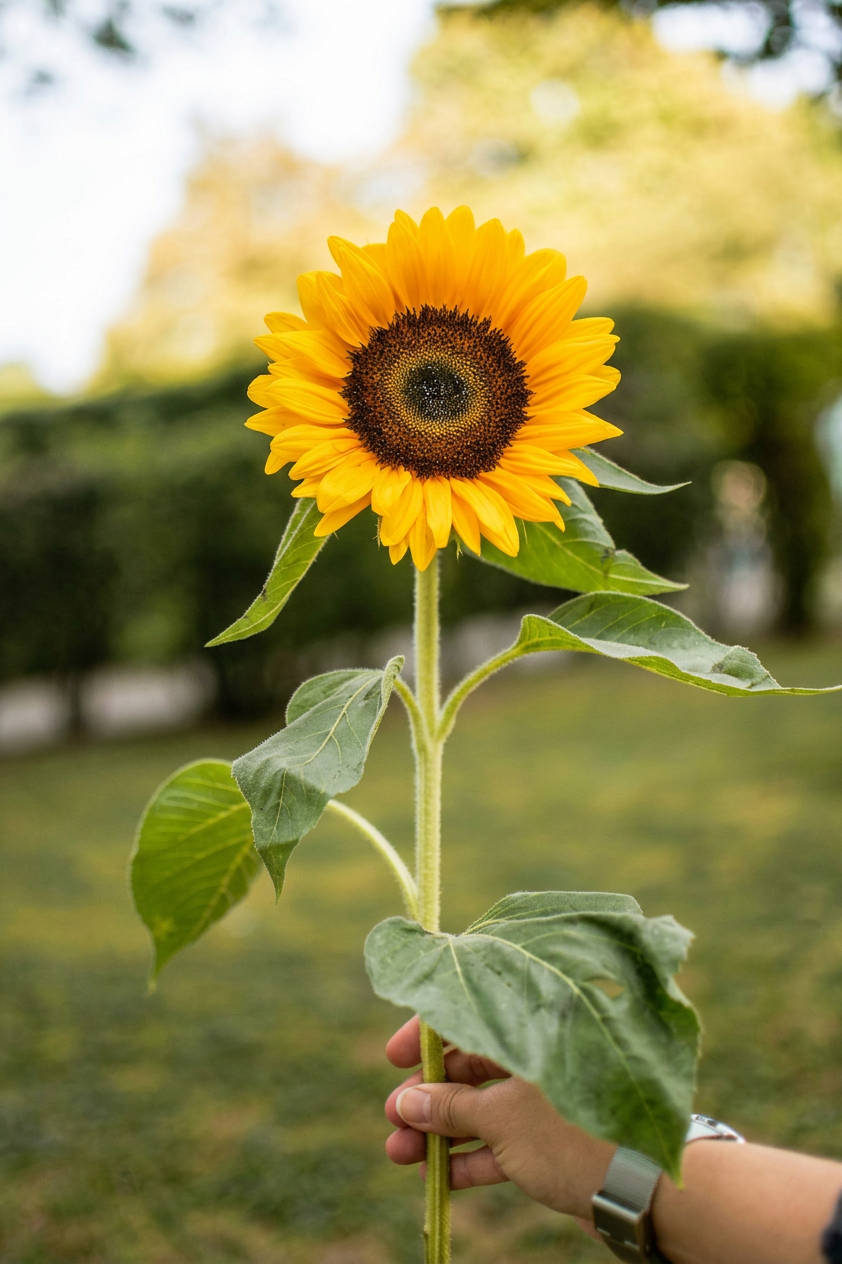
Sunflowers typically grow between 1 and 3 metres in height depending on the cultivar, although giant varieties can reach up to 4.5 metres tall under suitable growing conditions. Dwarf cultivars, which generally reach between 30 and 90 centimetres in height, are well suited to containers, pots, and lower border planting.
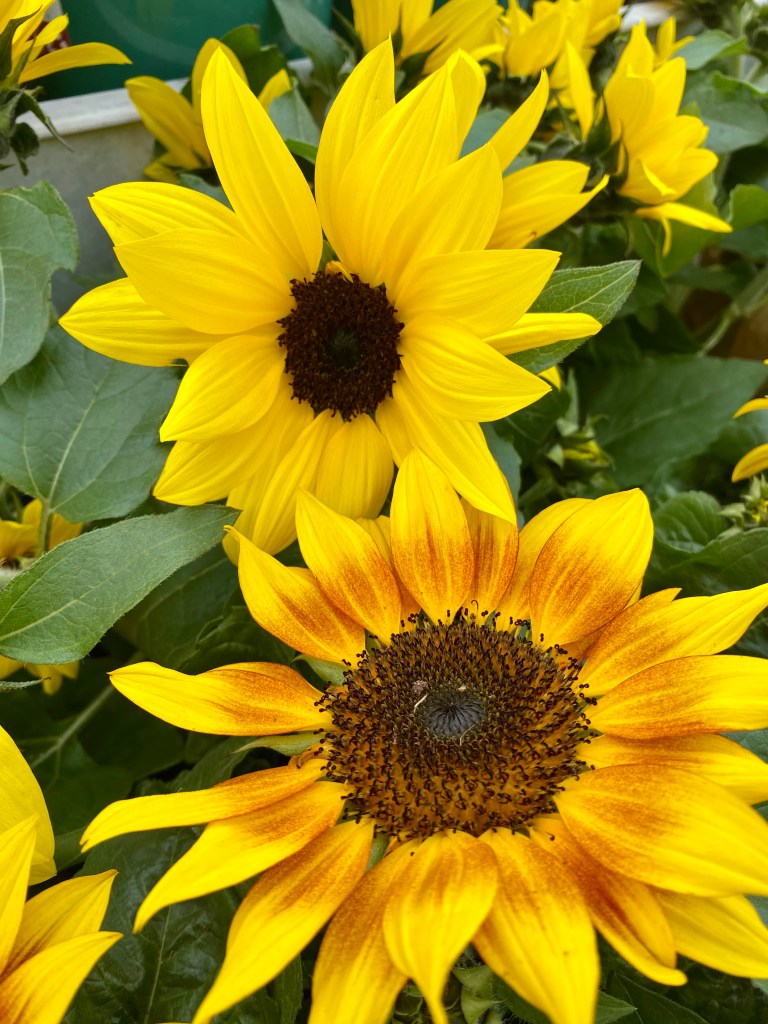
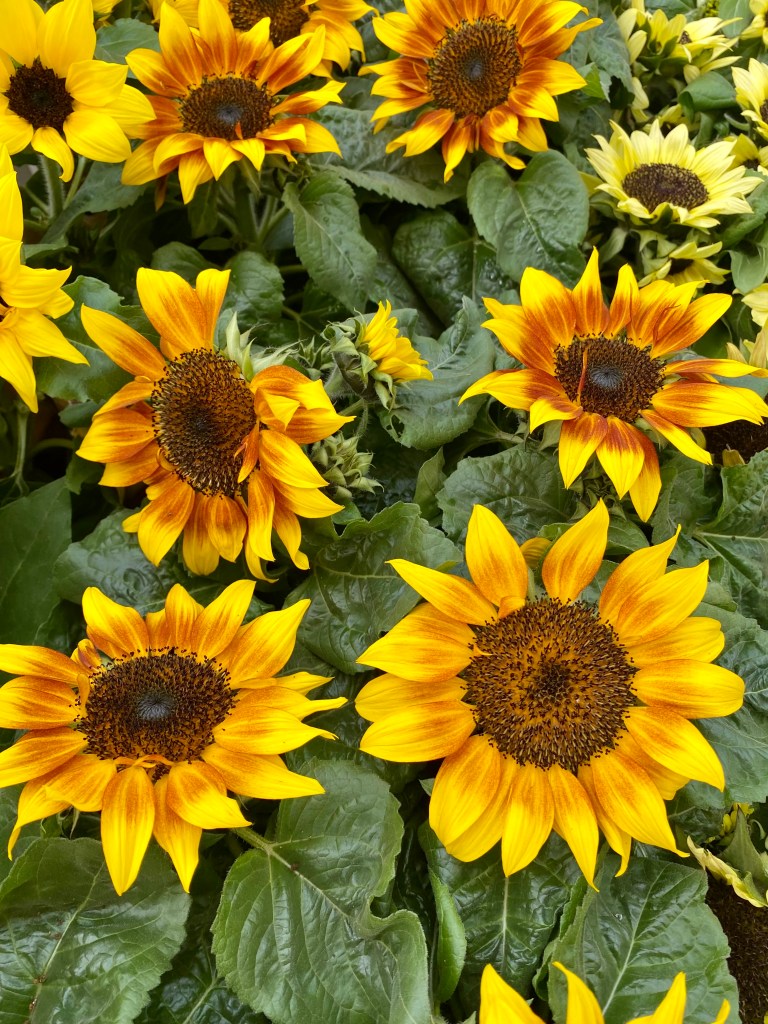
Their large textured leaves and strong upright stems create a bold architectural presence within the garden, while their oversized flower heads become a striking focal point during the warmer months. Flower colours commonly range from golden yellow and bronze to deep red and burnt orange tones depending on the variety.
The tall stems and broad blooms also introduce movement and seasonal rhythm into planting schemes, particularly when grown in groups where their flowers gently follow the direction of sunlight throughout the day.
Growing Conditions
Sunflowers grow best in full sun positions with rich, well-drained soil and consistent moisture throughout the growing season. Warm, open locations encourage stronger growth and more reliable flowering.
Due to their vigorous growth habit and large flower heads, taller cultivars may require staking or additional support, particularly in exposed gardens where strong winds can damage stems once plants become top-heavy.
Seeds are typically sown in spring once the risk of frost has passed and soil temperatures begin to warm. In cooler regions, seeds may also be started indoors earlier and planted out once conditions improve.
Care & Maintenance
When establishing sunflowers, enriching the soil with compost or well-rotted organic matter helps support healthy growth and vigorous flowering. Young plants benefit from regular watering, particularly during dry periods, while mulching around the base of the plant assists with moisture retention and soil stability.
Sunflowers respond well to feeding during active growth, particularly fertilisers higher in phosphorus, which support flower production throughout the season.
As plants mature, removing damaged foliage and providing support where necessary helps maintain healthy upright growth and prolong the quality of the seasonal display.
Seasonal Notes
Sunflower seeds are best sown during spring, allowing plants sufficient time to establish before reaching their peak flowering display in summer. In cooler climates or frost-prone areas, sowing should take place after the final frost or seedlings should be protected during early growth.
Flowering generally continues through summer and into early autumn, bringing strong seasonal colour and structure to the garden during the warmest months of the year.
Uses
Sunflowers are highly valued within pollinator-friendly gardens, as their open blooms provide an abundant source of pollen and nectar for bees, butterflies, and other beneficial insects. As flowers mature, their seed heads can also provide a valuable food source for birds and wildlife later in the season.
Their impressive flower heads and long stems make them excellent cut flowers for indoor arrangements, while dwarf varieties are particularly effective in containers, raised beds, and smaller garden spaces where seasonal colour and vertical interest are desired.
Beyond their practical use, sunflowers often contribute a strong sense of warmth, optimism, and seasonal abundance within the garden, helping create spaces that feel vibrant, uplifting, and connected to the rhythm of summer.