Rubber Plant
Ficus elastica
Plant Overview
The Rubber Plant (Ficus elastica) is a striking tropical indoor houseplant celebrated for its bold foliage, elegant form, and remarkable longevity. Native to the tropical forests of India, Nepal, Bhutan, Myanmar, Malaysia, and Indonesia, it grows naturally as a large evergreen tree, where warm temperatures, abundant rainfall, and filtered light support its impressive growth. Indoors, it has become one of the world’s most enduring houseplants, admired for its ability to bring structure, greenery, and a sense of calm to interior spaces.
Its common name reflects the milky latex sap once harvested from the plant, although it is no longer commercially grown for rubber production. Today, its value lies in its ornamental qualities. Large, glossy leaves and a naturally upright habit allow it to make a confident statement while remaining surprisingly easy to care for.
The Rubber Plant possesses a quiet strength. Its sturdy stems and broad foliage create a feeling of permanence, while its measured pace of growth encourages patience. New leaves emerge individually from colourful protective sheaths, slowly unfurling into glossy surfaces that catch and reflect the changing light throughout the day.
As the years pass, a well-grown Rubber Plant develops both character and presence. Rather than demanding attention through flowers, it reveals its beauty through the gradual unfolding of each new leaf and the steady growth of its graceful framework.
Appearance & Growth Habit
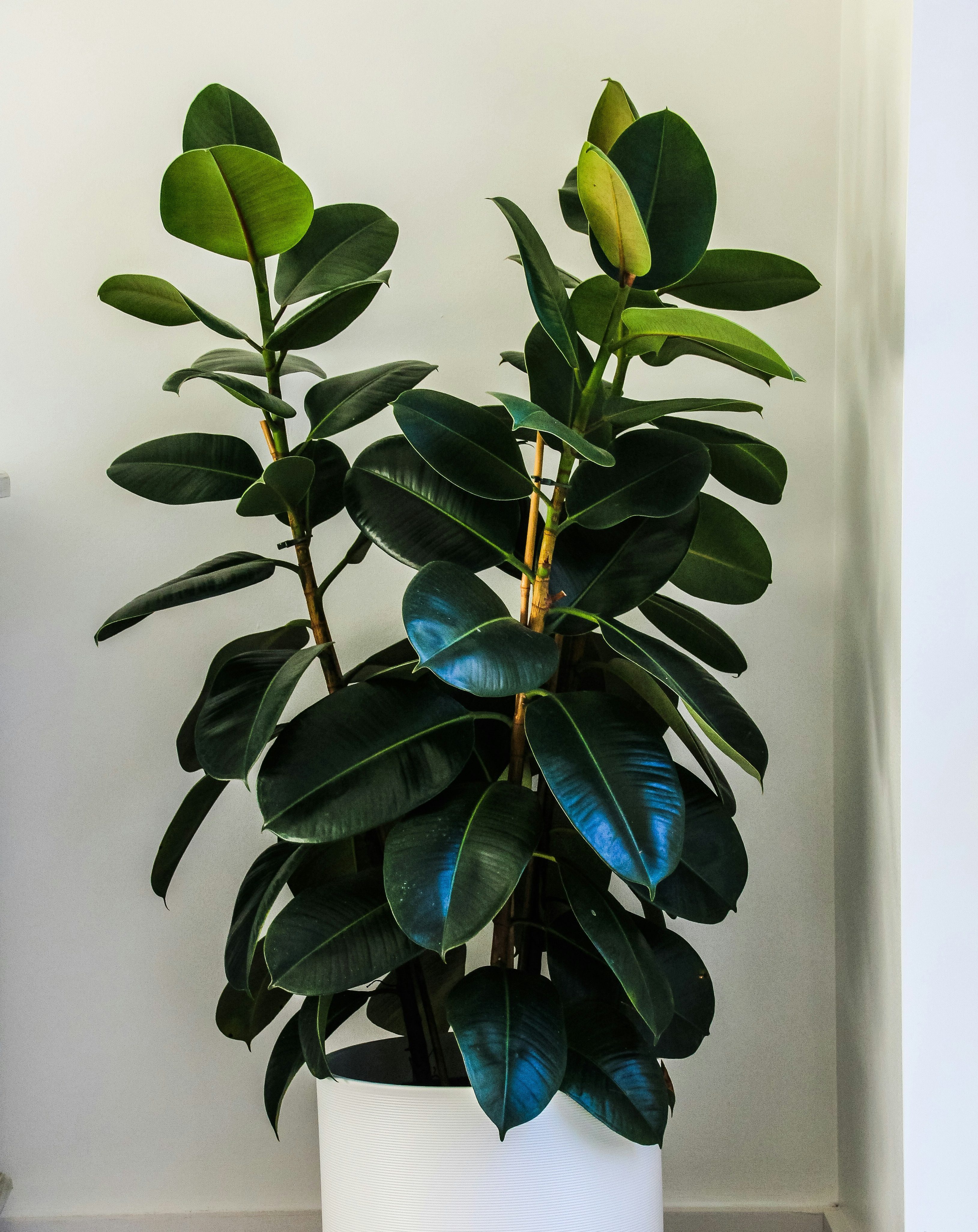
Rubber Plant is an evergreen tropical tree that develops a strong, upright growth habit. In its native environment it may exceed 30 metres in height, but when cultivated indoors it generally reaches between 2 and 3 metres, making it an impressive yet manageable feature plant.
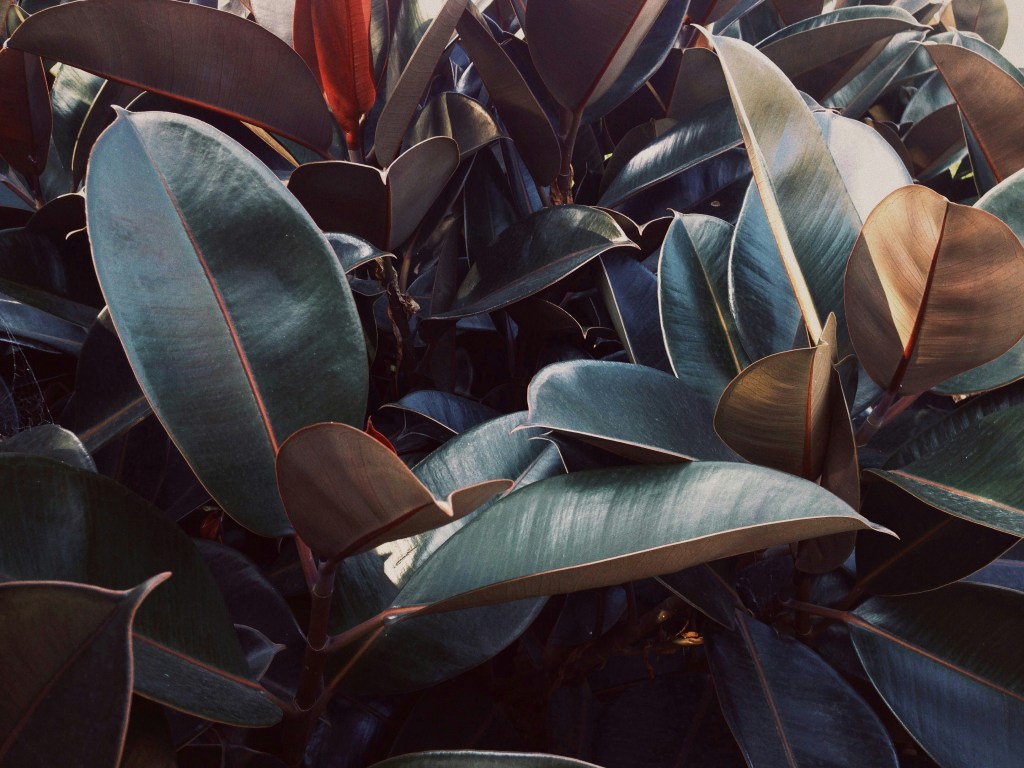
Its most distinctive feature is its foliage. The leaves are large, thick, leathery, and oval in shape, often measuring between 20 and 35 centimetres in length. Their glossy surface gives them an almost polished appearance, reflecting natural light and creating an attractive contrast with softer furnishings and surrounding plants.
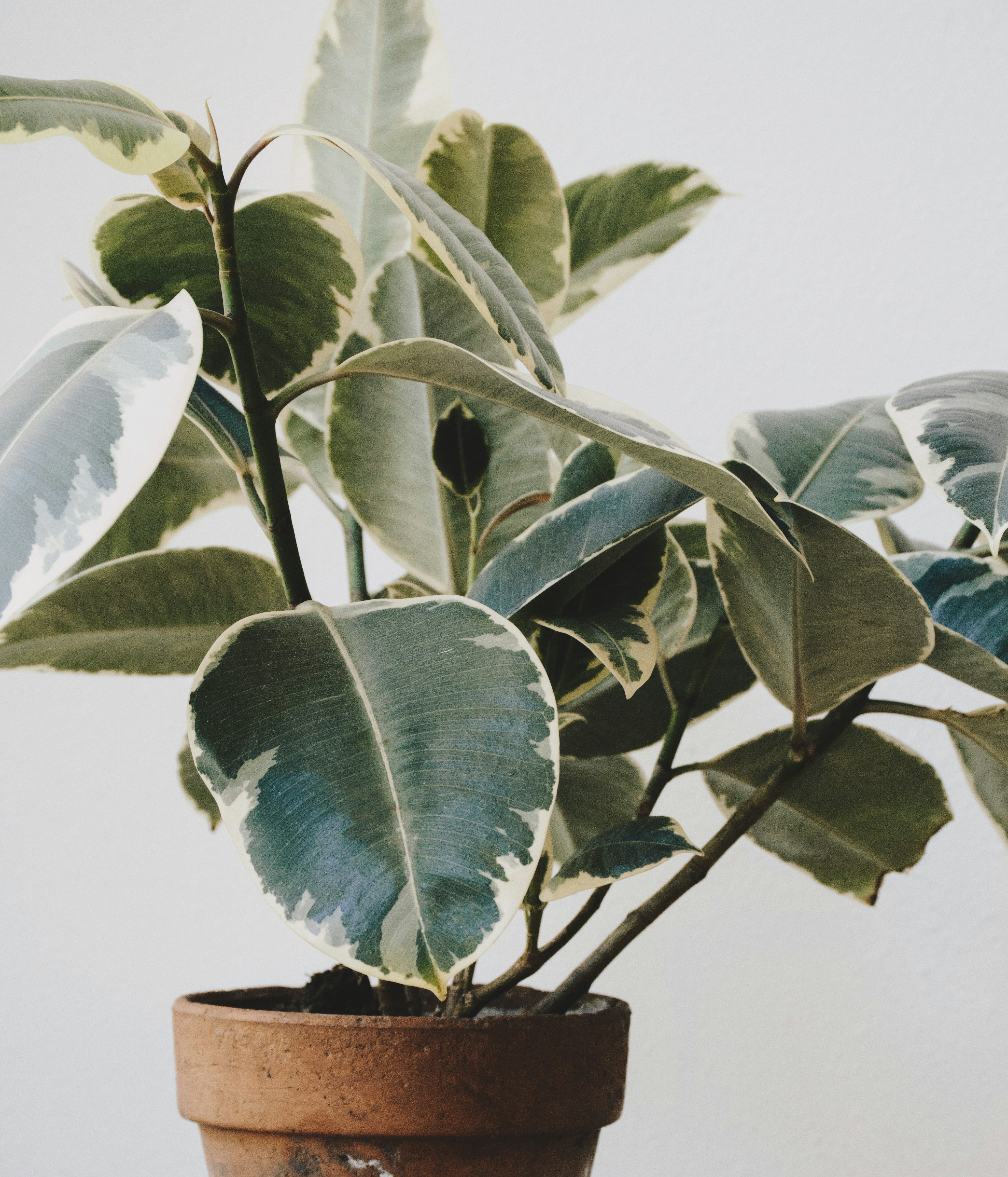
The deep green foliage is characteristic of the species, although numerous cultivated varieties display shades of burgundy, cream, lime green, or variegated combinations. Young leaves emerge tightly enclosed within colourful red or burgundy sheaths before gradually unfurling, providing one of the most satisfying stages of the plant’s growth.
The trunk gradually becomes woody with age, supporting a balanced canopy of foliage. When left unpruned, the plant develops a naturally upright form, while selective pruning encourages branching and creates a fuller, more compact specimen.
Flowering and fruit production are extremely rare indoors. The plant’s ornamental appeal rests almost entirely in the elegance of its foliage and architectural form.
Growing Conditions
As a tropical indoor houseplant, Rubber Plant thrives in bright, indirect light where its foliage develops rich colour and healthy growth. It tolerates moderate light conditions but generally performs best when positioned near a bright window protected from harsh afternoon sun.
The plant prefers a fertile, well-drained potting mix that retains moderate moisture while allowing excess water to drain freely. Healthy root systems depend on avoiding prolonged waterlogging.
Warm temperatures between 18°C and 27°C provide ideal growing conditions. The plant appreciates moderate humidity but adapts well to the conditions found in most homes. Cold draughts and sudden temperature fluctuations should be avoided, as they may lead to leaf drop or slower growth.
Like many tropical plants, the Rubber Plant responds well to consistency. Stable growing conditions allow it to establish a steady pattern of growth, gradually producing healthy new foliage throughout the year.
Care & Maintenance
Rubber Plant is valued for its relatively uncomplicated care and dependable nature. Water thoroughly when the upper layer of the potting mix has dried slightly, ensuring excess water drains away freely. Allowing the soil to remain constantly wet should be avoided, as this can lead to root problems.
During spring and summer, feeding every four to six weeks with a balanced liquid fertiliser encourages steady growth and healthy foliage. Fertiliser requirements decrease naturally during autumn and winter.
The broad glossy leaves benefit from occasional cleaning with a soft, damp cloth. Removing accumulated dust not only restores their attractive sheen but also allows the plant to make better use of available light.
If the plant becomes taller than desired, pruning may be carried out during the active growing season. New shoots often emerge below the cut, encouraging a fuller, more branched appearance. Stem cuttings can also be propagated, allowing new plants to be established from healthy growth.
Rubber Plant is generally resistant to pests but may occasionally experience problems with scale insects, mealybugs, or spider mites if growing conditions become stressful. Regular observation and consistent care usually maintain healthy plants.
Like other members of the Ficus genus, the milky sap may irritate sensitive skin, and the plant should be kept away from pets if there is a risk of ingestion.
Seasonal Notes
Although indoor environments soften seasonal changes, the Rubber Plant continues to respond to the natural cycle of daylight.
Spring often signals the beginning of renewed growth. Fresh leaves begin emerging from colourful sheaths, each one slowly unfolding into its full size over several weeks.
Summer is typically the period of strongest development. Warm temperatures and increased light encourage healthy foliage production, gradually increasing the plant’s height and fullness.
Autumn introduces a slower rhythm as available daylight decreases. Existing foliage remains vibrant while new growth becomes less frequent.
Winter offers a season of quiet stability. The glossy evergreen leaves continue to provide colour and structure within the home, reflecting changing winter light and maintaining a reassuring sense of vitality while outdoor gardens rest.
Uses
Rubber Plant is widely grown as a specimen tropical indoor houseplant, where its bold foliage and upright habit create a strong architectural presence. It is particularly effective in living rooms, entrance halls, offices, studios, conservatories, and other spacious interiors where its elegant form can be appreciated.
Its broad, glossy leaves complement a wide range of interior styles, from contemporary minimalist spaces to homes filled with natural materials and softer furnishings. As it matures, the plant develops into a living feature that brings height, texture, and year-round greenery to indoor environments.
Rubber Plant is also recognised as one of the classic air-purifying indoor plants, following research demonstrating that certain houseplants can remove selected airborne compounds under controlled conditions. While individual plants have only a modest influence on the air quality of a typical home, incorporating healthy tropical houseplants into indoor spaces can contribute to a fresher, more welcoming atmosphere while strengthening our everyday connection with nature.