RHODODENDRON
Rhododendron spp.

Plant Overview
Rhododendrons (Rhododendron spp.) are among the most spectacular flowering shrubs cultivated in temperate gardens, admired for their magnificent spring displays, evergreen foliage, and enduring presence in woodland landscapes. Native to diverse regions across Asia, Europe, and North America, they are especially abundant in the cool mountain forests of the Himalayas, China, Japan, and the Caucasus, where many species flourish beneath the dappled light of mature trees in moist, acidic soils.
Over centuries of cultivation, thousands of hybrids and cultivars have been developed, offering an extraordinary range of flower colours, plant sizes, and growth habits. From compact shrubs suited to small gardens to magnificent specimens that become small trees over many decades, rhododendrons have earned an enduring place in landscapes around the world.
While their flowering display is often their most celebrated feature, rhododendrons possess a quieter beauty that extends beyond a few weeks each spring. Their evergreen foliage provides year-round structure, creating a calm backdrop against which the changing seasons unfold. Mature specimens often develop broad, sculptural forms that become woven into the character of a garden, offering shelter, texture, and permanence.
There is a sense of patience about a rhododendron. It grows steadily rather than quickly, gradually becoming more impressive with each passing year. A young shrub may hint at its future, but only time reveals the graceful proportions and abundant flowering that make mature plants so memorable.
Appearance & Growth Habit
Rhododendrons are evergreen or deciduous shrubs, depending on the species, with most commonly cultivated garden forms remaining evergreen. Their size varies enormously, from compact shrubs less than one metre high to impressive specimens exceeding six metres under ideal conditions.
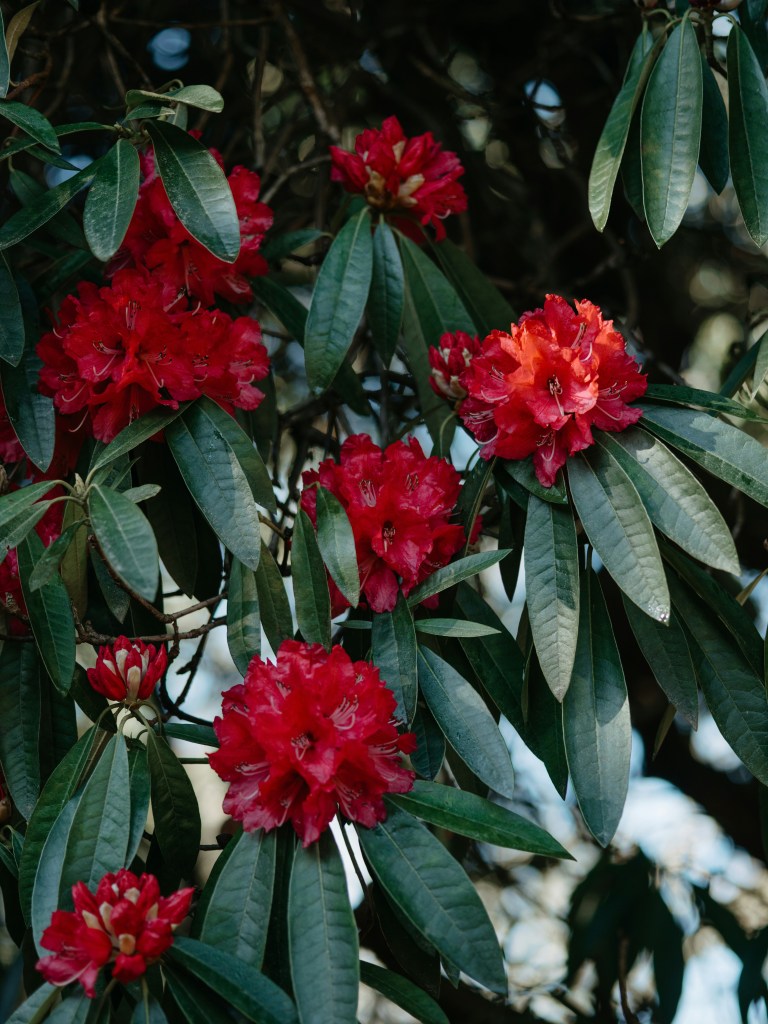
The leaves are typically leathery, glossy, and deep green, often arranged in attractive whorls near the ends of the branches. Larger species produce bold foliage that remains handsome throughout the year, providing valuable structure even when the plant is not in flower.
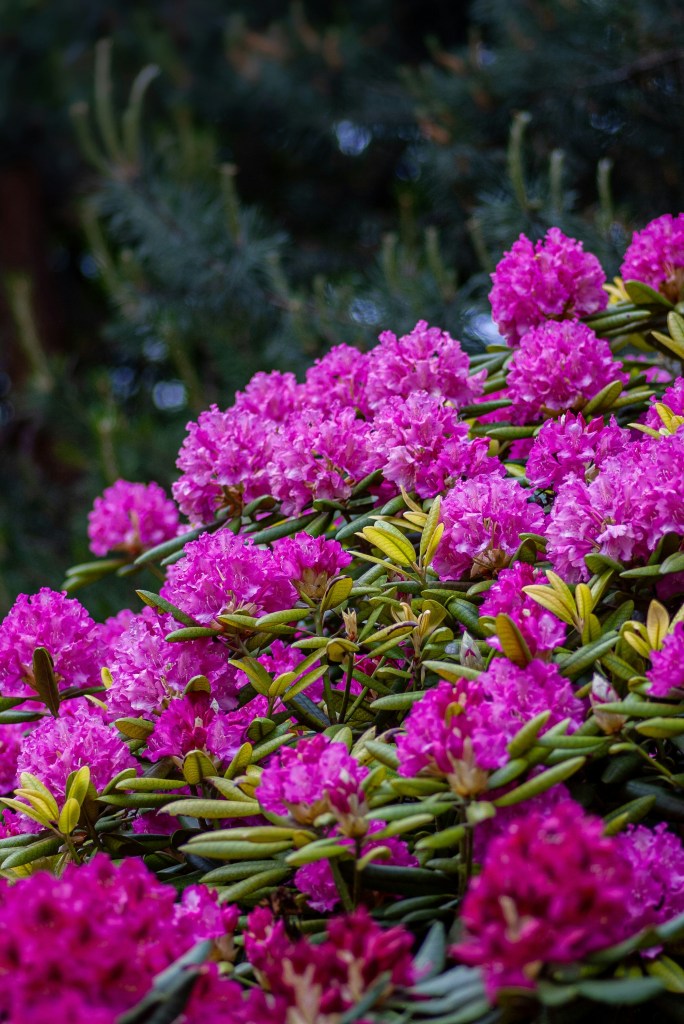
Flower buds develop during the previous growing season before opening in spring. Individual trumpet or bell-shaped flowers are carried in rounded clusters known as trusses, creating spectacular displays that may almost completely cover the foliage. Colours range from pure white and soft cream to pink, crimson, lavender, purple, orange, yellow, and rich burgundy, with many cultivars displaying delicate spotting or contrasting throats.
As plants mature, their branching framework becomes increasingly elegant. Gnarled trunks and layered branches often develop considerable character, particularly in older specimens that have been allowed to grow naturally over many decades.
Growing Conditions
Rhododendrons thrive in cool, moist climates where summers are moderate and rainfall is reasonably consistent. They perform best in partial shade, particularly beneath the light canopy of deciduous trees, where they receive protection from intense afternoon sun while still enjoying good natural light.
An acidic soil with a pH between 4.5 and 6.0 is essential for healthy growth. The soil should be rich in organic matter, moisture-retentive, and exceptionally well drained. Heavy clay or alkaline soils frequently result in poor growth and yellowing foliage unless appropriately improved.
Consistent soil moisture is particularly important during establishment and while flower buds are developing. Although mature plants tolerate brief dry periods, prolonged drought may reduce flowering and place the shrub under unnecessary stress.
Sheltered locations protect both foliage and flowers from drying winds and late frosts. Woodland settings often provide the ideal combination of filtered light, cool root conditions, and natural leaf litter that closely resembles the plant’s native habitat.
Care & Maintenance
Rhododendrons benefit from thoughtful rather than intensive care. Watering is particularly important during dry weather, especially for newly planted shrubs and during the months when flower buds are forming for the following spring.
Applying an annual mulch of leaf mould, composted pine bark, or other organic material helps conserve moisture, suppress weeds, and gradually enrich the soil while maintaining the cool root environment the plants prefer.
Fertilisers formulated specifically for acid-loving plants may be applied during spring if required, although excessive feeding should be avoided. Healthy soils rich in organic matter often provide much of what established plants need.
Pruning requirements are generally minimal. Removing spent flower trusses after flowering helps direct energy into vegetative growth and the development of next year’s flower buds. Dead, damaged, or overcrowded branches can also be removed to improve airflow while preserving the plant’s natural form.
Regular observation allows gardeners to identify potential issues such as vine weevils, lace bugs, or nutrient deficiencies before they become significant. In suitable growing conditions, however, rhododendrons remain remarkably long-lived and dependable shrubs.
Seasonal Notes
The annual rhythm of a rhododendron begins quietly during late summer, when flower buds for the following spring gradually develop among the foliage. Throughout autumn these rounded buds become increasingly prominent, carrying the promise of the season to come.
Winter highlights the evergreen structure of the shrub. The broad leaves continue to provide shelter and colour within the garden, while the tightly closed buds remain patiently protected against the cold.
Spring is the defining season. As temperatures rise, each bud slowly expands before opening into generous clusters of flowers that illuminate woodland gardens with remarkable colour. The display often lasts for several weeks, depending on weather conditions and the variety grown.
Summer brings fresh vegetative growth as new shoots extend beyond the flowering trusses. The shrub settles into its quieter season, building the foliage and flower buds that will support another display in the year ahead. Even without blossoms, the rich green canopy continues to provide structure and balance within the landscape.
Uses
Rhododendrons are among the finest shrubs for woodland gardens, shaded borders, large foundation plantings, and informal landscapes where their mature form can be fully appreciated. Their generous flowering displays make them natural focal points, while the evergreen foliage provides lasting structure throughout the year.
They combine particularly well with camellias, magnolias, woodland bulbs, ferns, hostas, and other acid-loving plants, creating layered plantings that remain attractive across multiple seasons. Smaller cultivars also perform well in large containers filled with suitable acidic growing media.
The flowers provide an important source of nectar for bees and other pollinating insects during spring, while the dense branching offers valuable shelter for small birds and other garden wildlife. Mature specimens contribute not only beauty but also habitat, becoming an integral part of the wider garden ecosystem.
Perhaps the greatest gift of a rhododendron is the way it teaches us to think in years rather than seasons. Its finest form is not achieved quickly, nor are its most memorable displays confined to a single spring. Instead, it grows steadily into its place, becoming more generous with time until it feels less like something that was planted and more like something that has always belonged there.