Prayer Plant (Round-Leafed Calathea)
Calathea orbifolia


Plant Overview
Prayer Plant (Calathea orbifolia) is one of the most striking foliage plants grown indoors, admired for its broad, beautifully patterned leaves and graceful presence. Native to the tropical rainforests of Bolivia, it naturally grows beneath the dense forest canopy where filtered light, warm temperatures, and high humidity provide ideal growing conditions. These origins explain much of its character and help guide its care within the home.
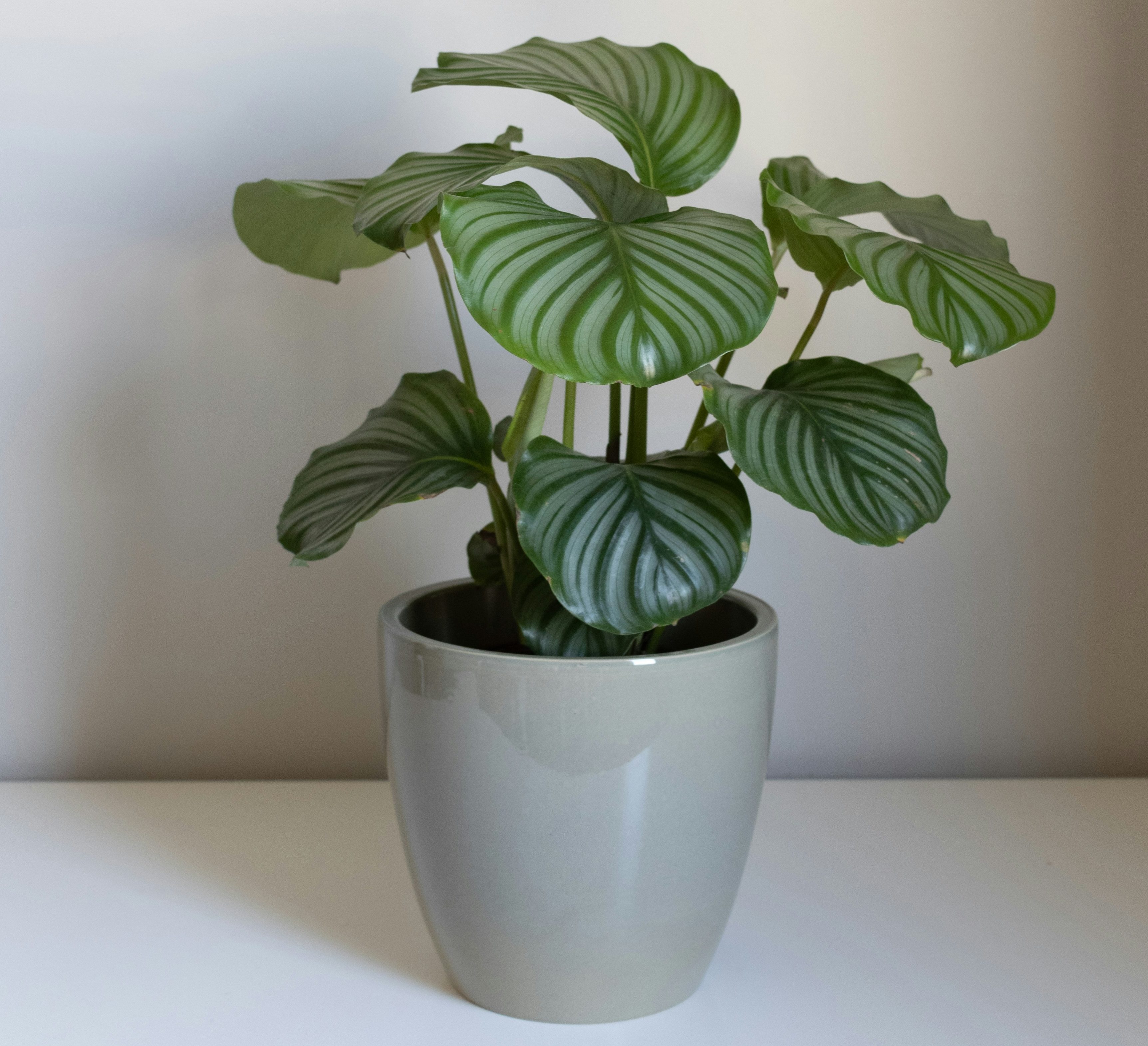
Unlike flowering houseplants that rely on colourful blooms for their appeal, Calathea orbifolia captures attention through its foliage alone. Its large, rounded leaves display elegant bands of silver and green that seem almost hand-painted, creating a sense of quiet sophistication. The plant’s beauty is subtle yet captivating, encouraging closer observation rather than demanding immediate attention.
Like many members of the prayer plant family, its leaves respond to changing light throughout the day. As evening approaches, they gradually lift into a more upright position before lowering again with the return of daylight. This daily movement gives the plant a quiet rhythm, reminding us that even within our homes, plants continue to respond to the natural cycles of day and night.
Over time, the Prayer Plant becomes more than an ornamental feature. Its steady growth and gentle movements invite a slower way of noticing the living world, bringing a sense of calm into everyday spaces.
Appearance & Growth Habit
Prayer Plant forms a compact clump of lush foliage that emerges directly from underground rhizomes. Mature plants generally reach between 60 and 90 centimetres in height and spread, creating a full, rounded appearance that suits both large containers and decorative indoor displays.
The leaves are among the largest of the commonly cultivated calatheas. Broad, oval, and softly arching, they possess a velvety texture and a distinctive pattern of alternating silver and deep green stripes that follow the natural veins of the leaf. The undersides are typically a soft green, complementing the refined colouring above.
Each new leaf emerges tightly rolled before slowly unfurling over several days. This gradual process is one of the plant’s most rewarding features, revealing intricate patterns as the leaf expands to its full size.
Flowering is uncommon indoors and generally insignificant compared with the ornamental value of the foliage. Instead, the plant’s appeal lies in the continual production of fresh leaves, each contributing to the layered canopy that becomes increasingly impressive as the plant matures.
Its naturally symmetrical form and generous foliage allow it to soften interiors while creating an atmosphere of quiet elegance.
Growing Conditions
Prayer Plant thrives in conditions that reflect its tropical forest origins. Bright, indirect light is ideal, allowing the foliage to develop strong colouring without the risk of scorching. Direct sunlight should generally be avoided, as prolonged exposure may fade or damage the delicate leaves.
A well-drained, moisture-retentive potting mix rich in organic matter provides the best growing medium. The soil should remain evenly moist without becoming waterlogged, as prolonged saturation may damage the roots.
Humidity is particularly important for this species. Higher humidity levels help prevent leaf edges from browning and support the development of healthy new foliage. Bathrooms, kitchens, or rooms with additional humidity often provide favourable environments.
The plant performs best in warm temperatures between 18°C and 27°C and should be protected from cold draughts, sudden temperature changes, and dry air produced by heating or cooling systems.
Providing stable growing conditions allows the plant to establish a steady rhythm of growth, producing healthy foliage throughout much of the year.
Care & Maintenance
Prayer Plant benefits from consistent, attentive care rather than frequent intervention. Watering should keep the potting mix lightly moist while allowing excess water to drain freely. Rainwater or filtered water is often preferred where tap water contains high levels of minerals, as the leaves can be sensitive to accumulated salts and chemicals.
During spring and summer, feeding every four to six weeks with a balanced liquid fertiliser at half strength supports healthy foliage development. Fertiliser should be reduced during autumn and winter as growth naturally slows.
Dust occasionally settles on the broad leaves and can be gently removed with a soft, damp cloth. This not only enhances the plant’s appearance but also allows the foliage to make the most of available light.
Repotting every two or three years provides fresh growing medium and an opportunity to divide larger clumps if desired. Propagation by division is the most reliable method and allows mature plants to be shared or expanded into additional displays.
Prayer Plant is generally healthy when grown under suitable conditions, although spider mites may occasionally appear where humidity is consistently low. Regular observation allows potential issues to be addressed before they become significant.
Seasonal Notes
Although indoor environments reduce the extremes of seasonal change, Prayer Plant continues to respond to shifting daylight throughout the year.
Spring often marks the beginning of renewed growth as fresh leaves emerge from the centre of the plant. Their tightly rolled forms gradually unfold, revealing the intricate silver and green patterns that distinguish the species.
Summer is usually the period of strongest growth. Warm temperatures and longer days encourage the production of larger leaves, while the daily movement of the foliage becomes particularly noticeable in favourable conditions.
Autumn introduces a more measured pace. The plant continues to maintain its lush appearance, although new growth may become less frequent as daylight hours shorten.
Winter is a season of quiet stability. While growth slows, the broad patterned leaves continue to bring colour and texture indoors. Watching the foliage gently lift each evening offers a subtle reminder that the rhythms of the natural world continue, even within the shelter of our homes.
Uses
Prayer Plant is valued primarily as a premium indoor foliage plant, bringing texture, pattern, and softness to homes, offices, studios, and other interior spaces. Its broad leaves create a natural focal point while complementing both contemporary and traditional interiors.
The plant is particularly effective in living rooms, bedrooms, reading corners, and home offices where its graceful form can be appreciated at close range. It combines beautifully with other tropical houseplants, adding contrast through its distinctive rounded foliage and silvery markings.
Prayer Plant is also widely recognised as one of the indoor plants associated with air purification, following research demonstrating that certain houseplants can remove selected airborne compounds under controlled conditions. While individual plants have only a modest effect on the air quality of a typical home, incorporating healthy houseplants into indoor spaces can contribute to a fresher, more welcoming environment while strengthening our everyday connection with nature.
Beyond its ornamental qualities, the plant offers a gentle sense of movement that few houseplants possess. The gradual lifting and lowering of its leaves often goes unnoticed until it becomes part of a familiar daily rhythm. In time, these quiet changes encourage a slower way of looking, reminding us that even the stillness of an indoor space is filled with subtle signs of life for those willing to notice them.