Portuguese Laurel
Prunus lusitanica
Plant Overview
Portuguese Laurel (Prunus lusitanica) is an elegant evergreen shrub or small tree valued for its refined appearance, year-round structure, and adaptability. Native to Portugal, Spain, Morocco, and parts of southwestern Europe, it has become a highly regarded ornamental plant in gardens where evergreen presence and architectural form are desired.
While often used as a screening or hedging plant, Portuguese Laurel possesses a level of elegance that distinguishes it from many other evergreen shrubs. Its smaller, glossy leaves, rich red stems, and graceful growth habit create a more delicate and sophisticated appearance than many traditional hedging species. As a result, it functions equally well as a formal hedge, specimen shrub, or small ornamental tree.
One of the plant’s greatest strengths is its ability to provide structure without dominating the landscape. Throughout the seasons, it quietly anchors the garden, creating a backdrop against which flowering plants, ornamental grasses, and seasonal displays can shine. Its evergreen foliage brings continuity and balance, particularly during winter when many deciduous plants have retreated from view.
Portuguese Laurel reminds us that gardens are not built solely on moments of colour and spectacle. They also rely upon dependable plants that provide shelter, form, and permanence. In this role, it performs beautifully, contributing both practical value and understated beauty.
Appearance & Growth Habit
Portuguese Laurel develops as a dense evergreen shrub or small tree with a naturally upright and graceful habit. Mature plants can reach between 4 and 8 metres in height if left unpruned, although they are often maintained at smaller dimensions when used as hedging or screening plants.
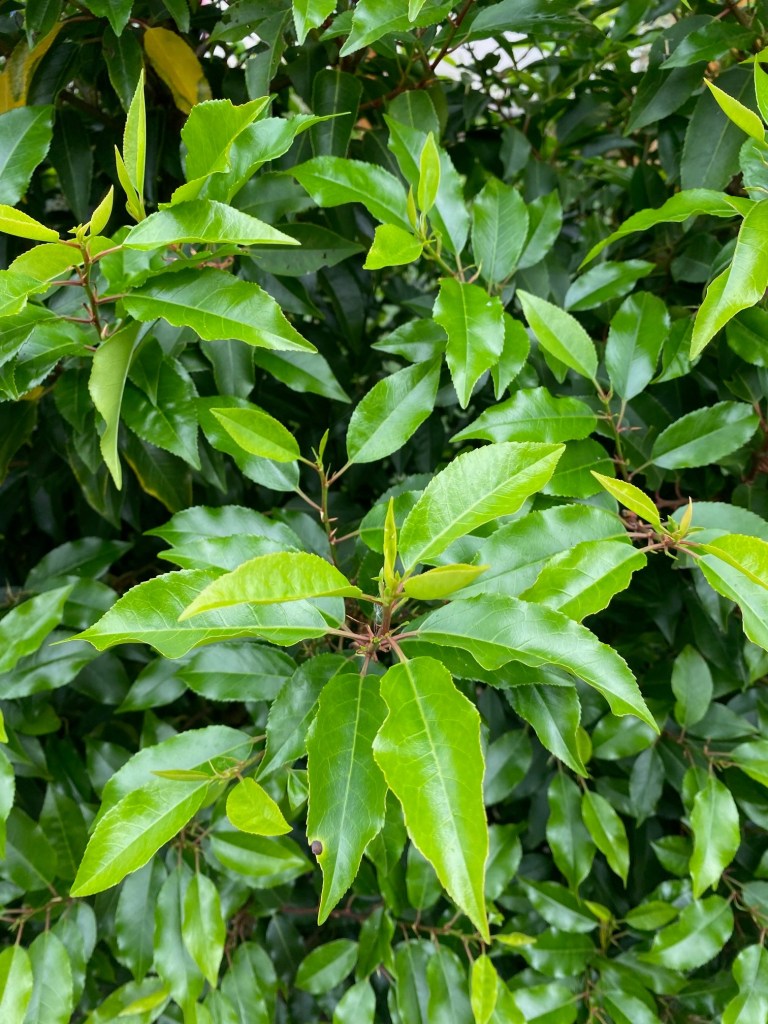
The foliage is one of its defining characteristics. Leaves are smaller and finer than those of Cherry Laurel, typically measuring between 7 and 12 centimetres in length. They are glossy, dark green, and slightly pointed, creating a refined texture that remains attractive throughout the year.
The young stems provide additional ornamental interest. Rich burgundy to deep red in colour, they create a striking contrast against the dark green foliage and are particularly noticeable during periods of active growth.
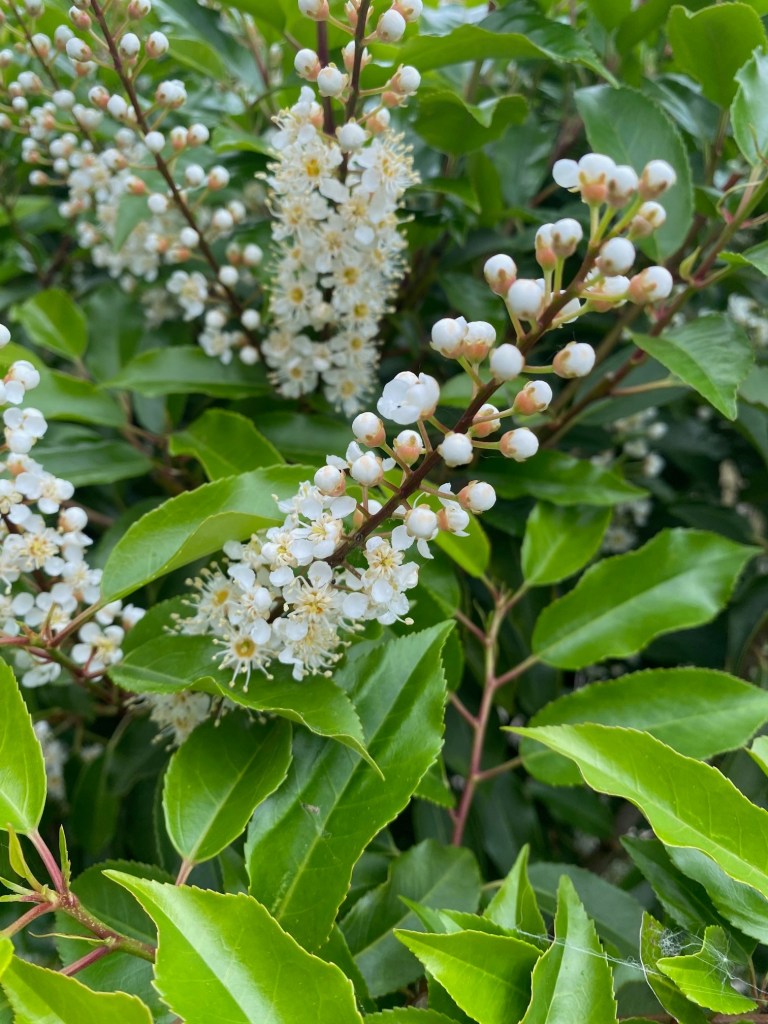
In late spring to early summer, Portuguese Laurel produces elegant clusters of small white flowers. These flowers are borne on slender upright racemes and carry a delicate fragrance that attracts bees and other pollinating insects. Although subtle compared to many flowering shrubs, they add an additional layer of seasonal interest.
Following flowering, small berries develop and gradually ripen from red to dark purple-black. These fruits are particularly attractive to birds and contribute to the plant’s wildlife value.
The overall impression is one of balance and refinement. Portuguese Laurel combines ornamental foliage, attractive stems, delicate flowers, and graceful structure in a way that feels both natural and sophisticated.
Growing Conditions
Portuguese Laurel is a remarkably adaptable plant that performs well across a range of growing conditions. It thrives in full sun or partial shade and is particularly effective in locations where some shelter is provided from harsh, drying winds.
The plant prefers fertile, well-drained soil enriched with organic matter but is tolerant of a variety of soil types, including clay, loam, and sandy soils. Good drainage is important, as prolonged waterlogging can affect root health and overall vigour.
Once established, Portuguese Laurel demonstrates good drought tolerance, making it a reliable choice for gardens that experience occasional dry periods. However, regular moisture during establishment encourages strong root development and healthy growth.
It is also tolerant of coastal conditions, urban environments, and moderate levels of air pollution, allowing it to perform successfully in a wide variety of landscapes. This resilience, combined with its ornamental qualities, contributes significantly to its popularity among gardeners and landscape designers.
Care & Maintenance
Portuguese Laurel is generally straightforward to maintain and rewards gardeners with reliable year-round performance. During the establishment phase, regular watering is important to support root development. Mature plants require relatively little supplemental irrigation except during prolonged drought.
Annual mulching with compost or well-rotted organic matter helps retain soil moisture, improve soil structure, and support healthy growth. Feeding is rarely essential in fertile soils, although a balanced fertiliser applied in spring can encourage vigorous new growth if required.
Pruning is often undertaken to maintain shape and density, particularly when the plant is grown as a hedge. Portuguese Laurel responds well to trimming and can be maintained as a formal screen or allowed to develop into a more natural form. Light pruning after flowering is generally sufficient for most situations.
Unlike some evergreen hedging plants, Portuguese Laurel tends to maintain an attractive appearance even with relatively minimal intervention. Its naturally elegant growth habit often requires less shaping than gardeners initially expect.
The plant is generally resilient to pests and diseases, particularly when grown in suitable conditions with adequate airflow and drainage.
Seasonal Notes
Portuguese Laurel offers interest throughout the year, although its seasonal changes are often subtle and best appreciated through careful observation.
Spring brings fresh new growth accompanied by the emergence of rich red stems that contrast beautifully with mature foliage. This period of renewal adds colour and vitality to the evergreen framework.
Late spring and early summer introduce clusters of fragrant white flowers. Pollinators are often attracted to these blooms, bringing movement and activity into the garden.
Summer highlights the plant’s dense foliage and structural qualities. Its glossy leaves create an attractive backdrop for flowering perennials and shrubs while providing shelter and enclosure within the landscape.
Autumn sees the development and ripening of berries, which attract birds and contribute to the garden’s ecological value. The evergreen foliage remains vibrant as surrounding deciduous plants begin their seasonal transformation.
Winter reveals the enduring importance of the plant’s structure. Its dark green foliage, elegant branching, and colourful stems provide continuity and visual stability during the quieter months of the gardening year.
Uses
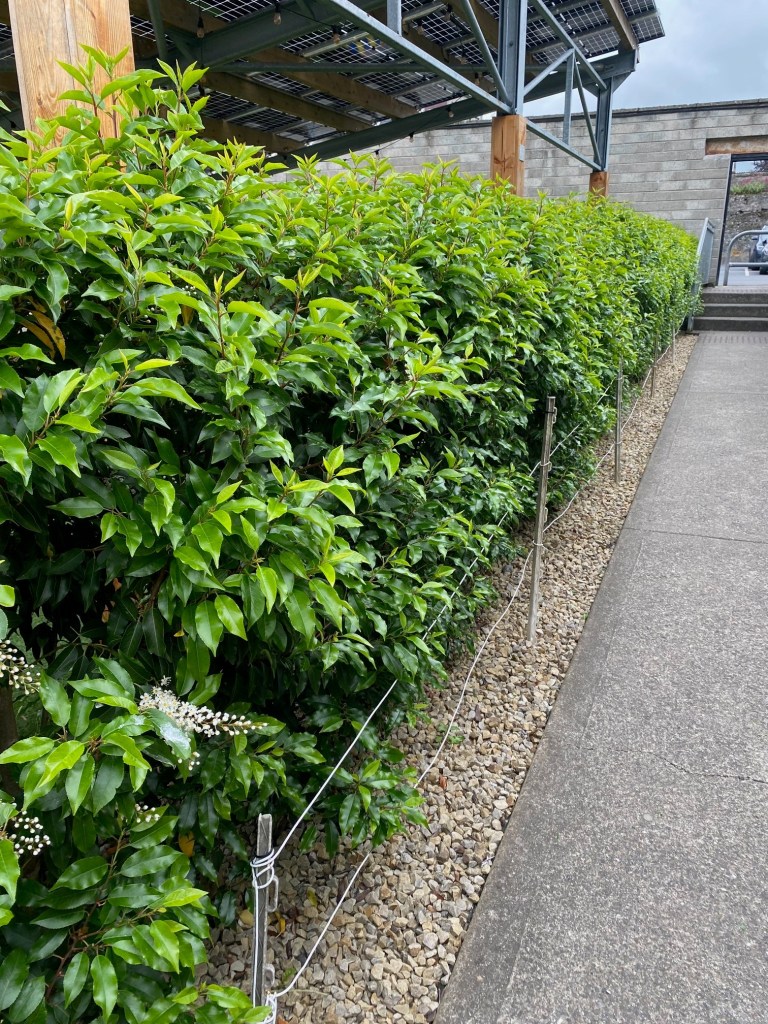
Portuguese Laurel is most commonly used as a screening or hedging plant, where its dense evergreen growth creates privacy and shelter without appearing heavy or overpowering. Its refined foliage often makes it a preferred alternative to larger-leaved screening plants.
As a specimen shrub or small tree, it can provide year-round structure within mixed borders, woodland gardens, and larger landscape plantings. The combination of glossy foliage and burgundy stems creates visual interest even when flowers are absent.
The plant is particularly effective in formal gardens where clipped hedges help define spaces and establish strong design lines. Equally, it works beautifully in more naturalistic settings where its graceful habit can develop with minimal intervention.
Its flowers support pollinating insects, while the berries provide food for birds, allowing Portuguese Laurel to contribute to biodiversity as well as ornamental design.
For Garden Lovers Collective, Portuguese Laurel represents the value of subtle beauty. It demonstrates that a garden’s character is often shaped not only by dramatic seasonal displays but also by those plants that quietly provide structure, shelter, and continuity. By noticing these contributions, we deepen our understanding of how gardens function as living systems and learn to appreciate the many different forms beauty can take throughout the year.