Peace Lily
Spathiphyllum wallisii

Plant Overview
The Peace Lily (Spathiphyllum wallisii) is one of the world’s most recognisable indoor plants, admired for its elegant white blooms, glossy green foliage, and remarkable adaptability. Native to the tropical rainforests of Central and South America, it naturally grows beneath the forest canopy where filtered light, warm temperatures, and consistent moisture create ideal growing conditions. These natural preferences have made it exceptionally well suited to life indoors, where it has become a favourite houseplant in homes, workplaces, and public spaces across the globe.
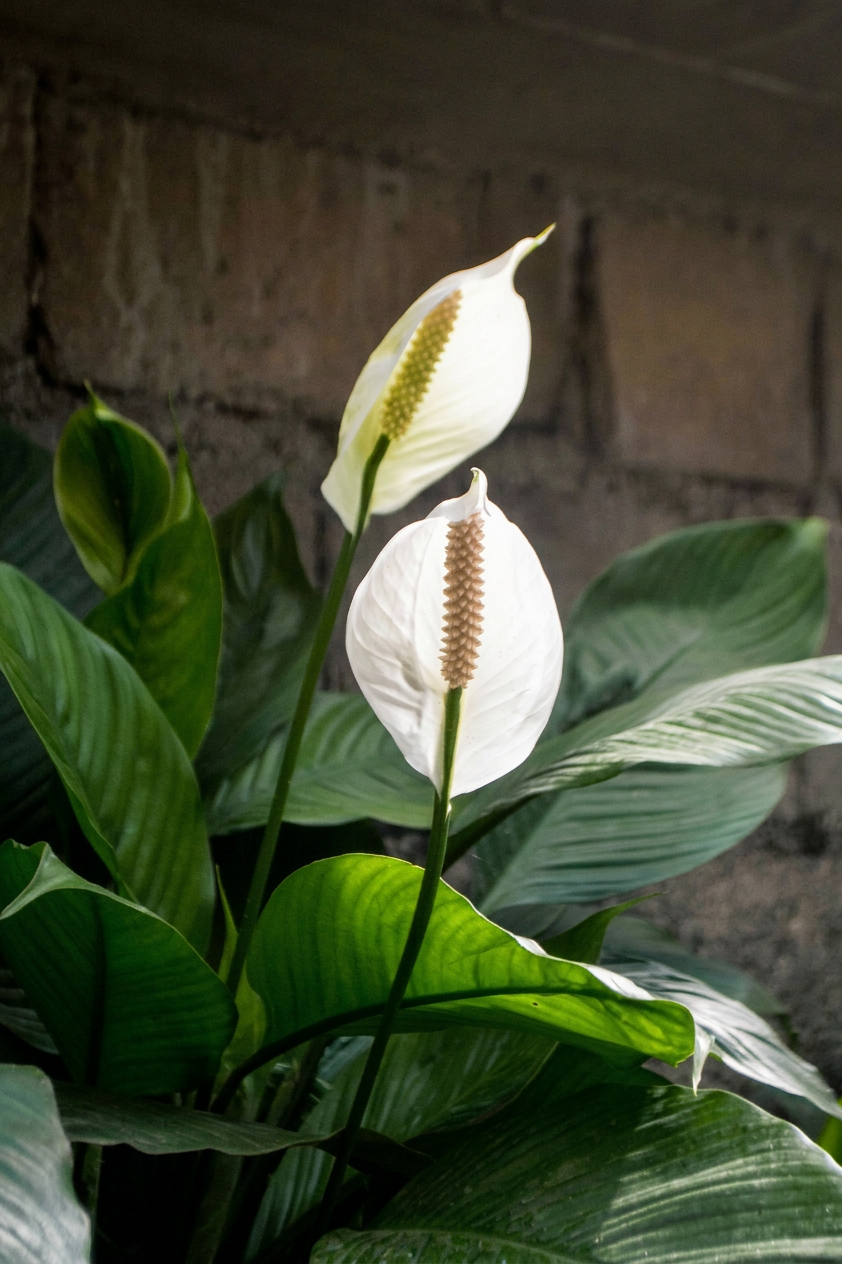
Despite its common name, the Peace Lily is not a true lily. It belongs to the arum family (Araceae), sharing close botanical relationships with plants such as Anthuriums and Philodendrons. Its distinctive white “flower” is actually a modified leaf known as a spathe, which surrounds a central flowering spike called a spadix. Together they create one of the most elegant floral displays found among foliage plants.
The Peace Lily offers more than ornamental beauty. Its calm appearance, graceful form, and dependable nature have made it a symbol of tranquillity and renewal. Whether placed in a quiet reading corner, an office, or a living room, it introduces a gentle presence that encourages stillness and reflection.
Appearance & Growth Habit
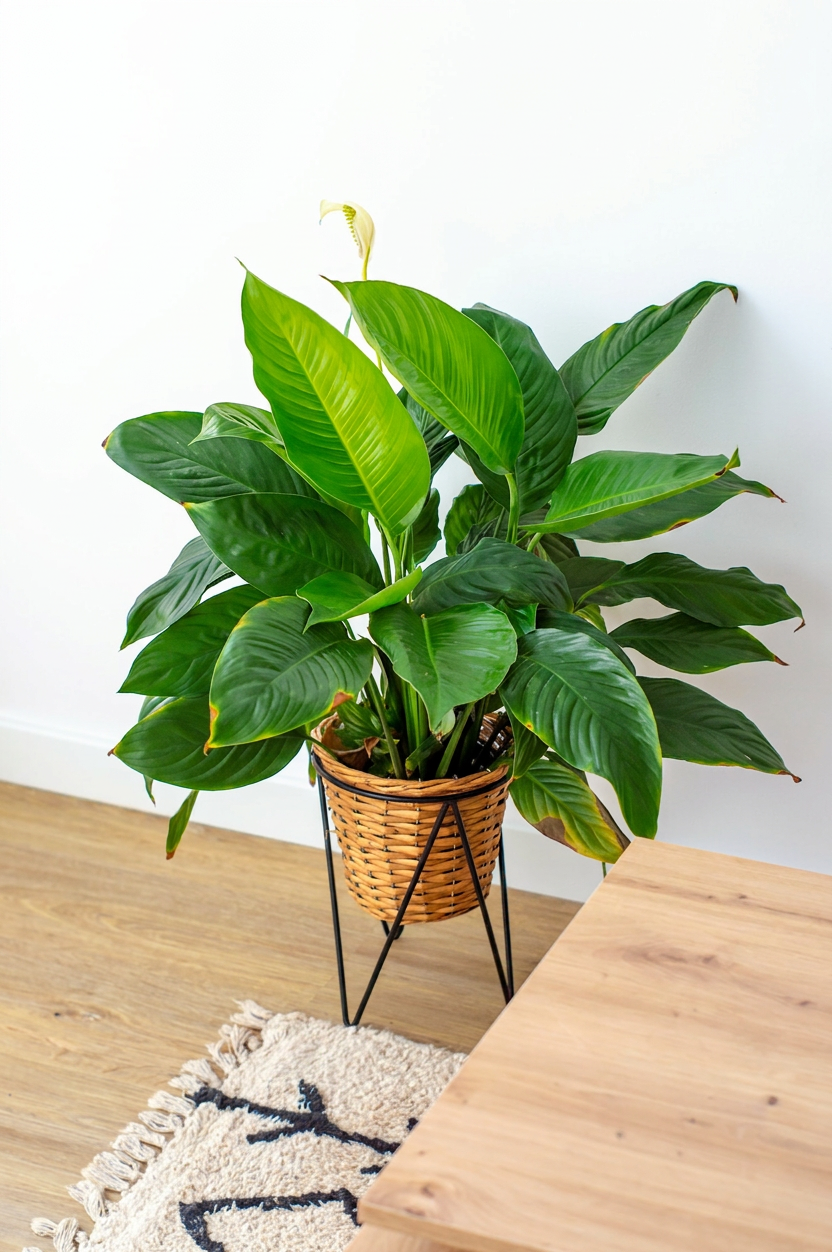
Peace Lily forms an attractive clump of lush, upright foliage emerging directly from the base of the plant. Mature specimens typically grow between 30 and 90 centimetres in height, depending on the cultivar, creating a compact yet elegant form suitable for a wide range of indoor settings.
The leaves are large, lance-shaped, and rich glossy green, with gently arching stems that create a soft, fountain-like appearance. Prominent veins add texture to the foliage, while the polished surface reflects available light, giving the plant a fresh and vibrant appearance throughout the year.
The flowering display is both distinctive and understated. Creamy-white spathes rise above the foliage on slender stems, surrounding the upright spadix that carries the tiny true flowers. As the blooms mature, the white spathes gradually fade to pale green before eventually returning nutrients to the plant. Even after flowering, the elegant foliage continues to provide year-round ornamental value.
The plant’s naturally balanced growth habit allows it to sit comfortably in both modern and traditional interiors. Its uncluttered form contributes a sense of calm, making it particularly effective in spaces designed for relaxation, concentration, or quiet reflection
Growing Conditions
Peace Lilies thrive in warm indoor environments that resemble the filtered light conditions of tropical forests. Bright, indirect light produces the strongest growth and most reliable flowering, although the plant is also well known for its ability to tolerate lower light conditions. Direct sunlight should generally be avoided, as it can scorch the foliage and fade the rich green colour of the leaves.
The ideal growing medium is well-drained, moisture-retentive, and rich in organic matter. A quality indoor potting mix that provides both drainage and moisture retention supports healthy root development while reducing the risk of water-logging.
Consistent moisture is important, but the soil should never remain saturated. Peace Lilies appreciate evenly moist conditions and often provide a helpful visual cue when water is needed, as the leaves will gently droop before quickly recovering after watering. This characteristic has made the plant popular among beginners learning to understand plant care.
Warm temperatures between 18°C and 27°C suit the plant well, while higher humidity encourages lush foliage and healthy flowering. Bathrooms, kitchens, or rooms with naturally elevated humidity can provide particularly favourable conditions.
Care & Maintenance
Peace Lilies are valued for their relatively simple care requirements, making them suitable for both experienced gardeners and those new to indoor plants. Regular watering is important, allowing the upper layer of soil to dry slightly between waterings while avoiding complete drying of the potting mix.
Dust can accumulate on the broad leaves over time, reducing both their appearance and ability to photosynthesise efficiently. Gently wiping the foliage with a soft, damp cloth helps maintain the plant’s glossy finish and supports healthy growth.
During spring and summer, a balanced liquid fertiliser applied at half strength every four to six weeks encourages vigorous foliage and repeated flowering. Feeding should be reduced during autumn and winter when growth naturally slows.
Spent flowers can be removed by cutting the flowering stem back to the base once the spathe begins to fade. Older leaves may also be removed as needed to maintain a tidy appearance and encourage fresh growth.
Peace Lilies are generally resilient but may occasionally experience issues such as brown leaf tips from low humidity or inconsistent watering. Maintaining stable growing conditions usually prevents most problems.
It is important to note that all parts of the plant contain calcium oxalate crystals and should be kept away from pets and young children, as ingestion may cause irritation.
Seasonal Notes
Although commonly regarded as an indoor plant with year-round appeal, the Peace Lily still follows gentle seasonal rhythms. Spring often brings renewed vigour as fresh leaves emerge and flower buds begin to develop in response to increasing light levels.
Summer is typically the most active growing period. Healthy plants may produce multiple blooms, while the glossy foliage reaches its fullest and most vibrant appearance. Regular watering and feeding during this time support continued growth.
Autumn introduces a gradual slowing of development. Flower production may become less frequent, but the plant retains its rich evergreen foliage, continuing to contribute colour and life to indoor spaces.
Winter offers an opportunity to appreciate the Peace Lily’s enduring presence. While growth slows, its elegant leaves maintain a connection with nature during a season when outdoor gardens may appear quiet. Observing these subtle seasonal changes encourages awareness that even indoor plants respond to the changing rhythm of the year.
Uses
Peace Lilies are among the most versatile indoor plants, suitable for homes, offices, reception areas, libraries, healthcare settings, and other interior spaces where a calming natural presence is desired. Their compact growth habit allows them to thrive on tables, shelves, plant stands, and floors depending on the cultivar.
Their graceful appearance complements a wide variety of interior styles, from contemporary minimalist spaces to traditional homes filled with natural materials. The glossy foliage provides year-round greenery, while the white blooms offer moments of quiet elegance without overwhelming the surrounding environment.
Peace Lilies are also popular in therapeutic and wellbeing-focused settings. Their lush foliage and steady growth create opportunities for nurturing, observation, and routine, all of which can foster a stronger sense of connection with the natural world. Caring for an indoor plant, even through simple acts such as watering or removing spent flowers, can encourage mindfulness and provide moments of calm within busy daily life.