Fruit Salad Plant
Monstera deliciosa
Plant Overview
The Fruit Salad Plant (Monstera deliciosa) is one of the world’s most recognisable tropical indoor houseplants, admired for its dramatic foliage, vigorous growth, and unmistakable character. Native to the tropical rainforests of southern Mexico and Central America, it naturally climbs through the forest understory, using aerial roots to ascend tree trunks in search of filtered sunlight. This climbing habit, combined with its remarkable leaves, has made it one of the defining plants of indoor gardening.
Its common name comes from the edible fruit produced by mature plants in their natural habitat. When fully ripe, the fruit is said to possess a flavour reminiscent of a blend of tropical fruits, giving rise to the name “Fruit Salad Plant.” Indoors, however, flowering and fruiting are uncommon, and the plant is grown almost entirely for its spectacular foliage.
There is an unmistakable confidence about Monstera deliciosa. Its large leaves and generous growth create a strong presence within a room, yet its tropical origins lend it a softness that prevents it from feeling overwhelming. Given time, it develops into a living sculpture, with each new leaf adding another layer of texture and complexity.
Watching a young plant mature is one of its greatest pleasures. The leaves gradually increase in size and begin to develop the natural splits and openings that have become synonymous with the species. These changes occur slowly, rewarding patience and careful observation rather than immediate results.
Appearance & Growth Habit
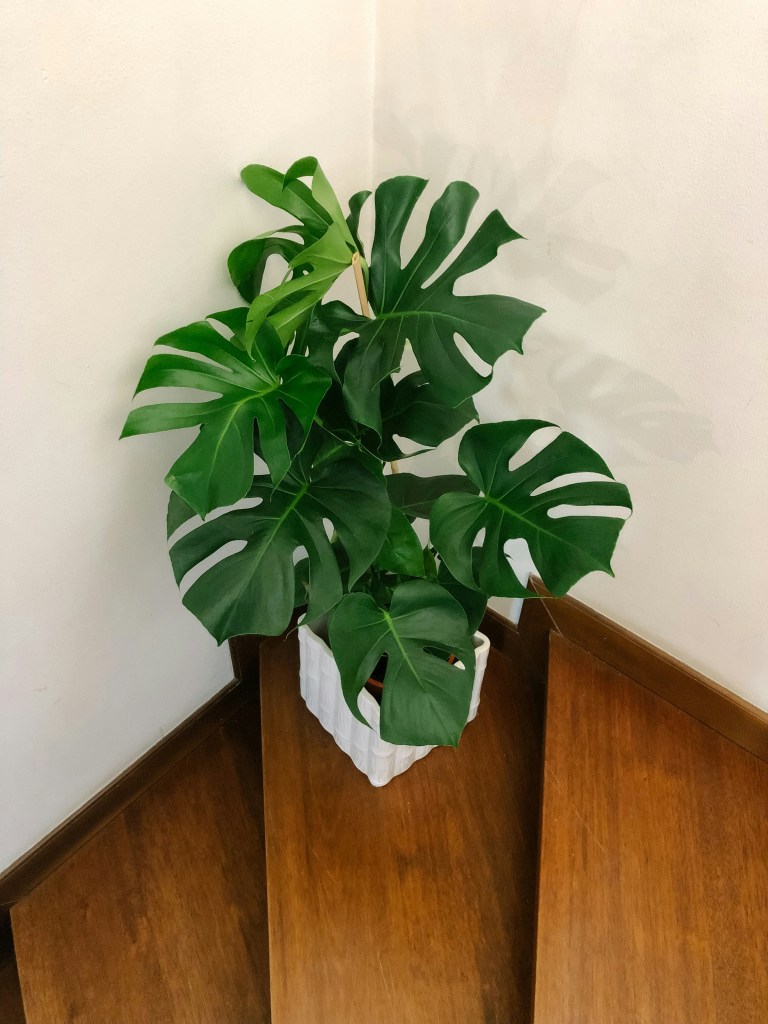
Fruit Salad Plant is a vigorous evergreen climber that produces long, flexible stems supported by thick aerial roots. Indoors, mature plants commonly reach between 2 and 3 metres in height when grown with a moss pole or other climbing support, while trailing stems may extend even further if left unsupported.
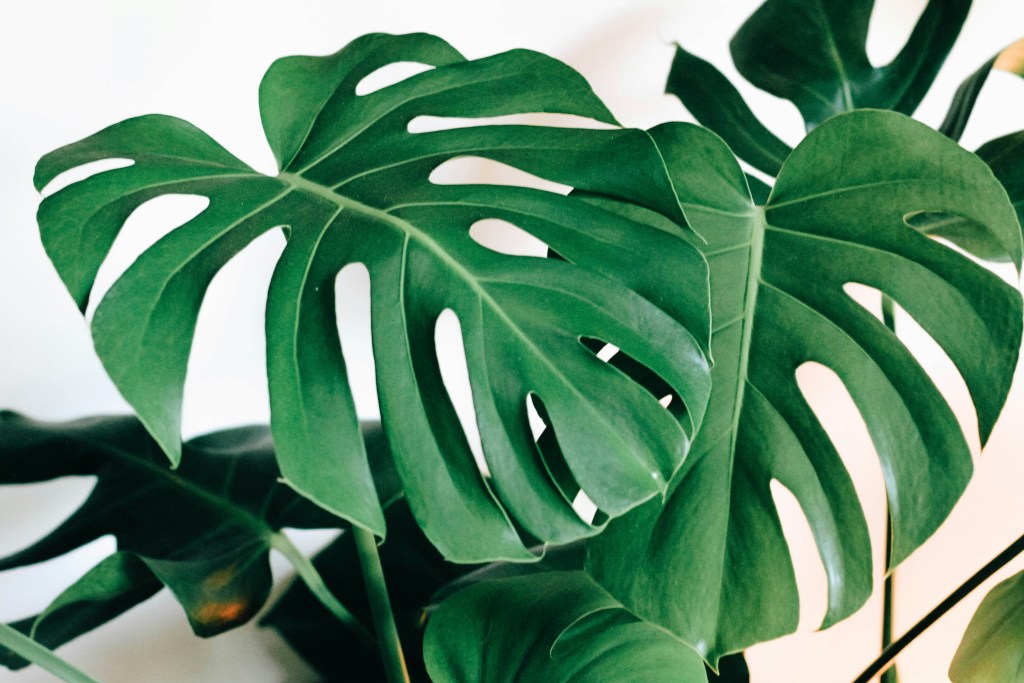
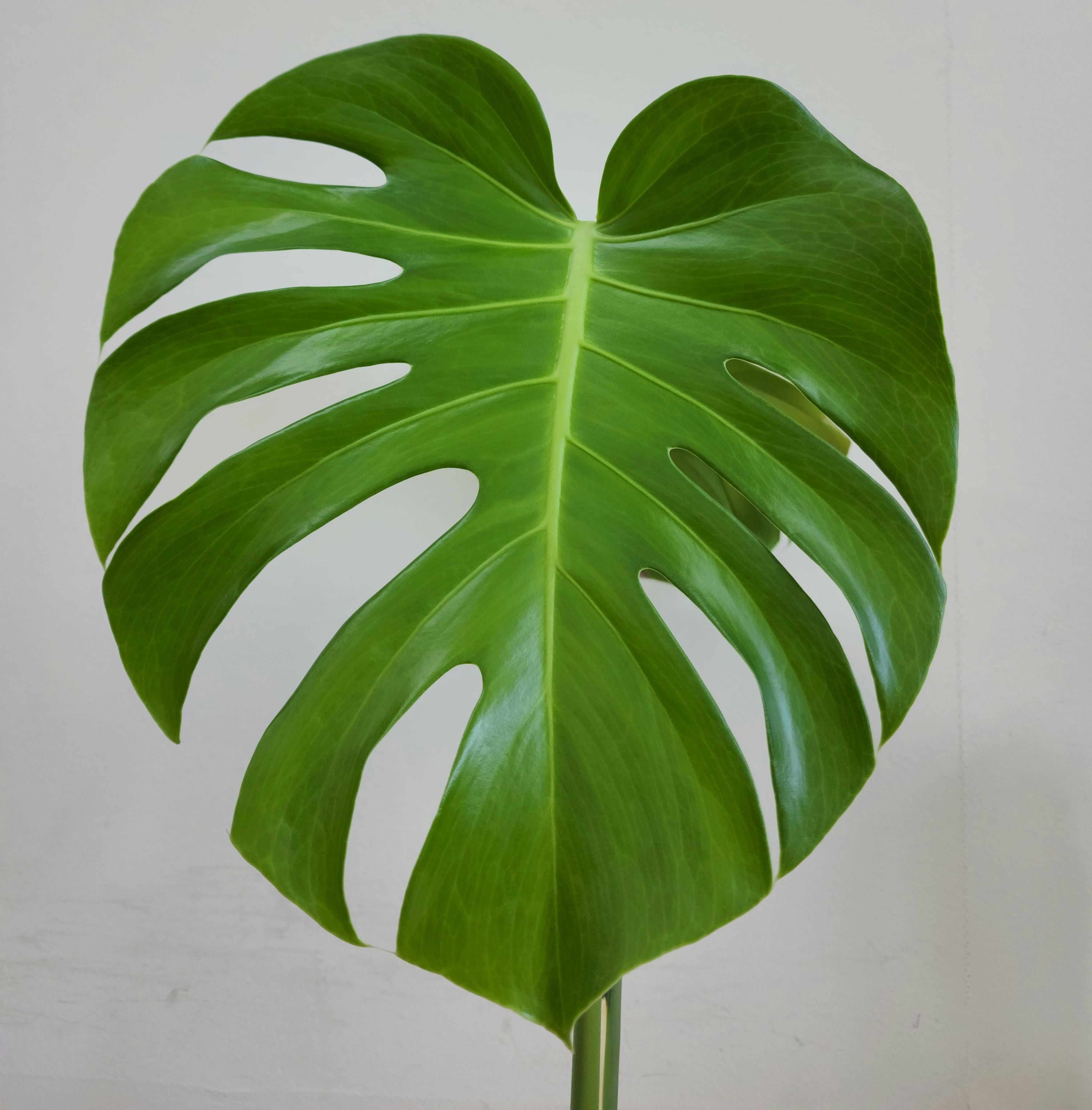
The foliage is the defining feature of the plant. Young leaves emerge as smooth, heart-shaped blades before gradually developing the distinctive splits and perforations that characterise mature specimens. These natural openings, known as fenestrations, allow filtered light and rainfall to pass through the canopy in the plant’s rainforest habitat while also helping the large leaves withstand tropical winds.
Individual leaves can grow remarkably large, often exceeding 50 centimetres in length on well-established indoor plants. Their rich green colour and glossy surface create a bold, lush appearance that immediately evokes the atmosphere of a tropical forest.
Thick aerial roots emerge naturally from the stems and seek surfaces to climb or anchor against. These roots are an important part of the plant’s growth habit and contribute to its distinctive appearance.
Flowering indoors is uncommon, although mature plants in ideal conditions may occasionally produce creamy-white spathes surrounding a central flowering spike. Fruit development is extremely rare in houseplants and requires considerable time to mature safely.
Growing Conditions
As a tropical indoor houseplant, Fruit Salad Plant thrives in bright, indirect light similar to the filtered conditions beneath a rainforest canopy. Bright positions encourage vigorous growth and the development of larger leaves with more pronounced fenestrations, while prolonged direct sunlight may scorch the foliage.
The plant grows best in a rich, free-draining potting mix containing organic matter that retains moisture while allowing excellent drainage. Healthy roots depend on consistent moisture without prolonged waterlogging.
Warm temperatures between 18°C and 30°C provide ideal growing conditions. Moderate to high humidity supports healthy foliage and encourages larger leaf development, although the plant adapts well to average household humidity once established.
Providing a sturdy moss pole, coir pole, or other vertical support allows the plant to express its natural climbing habit. Plants grown vertically often produce significantly larger and more mature foliage than those left to trail.
Care & Maintenance
Fruit Salad Plant is generally easy to care for once its basic needs are understood. Water thoroughly when the upper few centimetres of the potting mix become dry, allowing excess water to drain freely. Consistently saturated soil should be avoided, as it may lead to root problems.
During spring and summer, feeding every four weeks with a balanced liquid fertiliser encourages steady growth and healthy foliage. Fertiliser can be reduced during the cooler months when development naturally slows.
The broad leaves benefit from occasional cleaning with a soft, damp cloth to remove dust and maintain their glossy appearance. Clean foliage also allows the plant to make better use of available light.
As the plant matures, aerial roots may be guided towards the moss pole or allowed to grow naturally. These roots should not be removed unless absolutely necessary, as they contribute to the plant’s stability and moisture uptake.
Propagation is straightforward through stem cuttings containing at least one node and aerial root. Given suitable conditions, these cuttings readily develop into new plants.
Like many members of the arum family, Monstera deliciosa contains calcium oxalate crystals and should be kept away from pets and young children, as ingestion may cause irritation.
Seasonal Notes
Although grown indoors, Fruit Salad Plant responds noticeably to the changing seasons.
Spring often marks the beginning of renewed growth. New leaves emerge tightly rolled before gradually unfurling over several days, revealing their characteristic shape as they mature.
Summer is the period of strongest development. Healthy plants may produce several new leaves, each becoming progressively larger as the plant establishes itself. The appearance of additional splits and perforations often reflects the plant’s increasing maturity rather than simply its age.
Autumn brings a gentler pace of growth as natural daylight begins to decline. Existing foliage remains lush and attractive while the production of new leaves slows.
Winter is a period of quiet stability. Although little active growth may occur, the bold evergreen leaves continue to bring a tropical character indoors. Even during this quieter season, subtle changes in leaf orientation and the gradual expansion of developing foliage reward those who take time to notice them.
Uses
Fruit Salad Plant is one of the most popular tropical indoor houseplants for creating bold, leafy displays within homes, offices, studios, conservatories, and commercial interiors. Its dramatic foliage makes it an ideal feature plant, particularly where space allows its natural form to develop.
The large sculptural leaves introduce texture, movement, and a strong connection to tropical landscapes, pairing beautifully with natural timber, woven fibres, stone, and contemporary architectural interiors. When trained onto a moss pole, the plant develops into an impressive vertical specimen that brings height as well as foliage to a room.
Fruit Salad Plant is also recognised as one of the indoor foliage plants that have been studied for their ability to remove selected airborne compounds under controlled conditions. While individual plants have only a modest influence on the air quality of a typical home, incorporating healthy tropical houseplants into indoor environments can contribute to a fresher, more welcoming atmosphere while strengthening our everyday connection with nature.