MARIGOLD
Tegetes spp.

Plant Overview
Marigolds are widely used in ornamental planting schemes, edible gardens, container displays, and pollinator-friendly spaces where long-lasting seasonal colour is desired. Their bright flowers pair well with vegetables, herbs, grasses, and flowering annuals, helping soften productive gardens while encouraging beneficial insect activity.
In kitchen gardens, marigolds are commonly planted alongside tomatoes, beans, and herbs as companion plants to support biodiversity and seasonal interest. Their flowers are also valued for attracting pollinators such as bees and hoverflies into the garden during the warmer months.
Beyond their practical uses, marigolds often contribute a sense of warmth, vibrancy, and seasonal energy within outdoor spaces. Their long flowering period and uncomplicated growing nature make them especially suitable for gardeners seeking reliable colour and accessible planting experiences throughout summer and early autumn.
Appearance & Growth Habit
Marigolds typically form compact, bushy plants with upright stems and finely divided aromatic foliage. Depending on the variety, plants may range from smaller edging forms around 20 centimetres in height to taller varieties exceeding 60 centimetres.
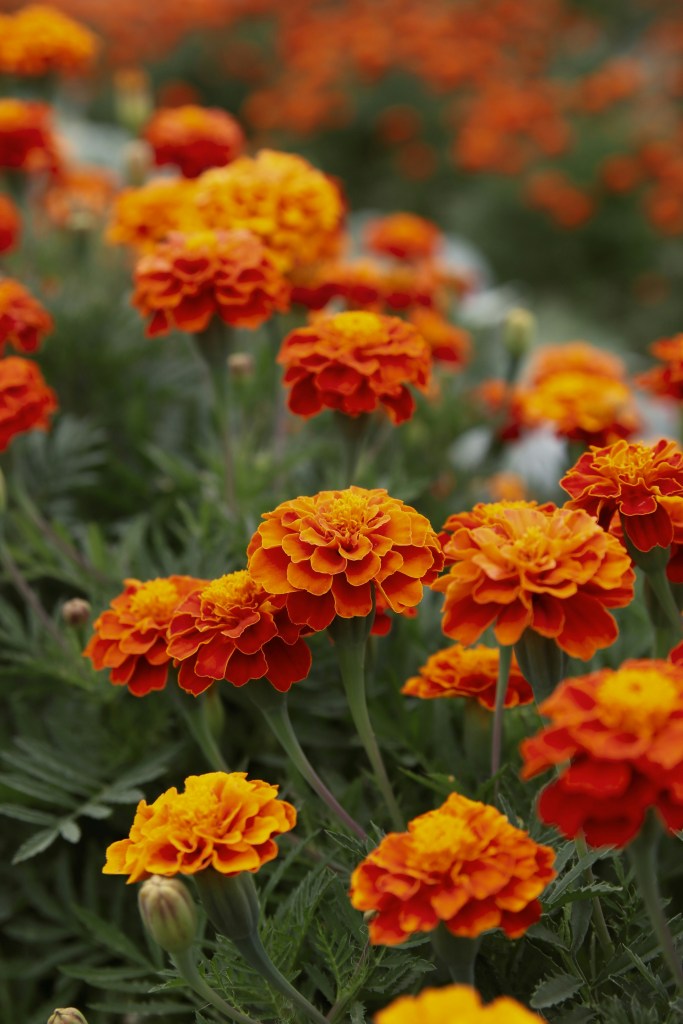
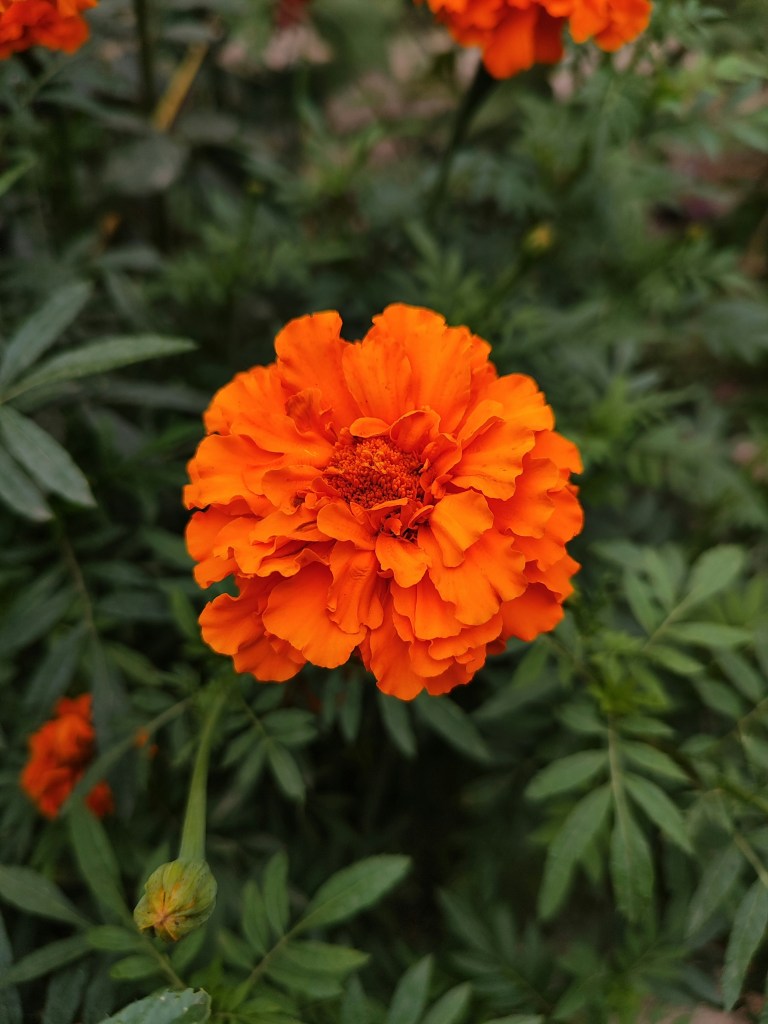
The flowers can be single, semi-double, or densely layered, with blooms appearing continuously throughout the warmer months when regularly deadheaded. Flower colours are most commonly shades of yellow, orange, gold, cream, and deep rust-red, often creating strong visual contrast within planting schemes.
The foliage has a distinctive scent and soft fern-like texture that adds additional interest even when plants are not in flower. Marigolds are generally fast growing and establish quickly from seed, making them useful for seasonal planting and filling gaps within borders or containers.
Their rounded and structured growth habit also makes them suitable for pathways, raised beds, cottage-style gardens, and balcony planting where ongoing colour and simplicity are desired.
Growing Conditions
Marigolds grow best in full sun and perform most reliably when planted in open positions that receive at least six hours of direct sunlight each day. Strong light encourages healthy flowering, compact growth, and improved resilience throughout the growing season.
They prefer well-drained soil and generally adapt well to a range of soil types provided excess moisture is avoided. While marigolds tolerate periods of warmth and dry conditions once established, younger plants benefit from more consistent watering during early growth.
Seeds can be sown directly into the garden after the risk of frost has passed, or started indoors earlier in cooler climates to extend the flowering season. Marigolds are considered warm-season annuals and are sensitive to frost and prolonged cold conditions.
Spacing between plants is important to encourage airflow and reduce overcrowding, particularly in humid conditions where excess moisture may contribute to fungal issues.
Care & Maintenance
Marigolds are generally considered low-maintenance plants and are often recommended for beginner gardeners due to their adaptability and straightforward care requirements.
Regular watering is helpful during dry periods, particularly for container-grown plants, although soil should be allowed to drain freely between watering. Overwatering may lead to reduced flowering or root-related issues in poorly drained conditions.
Deadheading spent flowers throughout the growing season helps encourage continuous blooming and maintains a tidier appearance. Taller varieties may occasionally benefit from light support in exposed or windy locations.
Marigolds typically require minimal feeding, especially when grown in reasonably fertile soil. Excessive fertiliser can encourage leafy growth at the expense of flowers, so moderate feeding is usually sufficient.
As annual plants, marigolds complete their life cycle within one growing season, although many varieties self-seed lightly in suitable conditions and may reappear naturally the following year.
Seasonal Notes
Marigolds are widely used in ornamental planting schemes, edible gardens, container displays, and pollinator-friendly spaces where long-lasting seasonal colour is desired. Their bright flowers pair well with vegetables, herbs, grasses, and flowering annuals, helping soften productive gardens while encouraging beneficial insect activity.
In kitchen gardens, marigolds are commonly planted alongside tomatoes, beans, and herbs as companion plants to support biodiversity and seasonal interest. Their flowers are also valued for attracting pollinators such as bees and hoverflies into the garden during the warmer months.
Beyond their practical uses, marigolds often contribute a sense of warmth, vibrancy, and seasonal energy within outdoor spaces. Their long flowering period and uncomplicated growing nature make them especially suitable for gardeners seeking reliable colour and accessible planting experiences throughout summer and early autumn.
Uses
Marigolds are widely used in ornamental planting schemes, edible gardens, container displays, and pollinator-friendly spaces where long-lasting seasonal colour is desired. Their bright flowers pair well with vegetables, herbs, grasses, and flowering annuals, helping soften productive gardens while encouraging beneficial insect activity.
In kitchen gardens, marigolds are commonly planted alongside tomatoes, beans, and herbs as companion plants to support biodiversity and seasonal interest. Their flowers are also valued for attracting pollinators such as bees and hoverflies into the garden during the warmer months.
Beyond their practical uses, marigolds often contribute a sense of warmth, vibrancy, and seasonal energy within outdoor spaces. Their long flowering period and uncomplicated growing nature make them especially suitable for gardeners seeking reliable colour and accessible planting experiences throughout summer and early autumn.