Lady’s Slipper Orchid
Paphiopedilum spp.

Plant Overview
The Lady’s Slipper Orchid (Paphiopedilum spp.) is one of the most distinctive and intriguing orchids cultivated as a tropical indoor houseplant. Native to the forests of Southeast Asia, southern China, India, and the islands of Indonesia and the Philippines, these orchids grow on the shaded forest floor or among moss-covered rocks where filtered light, consistent moisture, and humid air create a stable environment. Unlike many orchids that grow high in trees, most Paphiopedilum species are terrestrial or lithophytic, developing close to the ground beneath the shelter of the forest canopy.
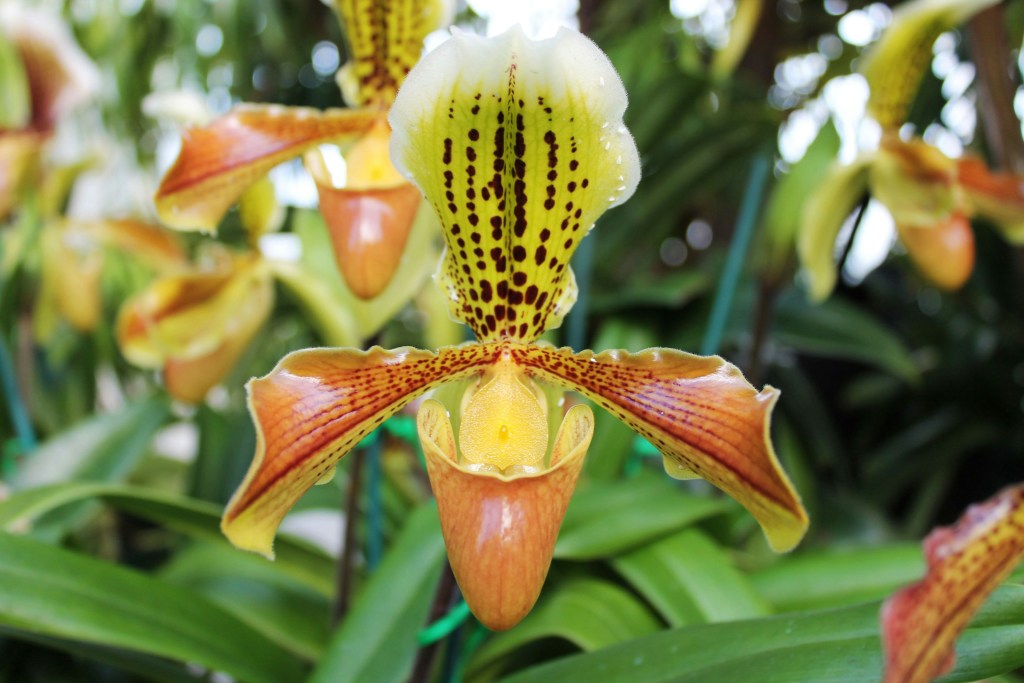
Their remarkable flowers have fascinated gardeners for generations. The inflated pouch that forms the lower petal gives rise to the common name “Lady’s Slipper,” resembling a finely crafted slipper suspended beneath the flower. This unusual structure is more than simply ornamental. In nature, it forms part of a specialised pollination strategy that gently guides visiting insects through the flower, increasing the likelihood of successful pollination.
While the flowers often receive immediate attention, the foliage possesses a quieter beauty of its own. Many species display beautifully mottled leaves patterned in shades of green and silver, allowing the plant to remain attractive even when not in bloom.
Growing a Lady’s Slipper Orchid is an exercise in observation rather than speed. New leaves emerge gradually from the centre of each growth, and flowering arrives only after months of patient development. The plant never appears hurried, revealing its finest qualities only to those willing to notice its slower rhythm.
Appearance & Growth Habit
Lady’s Slipper Orchids are compact evergreen perennials that grow in slowly expanding clumps. Mature plants generally reach between 20 and 45 centimetres in height, making them well suited to indoor cultivation on windowsills, benches, or display shelves.
The leaves emerge in fan-shaped arrangements from short stems at the base of the plant. Depending on the species or hybrid, the foliage may be plain rich green or beautifully marbled with intricate silver and dark green patterns. These markings provide year-round interest and often reflect the shaded woodland habitats from which many species originate.
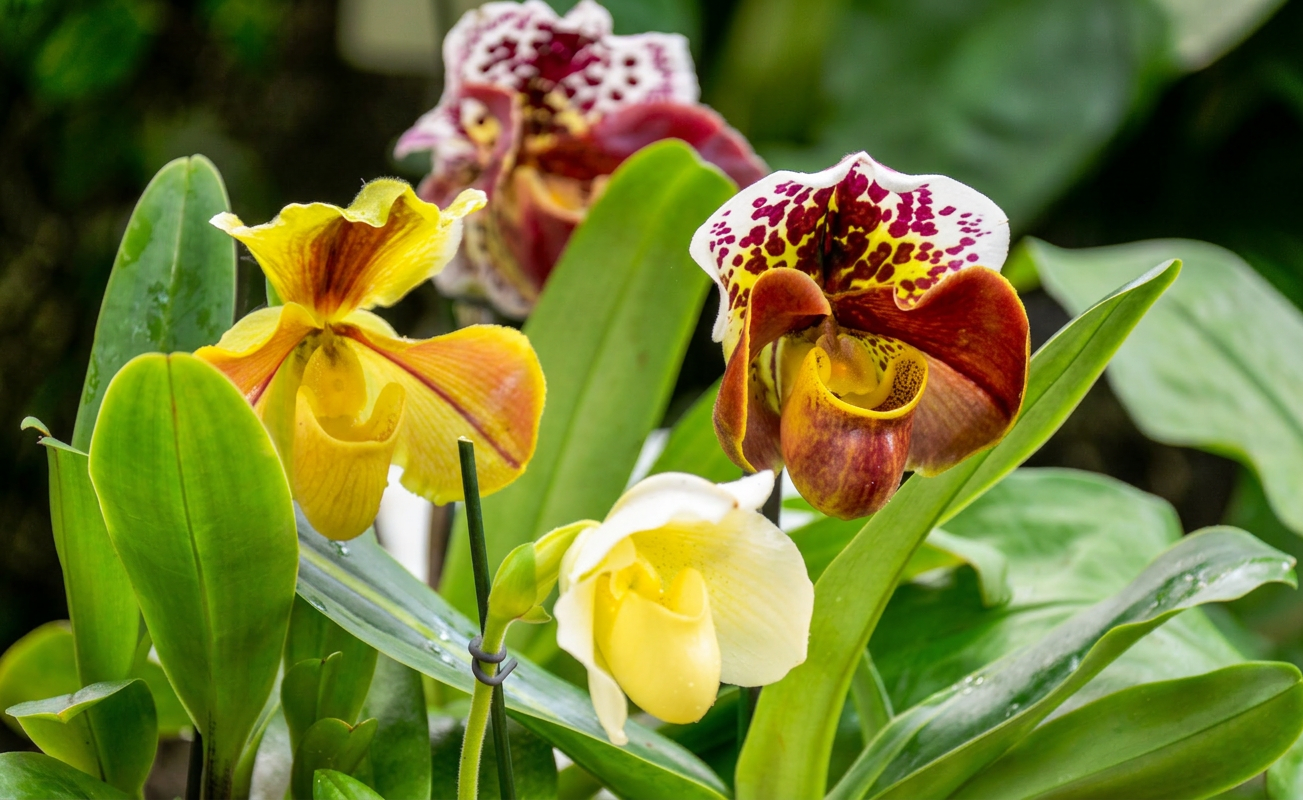
Each mature growth produces a single flower spike, carrying either one large bloom or several smaller flowers, depending on the variety. The flowers display extraordinary diversity in colour and pattern, ranging from creamy white and soft green to burgundy, deep purple, yellow, bronze, and finely striped combinations. The distinctive pouch is complemented by elegantly arching petals and a broad dorsal sepal that gives each flower remarkable architectural balance.
Unlike many orchids, each growth flowers only once. After flowering, the plant gradually directs its energy towards producing fresh shoots from the base, each of which will eventually carry its own flower.
Growing Conditions
As a tropical indoor houseplant, Lady’s Slipper Orchid thrives in bright, indirect light similar to the dappled conditions beneath a forest canopy. Gentle morning sun is usually well tolerated, while strong afternoon sunlight should be avoided to protect the foliage.
Unlike epiphytic orchids such as Moth Orchids, Paphiopedilum species prefer a finer orchid growing medium that retains slightly more moisture while still allowing excellent drainage. Specialised orchid compost containing fine bark, perlite, and other moisture-retentive materials provides suitable growing conditions.
Even moisture is important throughout the year. The growing medium should remain lightly moist without becoming waterlogged, as the roots are sensitive to both prolonged dryness and excessive saturation.
Warm temperatures between 18°C and 25°C suit most commonly cultivated hybrids. Moderate humidity and gentle air movement help maintain healthy foliage while reducing the risk of fungal problems.
Care & Maintenance
Lady’s Slipper Orchids reward regular, consistent care. Water thoroughly when the surface of the growing medium begins to dry, ensuring excess moisture drains freely from the container. Unlike orchids with large pseudobulbs, Paphiopedilum species possess little capacity to store water and therefore appreciate more even moisture.
A balanced orchid fertiliser applied at half strength every two to four weeks during active growth supports healthy foliage and future flowering. Feeding may be reduced during periods of slower growth.
Once flowering has finished, the flower spike should be removed near its base, allowing the plant to direct its energy into producing new growths. Healthy leaves should remain undisturbed, as they continue to supply energy through photosynthesis.
Repotting every one to two years into fresh orchid compost helps maintain healthy roots and replaces the growing medium as it gradually decomposes. Mature clumps may also be divided during repotting, provided each division retains several healthy growths.
Regular observation allows subtle changes in leaf colour, root health, and developing shoots to be noticed early, helping maintain vigorous plants over many years.
Seasonal Notes
The annual rhythm of a Lady’s Slipper Orchid unfolds gradually. Spring often brings fresh growth emerging from the base of mature fans, with new leaves slowly expanding over several weeks.
Summer is devoted primarily to vegetative growth. Leaves strengthen, roots develop, and the plant quietly gathers the energy required for future flowering.
Autumn often signals the beginning of flower spike development in many hybrids. Watching the bud gradually rise from between the leaves creates quiet anticipation, as each stage unfolds with deliberate patience.
Winter and early spring frequently provide the flowering display. Depending on the hybrid, blooms may remain fresh for six to twelve weeks, offering enduring beauty during the quieter months of the gardening year. Even after flowering, the patterned foliage continues to provide year-round interest while new growth quietly begins again.
Uses
Lady’s Slipper Orchids are among the most refined tropical indoor houseplants for bright living spaces, conservatories, home offices, and indoor plant collections. Their compact size allows them to fit comfortably on windowsills, side tables, display cabinets, and shelves where their remarkable flowers can be appreciated at close range.
The combination of beautifully patterned foliage and long-lasting blooms makes them attractive throughout the year, ensuring they remain ornamental even between flowering seasons. Their elegant flowers pair naturally with understated ceramic containers and simple interior styling, allowing the plant itself to become the focal point.
Unlike some foliage houseplants, Lady’s Slipper Orchids are not generally regarded as air-purifying plants. Their greatest contribution lies in the quiet beauty they bring to indoor spaces and the slower pace of attention they encourage. Each new growth carries the promise of a future flower, yet that promise is fulfilled only through months of patient development.
The flower may be the moment most people remember, but it is supported by countless smaller stages that often pass unnoticed. New leaves, developing roots, and the gradual strengthening of each growth all contribute to what follows. In time, the plant reveals that its greatest beauty is not found in a single bloom alone, but in the steady rhythm of growth that quietly prepares for it.