Japanese Pieris
Pieris japonica
Plant Overview
Japanese Pieris (Pieris japonica) is an elegant evergreen shrub admired for its graceful flowers, colourful new growth, and year-round presence in the garden. Native to Japan, Taiwan, and eastern China, it naturally inhabits woodland environments where it thrives in acidic soils and dappled shade. Over time, it has become a cherished ornamental plant in gardens around the world, particularly among gardeners seeking beauty beyond the peak flowering seasons.
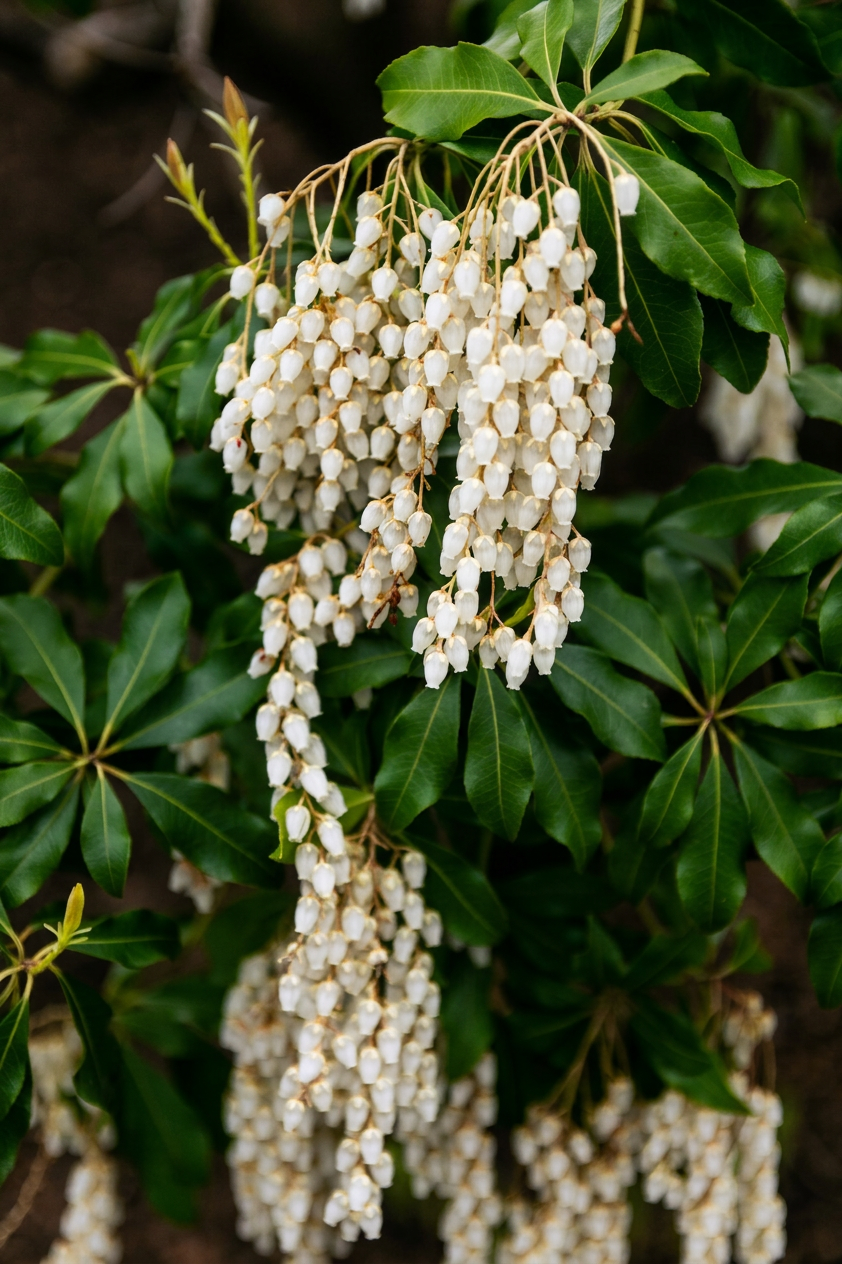
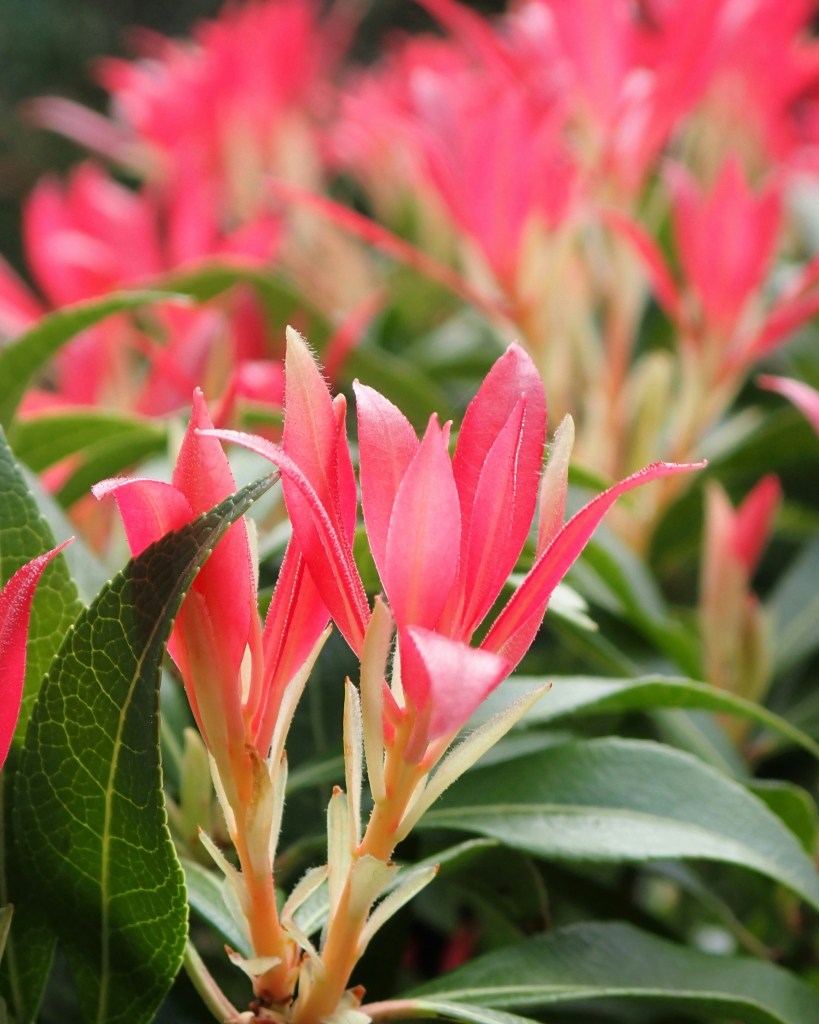
One of the most captivating aspects of Japanese Pieris is its ability to offer interest across multiple seasons. In early spring, clusters of delicate bell-shaped flowers appear in cascading sprays, often resembling those of lily-of-the-valley. At the same time, fresh new foliage emerges in brilliant shades of bronze, red, pink, or copper before gradually maturing to deep green. This combination of flowers and colourful growth creates a display that feels both vibrant and refined.
Japanese Pieris is not a plant that overwhelms the garden. Instead, it contributes a sense of quiet sophistication. Its beauty reveals itself gradually through changing foliage colours, elegant flower clusters, and subtle seasonal transitions. For gardeners who enjoy observing the finer details of nature, it offers rewards throughout the year.
In many ways, Japanese Pieris encourages attentiveness. It reminds us that some of the most memorable garden experiences arise not from dramatic displays but from the accumulation of small, beautiful moments noticed over time.
Appearance & Growth Habit
Japanese Pieris develops into a dense, upright evergreen shrub with a naturally layered and refined structure. Mature plants typically reach between 1.5 and 4 metres in height, depending on the cultivar and growing conditions, with a somewhat narrower spread that contributes to its graceful appearance.
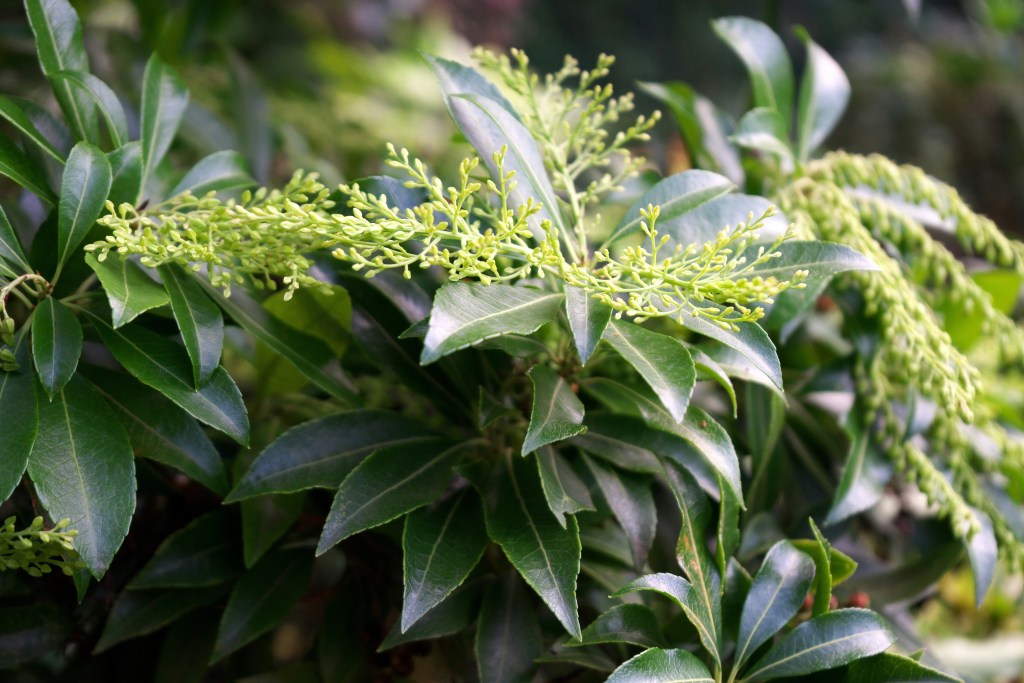
The foliage is one of the plant’s most attractive features. Leaves are glossy, lance-shaped, and arranged in clusters at the ends of the branches. Mature foliage is a rich, deep green that provides year-round structure and contrast within the landscape.
Perhaps the most distinctive characteristic of Japanese Pieris is the colourful flush of new growth that appears in spring. Depending on the variety, young leaves may emerge in vivid shades of crimson, bronze, pink, copper, or bright red. This colourful display often persists for several weeks before gradually maturing to green.
In late winter or early spring, long clusters of bell-shaped flowers hang gracefully beneath the branches. These flowers are typically white, although some cultivars produce soft pink blooms. The pendulous flower clusters create a delicate appearance that contrasts beautifully with the glossy foliage.
The overall effect is one of elegance and balance. Japanese Pieris combines ornamental foliage, attractive flowers, and a naturally pleasing form that remains visually appealing throughout the year.
Growing Conditions
Japanese Pieris thrives in conditions similar to those preferred by azaleas, camellias, and rhododendrons. It performs best in acidic soils rich in organic matter and benefits from environments that provide consistent moisture without becoming waterlogged.
A position in partial shade is often ideal, particularly where the plant receives morning sunlight and protection from intense afternoon heat. While it can tolerate full sun in cooler climates, excessive exposure may scorch foliage or reduce the quality of new growth.
The soil should be well-drained yet capable of retaining adequate moisture. Organic matter such as composted bark, leaf mould, or well-rotted compost helps create the conditions necessary for healthy root development.
Japanese Pieris appreciates sheltered locations protected from strong winds, particularly during periods of new growth and flowering. Woodland gardens, shaded borders, and protected courtyard plantings often provide excellent growing environments.
Once established, the plant is relatively hardy and reliable, rewarding suitable placement with many years of ornamental value.
Care & Maintenance
Japanese Pieris is generally considered a low-maintenance shrub when grown in appropriate conditions. The key to success lies in maintaining acidic soil and avoiding stress caused by drought or poor drainage.
Regular watering is important during establishment and during prolonged dry periods. The shallow root system benefits from a layer of organic mulch, which helps conserve moisture, suppress weeds, and gradually improve soil structure.
Feeding should be undertaken with fertilisers formulated for acid-loving plants. Maintaining the correct soil pH is particularly important, as alkaline conditions can lead to nutrient deficiencies and yellowing foliage.
Pruning requirements are minimal. The shrub naturally develops an attractive form and usually requires only the removal of dead, damaged, or poorly positioned branches. If shaping is desired, pruning should be carried out immediately after flowering to avoid removing developing flower buds for the following season.
Japanese Pieris is generally resilient but may occasionally experience lace bug infestations or issues associated with poor drainage. Regular observation and good cultural practices are usually sufficient to maintain plant health.
Seasonal Notes
The seasonal progression of Japanese Pieris is one of its greatest strengths. Each part of the year reveals a different aspect of the plant’s beauty.
Late winter often begins the display as flower buds, formed during the previous growing season, become increasingly visible. Their presence provides anticipation and interest during a period when many gardens remain relatively quiet.
Spring is undoubtedly the highlight. Cascading flower clusters emerge alongside brilliantly coloured new foliage, creating a combination of texture, colour, and form that captures attention without appearing excessive.
Summer sees the colourful new growth mature into deep green foliage. The shrub provides structure, shade, and visual stability within mixed plantings while continuing to contribute evergreen interest.
Autumn and winter reveal the plant’s enduring framework. The glossy foliage remains attractive throughout the colder months, while developing flower buds quietly prepare for the following spring. This cycle of anticipation and renewal becomes part of the plant’s enduring appeal.
Uses
Japanese Pieris is exceptionally well suited to woodland gardens, shade gardens, and mixed shrub borders where its seasonal qualities can be appreciated at close range. It combines beautifully with other acid-loving plants such as azaleas, camellias, rhododendrons, and hydrangeas.
Its compact habit makes it suitable for foundation plantings, courtyard gardens, and even larger containers where space is limited. Positioned near entrances, pathways, or seating areas, the flowers and colourful new growth can be enjoyed throughout their seasonal progression.
The evergreen foliage provides valuable year-round structure, helping to anchor planting schemes and create continuity between seasons. Its layered form also contributes texture and depth within more naturalistic landscapes.
From a wellbeing perspective, Japanese Pieris encourages close observation and seasonal awareness. Its changing foliage colours, developing flower buds, and graceful blooms invite gardeners to slow down and notice subtle transformations occurring throughout the year.