HOLLYHOCKS
Alcea rosea

PLANT OVERVIEW
Hollyhocks are among the most recognisable and nostalgic flowering plants found within traditional cottage gardens. With their tall flowering spires rising gracefully above surrounding plants, hollyhocks bring a strong sense of seasonality, softness, and romantic garden atmosphere to outdoor spaces. Flowering during the warmth of summer, they create vertical movement and visual rhythm while attracting bees, butterflies, and other beneficial pollinators into the garden.
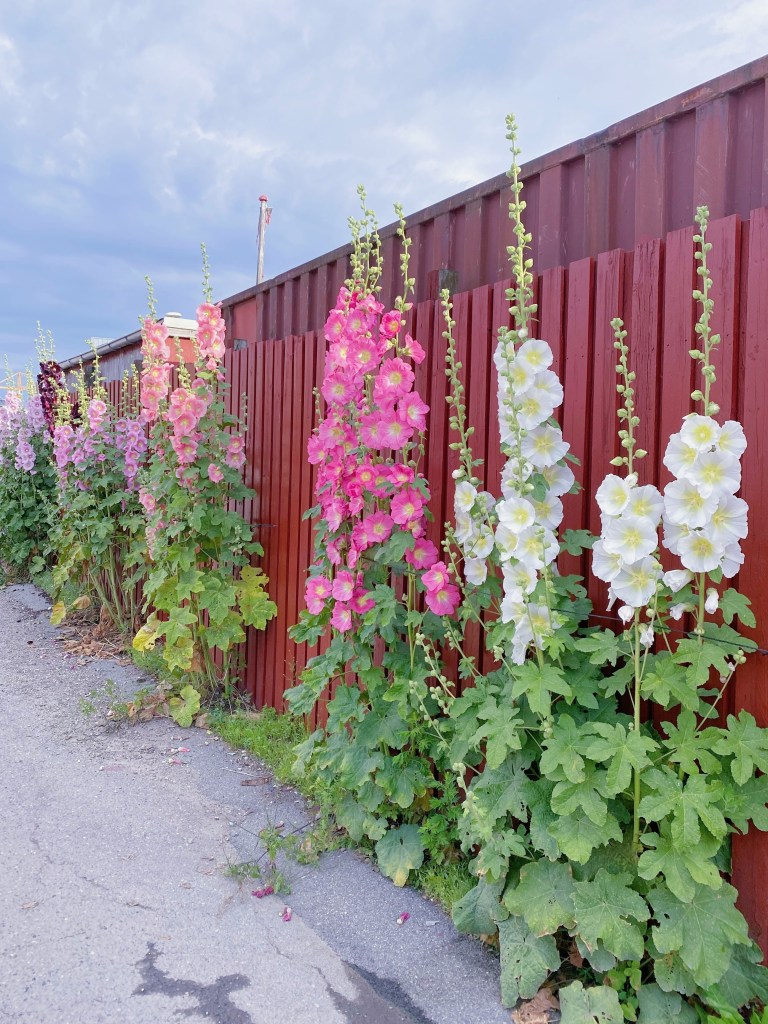
Traditionally planted along fences, walls, pathways, and informal borders, hollyhocks have long been associated with old-world gardens and relaxed planting styles that celebrate abundance rather than perfection. Their towering flowers and gentle movement in the breeze encourage people to slow down, observe closely, and reconnect with the quieter rhythms of the natural world.
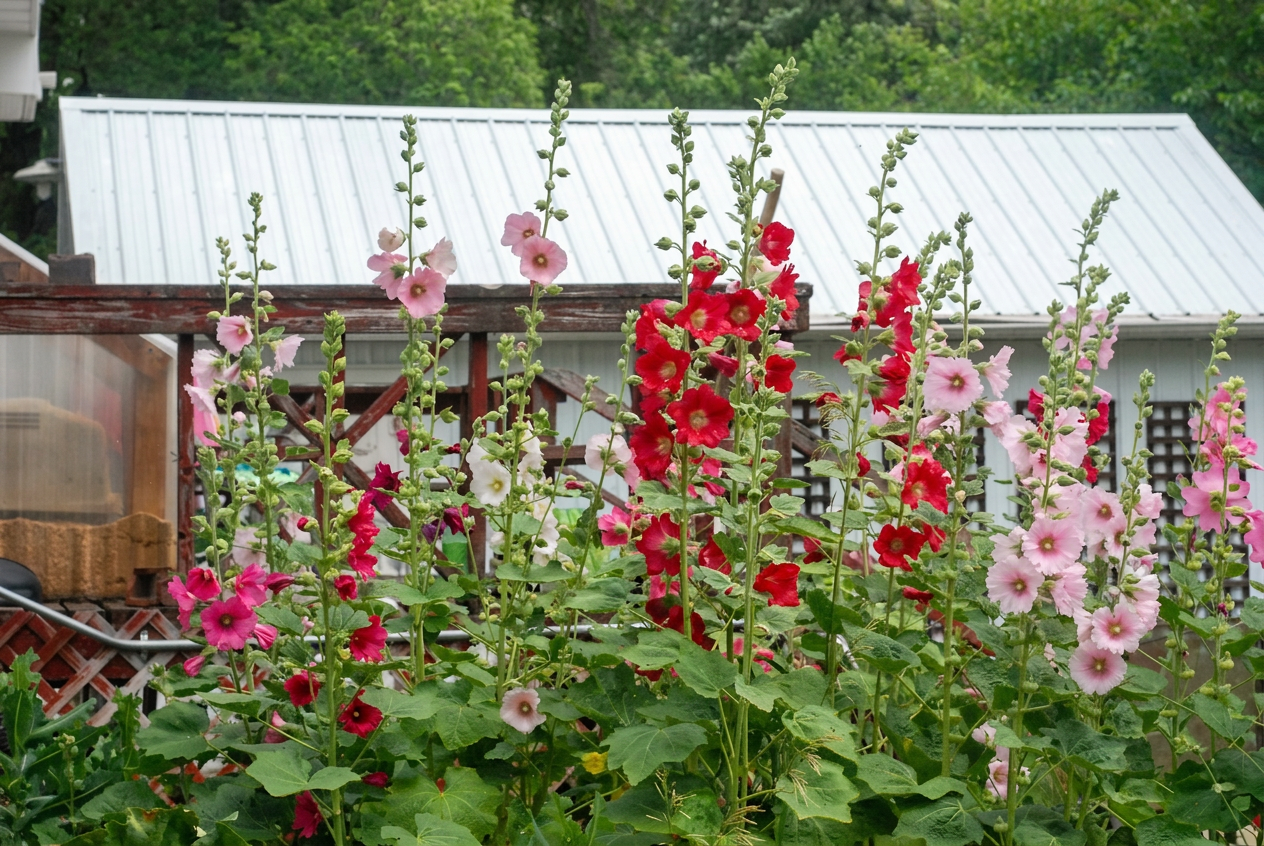
Available in a wide range of colours including blush pink, apricot, cream, burgundy, soft yellow, deep plum, and almost black tones, hollyhocks create dramatic seasonal displays that feel both timeless and immersive. Their presence in the garden often evokes feelings of nostalgia, warmth, and connection to traditional gardening practices passed down through generations.
Appearance & Growth Habit
Hollyhocks are upright flowering plants that typically grow between 1.5 and 2.5 metres tall, creating strong vertical structure within planting schemes. Their tall flower spikes are lined with large open blooms that appear progressively along the stem throughout summer, extending the flowering season and creating continuous visual interest.
The flowers themselves are soft and delicate in appearance, often resembling tissue-like layers with gently overlapping petals surrounding a central cluster of pollen-rich stamens. Their open flower form makes them particularly attractive to pollinators, allowing bees and butterflies easy access to nectar and pollen.
At the base of the plant, hollyhocks produce broad green foliage with a slightly textured appearance. The leaves help anchor the dramatic flower spikes while creating a softer visual transition into surrounding plantings. Although hollyhocks are often grown as biennials, many behave as short-lived perennials and will frequently self-seed naturally throughout the garden if conditions are favourable.
One of the most beautiful characteristics of hollyhocks is their ability to create movement and atmosphere within the landscape. Their tall stems sway gently in summer breezes, adding softness and life to garden spaces while helping create immersive layered planting environments.
Growing Conditions
Hollyhocks thrive best in full sun and prefer fertile, well-drained soil enriched with organic matter. They perform particularly well in warm, sheltered positions where their tall flowering stems are protected from strong winds. Garden beds positioned against fences, walls, or sheltered borders often provide ideal growing conditions.
These plants are highly suited to cottage gardens, pollinator-friendly landscapes, informal borders, and layered seasonal planting designs. Because of their vertical nature, hollyhocks are especially effective when planted toward the back of garden beds or used to soften structural elements within the landscape.
Good airflow around plants is important, particularly in humid conditions, as hollyhocks can occasionally be affected by fungal diseases such as rust. Avoid overcrowding and allow sufficient spacing between plants to encourage healthy growth and air circulation.
Although hollyhocks are relatively adaptable once established, they benefit from regular watering during prolonged dry periods, especially while flowering. Incorporating compost or well-rotted organic matter into the soil before planting can greatly improve plant health, flowering performance, and long-term resilience.
Care & Maintenance
Hollyhocks are generally considered low-maintenance plants once established, making them suitable for both experienced gardeners and those seeking a softer, more naturalistic approach to gardening. Regular watering during dry periods will help maintain healthy growth and encourage continued flowering throughout summer.
Spent flowers can be removed to extend the blooming period and maintain a tidy appearance, although many gardeners choose to leave some flowers to mature naturally into seed heads. Allowing plants to self-seed often creates beautiful drifting displays that emerge naturally over time, adding to the relaxed atmosphere commonly associated with cottage gardens.
At the end of the flowering season, stems can be cut back to tidy the plant and encourage healthy regrowth. Taller varieties may occasionally require discreet staking in exposed areas to support flowering stems during windy conditions.
One of the most common issues affecting hollyhocks is rust disease, which appears as orange-brown spots on foliage. While this can occasionally occur during periods of humidity or poor airflow, maintaining healthy spacing and removing affected leaves can help minimise problems.
Despite their delicate appearance, hollyhocks are resilient plants that often return year after year through self-seeding, gradually becoming part of the seasonal rhythm of the garden itself.
Seasonal Notes
Hollyhocks are strongly associated with the height of summer and often flower during the warmest months of the year when gardens feel abundant, layered, and full of life. Their towering flower spikes create strong seasonal presence while supporting pollinator activity during an important period of nectar availability.
As summer progresses, the flowers gradually move upward along the stems, creating evolving colour and movement within the garden. Seed heads begin to develop later in the season and can either be collected for propagation or left naturally for self-seeding and wildlife interest.
Hollyhocks pair beautifully with other traditional summer flowering plants such as lavender, roses, foxgloves, salvias, cosmos, and ornamental grasses. Together, these combinations help create immersive and restorative garden spaces filled with texture, movement, and biodiversity.
Beyond their ornamental qualities, hollyhocks encourage seasonal awareness and attentive observation. Their flowers attract pollinators throughout the day, inviting gardeners to pause, notice movement, and reconnect with the quieter details unfolding within the landscape.
Uses
Hollyhocks are widely used within cottage gardens, pollinator gardens, informal borders, and reflective garden spaces where vertical structure and seasonal atmosphere are desired. Their height makes them excellent plants for softening walls, fences, and architectural edges while creating depth and layering within planting schemes.
Because they attract bees, butterflies, and other beneficial insects, hollyhocks are valuable additions to biodiversity-focused gardens and spaces designed to support pollinator populations. Their open flowers also encourage close observation of insect behaviour, movement, colour, and seasonal change.
In wellbeing and sensory-focused gardens, hollyhocks contribute softness, movement, and a sense of gentle immersion. Their nostalgic character and seasonal beauty can evoke memories, encourage reflection, and create emotionally restorative garden experiences.
More than simply ornamental plants, hollyhocks remind us that gardens are living seasonal stories shaped by rhythm, change, pollinators, weather, and time. Their timeless presence encourages attentiveness, wonderment, and deeper connection with the natural world.