German Chamomile
Matricaria chamomilla


Plant Overview
German Chamomile (Matricaria chamomilla) is a delicate annual herb celebrated for its fragrant flowers, airy foliage, and long-standing place in herb gardens throughout Europe and beyond. Believed to have originated in southern and eastern Europe and western Asia, it has naturalised widely across temperate regions, thriving in meadows, field margins, and sunny open ground where it readily reseeds from year to year.
For centuries, German Chamomile has been cultivated for its aromatic flowers, which have been gathered for herbal teas, traditional remedies, and fragrant preparations. Yet beyond these practical uses, it is also an elegant ornamental plant. Its finely divided foliage and masses of small white flowers lend a lightness to borders and productive gardens, softening neighbouring plantings with an almost meadow-like character.
Unlike the perennial Roman Chamomile, German Chamomile completes its entire life cycle within a single growing season. From tiny seedlings in spring, it quickly develops into a flowering plant alive with bees, hoverflies, and other beneficial insects before setting seed and quietly returning its energy to the soil through the next generation.
There is a sense of generosity about German Chamomile. It flowers freely, welcomes pollinators in abundance, and often leaves behind seeds that ensure its quiet return the following year. Its presence is never permanent, yet it has a remarkable way of becoming a familiar part of the garden over time.
Appearance & Growth Habit
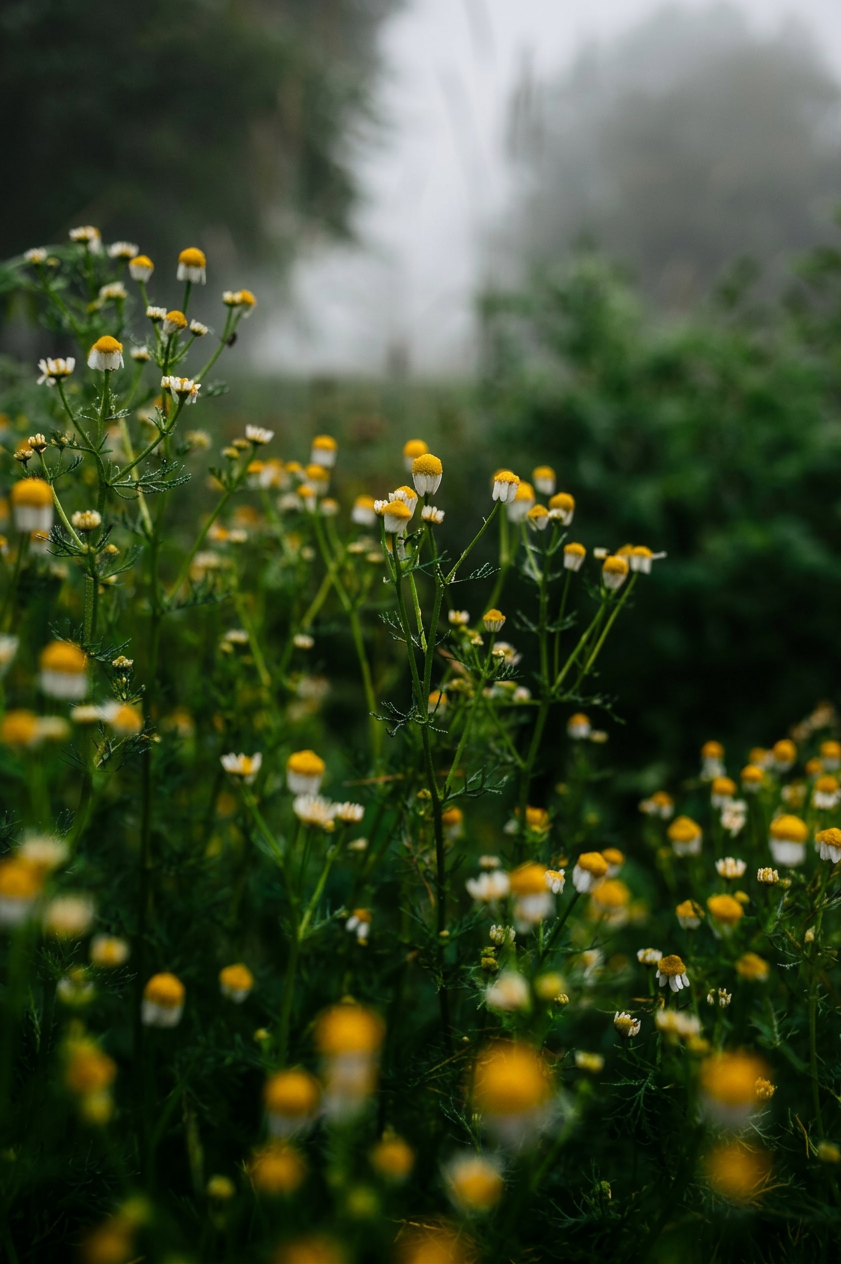
German Chamomile is an upright annual herb that typically grows between 30 and 60 centimetres in height, developing numerous slender branching stems from a single base. Its naturally open habit allows neighbouring plants to grow comfortably alongside it while creating a soft, informal appearance.
The foliage is bright green and finely divided into thread-like segments, giving the plant a delicate, feathery texture that moves gently in even the lightest breeze. The leaves release a pleasant herbal fragrance when lightly brushed or crushed.
From late spring into summer, countless daisy-like flowers appear at the ends of the branching stems. Each flower consists of bright white petals surrounding a golden-yellow cone-shaped centre. As the blooms mature, the central cone becomes increasingly pronounced, a useful characteristic that distinguishes German Chamomile from several similar species.
Individual flowers are modest in size, but their abundance creates a luminous display that seems to float above the fine foliage. When flowering is complete, the plant produces numerous small seeds that readily germinate under favourable conditions.
Growing Conditions
German Chamomile thrives in full sun, where it receives at least six hours of direct sunlight each day. Bright, open positions encourage compact growth, abundant flowering, and the highest concentration of aromatic oils within the flowers.
The plant performs best in light, well-drained soils of moderate fertility. It adapts readily to sandy and loamy soils and generally requires little soil improvement beyond the incorporation of organic matter before sowing.
Because it grows quickly from seed, German Chamomile is often sown directly into prepared garden beds during spring. It is equally suited to herb gardens, vegetable gardens, wildlife plantings, cottage gardens, and containers with good drainage.
Once established, the plant demonstrates moderate drought tolerance, although regular moisture during prolonged dry periods supports healthier foliage and more continuous flowering.
Care & Maintenance
German Chamomile is one of the easiest herbs to cultivate, asking for little more than sunlight, well-drained soil, and occasional watering during extended dry weather. Seeds germinate readily when sown directly onto the soil surface, as they require light to trigger successful germination.
Young seedlings establish quickly, and thinning may be necessary where self-sown plants emerge in large numbers. Providing adequate spacing encourages healthy airflow and strong branching.
An annual application of compost before sowing generally supplies sufficient nutrients for vigorous growth. Excessive fertiliser should be avoided, as it may encourage leafy growth at the expense of flowering.
Flowers are best harvested as they open fully, encouraging the continual production of fresh blooms throughout the season. If some flowers are left to mature naturally, they produce abundant seed that often establishes new plants the following year without further effort.
Because German Chamomile is an annual, no winter pruning or division is required. Its life cycle concludes naturally once seed has ripened, leaving the next generation to continue the cycle.
Seasonal Notes
Spring begins with the emergence of fine green seedlings that rapidly develop into delicate, feathery plants. Their growth is steady and surprisingly vigorous, quickly filling available space with fresh foliage.
Late spring and summer bring the flowering season. New blooms appear continuously for many weeks, creating a succession of white and gold flowers that attract a constant procession of bees, hoverflies, butterflies, and other beneficial insects.
As summer progresses, the earliest flowers begin producing seed while fresh blooms continue opening nearby. This overlapping cycle allows the plant to flower generously while quietly preparing for the following year.
Autumn marks the completion of its annual life cycle. The stems gradually fade, returning organic matter to the soil, while countless seeds settle unnoticed among the surrounding plants. Long before winter arrives, the next season has already begun in quiet anticipation beneath the surface.
Uses
German Chamomile is widely grown in herb gardens, cottage gardens, wildlife gardens, vegetable plots, and naturalistic plantings where its light, informal habit blends comfortably among vegetables, herbs, and flowering perennials. Its delicate flowers also make attractive additions to fresh and dried floral arrangements.
The nectar-rich blooms provide an excellent food source for bees, hoverflies, butterflies, and many other pollinating insects throughout summer. Their long flowering period makes them particularly valuable in gardens designed to support biodiversity and encourage beneficial wildlife.
For centuries, the flowers have been carefully harvested for herbal teas, aromatic preparations, and traditional herbal practices. Today, many gardeners continue to cultivate German Chamomile for these historical associations while also appreciating its contribution to the beauty and ecological richness of the garden.
Perhaps one of the most appealing qualities of German Chamomile is its willingness to begin again each year. It asks only for a little open ground and the warmth of spring before quietly returning, flowering generously, setting seed, and leaving behind the promise of another season. Its presence reminds us that continuity in the garden is not always created by permanence, but sometimes by the quiet rhythm of renewal.