English Lavender
Lavandula angustifolia

Plant Overview
English Lavender (Lavandula angustifolia) is one of the world’s most beloved aromatic shrubs, celebrated for its graceful flower spikes, silvery foliage, and timeless fragrance. Despite its common name, it is native to the mountainous regions of the Mediterranean, where it grows on rocky hillsides bathed in sunshine and shaped by dry summers and cool winters. Its remarkable adaptability and cold hardiness have allowed it to become a defining feature of gardens across Europe and far beyond.
For centuries, English Lavender has been cultivated for its beauty, perfume, and versatility. It has found a place in cottage gardens, formal knot gardens, herb collections, and contemporary landscapes alike, valued as much for its evergreen structure as for its abundance of fragrant flowers. Few plants have become so closely associated with the simple pleasures of gardening, where the scent of lavender carried on a warm breeze has become a familiar part of summer.
Unlike the distinctive bracted flowers of Italian Lavender or the extended flowering season of French Lavender, English Lavender is admired for its elegant, uninterrupted flower spikes that rise above softly mounded foliage. Their refined simplicity has made them one of the defining images of the summer garden, attracting countless bees and butterflies while filling the surrounding air with their unmistakable fragrance.
There is a quiet sense of permanence about English Lavender. It settles naturally into a garden, becoming more beautiful with each passing year. Its flowers may define the season, but its evergreen foliage ensures that even in winter, it continues to contribute structure, texture, and calm.
Appearance & Growth Habit
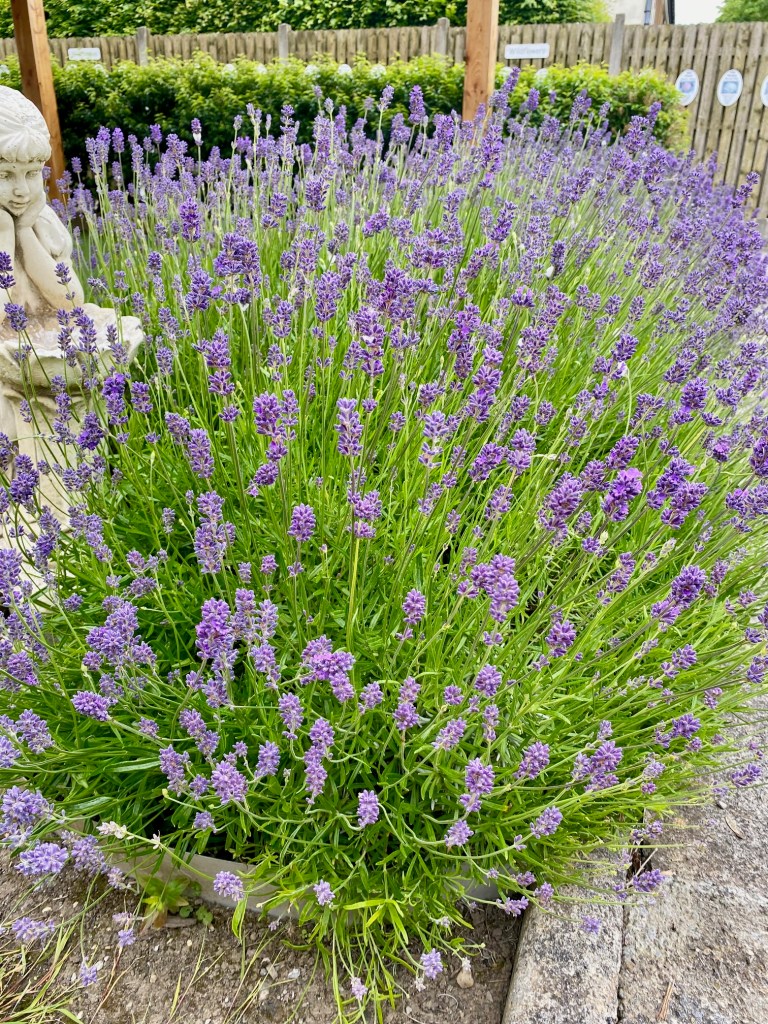
English Lavender is a compact evergreen shrub that typically grows between 45 and 90 centimetres in height and spread, depending on the cultivar. It develops into a neat, rounded mound with numerous slender stems arising from a gradually woody base.
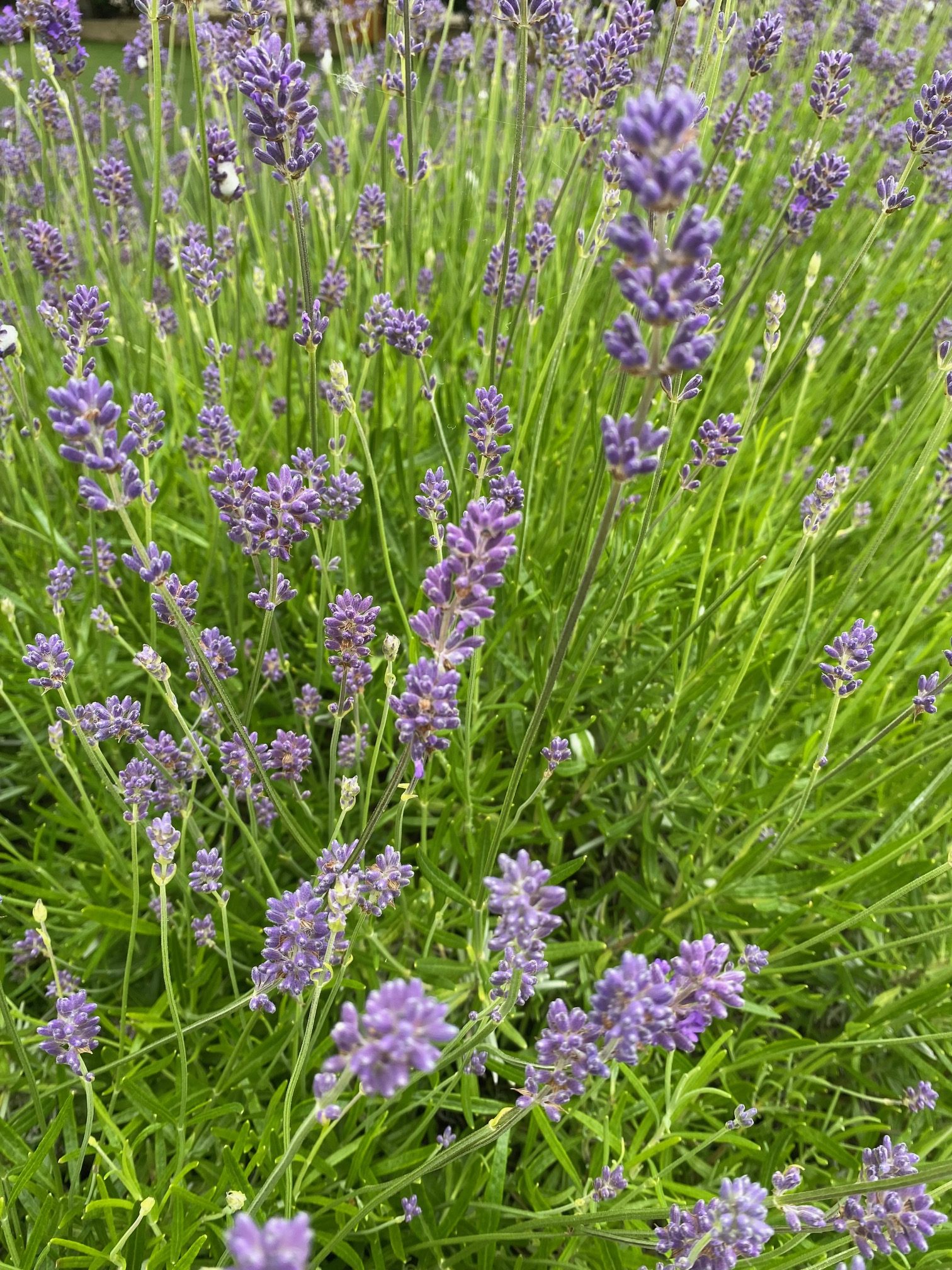
The foliage is composed of narrow, linear leaves covered with fine silvery hairs that give the plant its characteristic grey-green colouring. These tiny hairs help reduce moisture loss while creating the soft appearance that contrasts so beautifully with surrounding foliage.
From late spring into mid-summer, upright flower spikes emerge above the foliage, each carrying numerous small violet-blue flowers arranged in dense whorls along the stem. Modern cultivars are also available in shades of white, pink, and deep purple, although the classic lavender-blue remains the most familiar.
As the flowers mature, they release a rich, clean fragrance that has become synonymous with lavender itself. Their simple, uninterrupted form lends an understated elegance that complements both informal and formal planting styles.
Growing Conditions
English Lavender thrives in full sun and performs best where it receives at least six hours of direct sunlight each day. Bright, open positions encourage compact growth, abundant flowering, and the highest concentration of aromatic oils within both the flowers and foliage.
Excellent drainage is essential. The plant naturally grows in rocky, alkaline to neutral soils where water drains away rapidly following rainfall. Heavy clay soils should be improved with grit or coarse sand before planting to prevent excessive winter moisture around the roots.
Moderately fertile soils are ideal. Rich soils often encourage lush foliage at the expense of flowering and may shorten the lifespan of the shrub.
English Lavender is exceptionally well suited to cottage gardens, herb gardens, formal borders, gravel gardens, rockeries, coastal landscapes, and containers where its preference for dry conditions can be readily accommodated.
Care & Maintenance
English Lavender is an easy and dependable shrub once established. Young plants require regular watering during their first growing season, but mature specimens are notably drought tolerant and generally need supplementary watering only during prolonged dry periods.
Light pruning immediately after flowering helps maintain the plant’s naturally compact shape while encouraging fresh growth for the following season. Care should be taken not to cut deeply into old woody stems where new shoots may develop only sparingly.
An annual application of compost or a light dressing of balanced fertiliser in spring is usually sufficient to support healthy growth. Excessive feeding should be avoided, as it may reduce both flowering and fragrance.
Older shrubs benefit from occasional rejuvenation through careful shaping over several seasons rather than severe pruning. With thoughtful care, English Lavender often remains an attractive feature of the garden for many years.
Seasonal Notes
Spring begins with fresh silver-green shoots emerging from the woody framework. As temperatures rise, the rounded mounds gradually become fuller while flower stems begin extending above the foliage.
Early to mid-summer marks the principal flowering season. Dense spikes of fragrant blooms sway gently above the shrub, drawing bees, butterflies, hoverflies, and countless other pollinating insects throughout the warmest months of the year.
By late summer, the flowers gradually fade, yet the evergreen foliage continues to provide colour and texture within the garden. Light pruning after flowering often produces fresh leafy growth that remains attractive throughout autumn.
Winter reveals the quiet resilience of the plant. The silvery foliage maintains its presence while the woody framework patiently awaits the return of spring, offering structure and continuity even during the garden’s quieter months.
Uses
English Lavender is one of the most versatile shrubs grown in temperate gardens. It is widely planted along pathways, in herb gardens, cottage borders, formal parterres, gravel gardens, and containers where its fragrance can be appreciated throughout the summer months. Planted in groups, it creates broad drifts of colour that have become one of the defining features of traditional garden design.
The nectar-rich flowers are among the finest plants for supporting bees, butterflies, and many other beneficial insects, making English Lavender an essential addition to pollinator-friendly gardens. Its compact habit also allows it to form attractive low hedges that combine structure with seasonal beauty.
Fresh and dried flower stems are valued for floral arrangements, sachets, potpourri, wreaths, and fragrant household decorations. The flowers are also widely harvested for culinary use, herbal teas, and the production of essential oils, reflecting centuries of cultivation and appreciation.
Perhaps more than any other lavender, English Lavender carries with it a sense of familiarity. Its fragrance has become woven into gardens, homes, and memories across generations. Year after year it flowers with quiet reliability, asking only for sunshine, well-drained soil, and a little thoughtful care. In return, it offers a season filled with colour, fragrance, and the gentle hum of pollinators, reminding us that some of the garden’s greatest pleasures are also its most enduring.