Echinacea (Purple Coneflower)
Echinacea purpurea

Plant Overview
Echinacea (Echinacea purpurea), commonly known as Purple Coneflower, is one of the most recognisable and enduring herbaceous perennials grown in temperate gardens. Native to the prairies and open woodlands of central and eastern North America, it has evolved in landscapes shaped by wide skies, seasonal extremes, and rich grassland ecosystems. Its ability to withstand both summer heat and winter cold has made it a dependable favourite in gardens around the world.
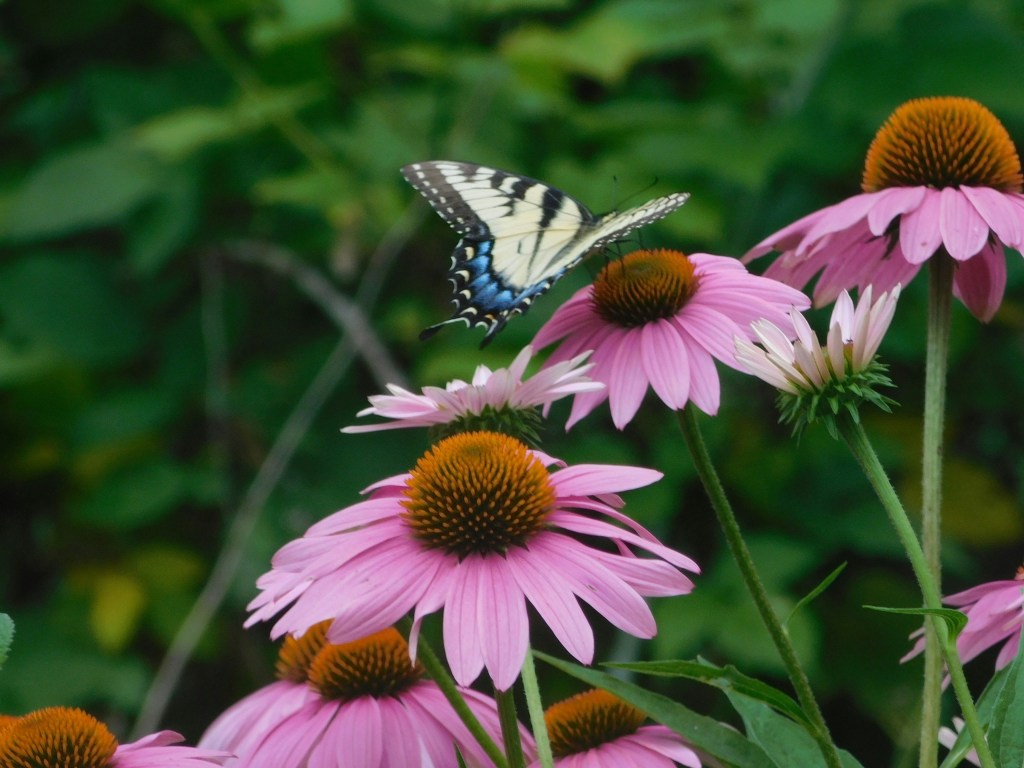
Best known for its distinctive daisy-like flowers with prominent raised centres, Echinacea brings colour and vitality to the garden from mid-summer into autumn. Its blooms are not only admired by gardeners but are also highly attractive to bees, butterflies, and many other pollinating insects. As the flowers mature, their seed heads provide an important food source for birds, allowing the plant to continue contributing to the garden long after the petals have faded.
Although widely recognised for its long association with traditional herbal medicine, Echinacea is equally valued as an ornamental perennial. Its upright growth, generous flowering period, and resilience make it a natural choice for cottage gardens, prairie-style plantings, wildlife gardens, and mixed perennial borders.
There is an honesty about Echinacea that reflects its prairie origins. It stands upright through changing weather, flowers generously without excess, and remains beautiful even as the seasons begin to shift towards autumn. Its appeal lies not in perfection, but in the way it continues to offer something at every stage of its life.
Appearance & Growth Habit
Echinacea is a clump-forming herbaceous perennial that typically grows between 60 centimetres and 1.2 metres in height, depending on the cultivar and growing conditions. Each spring, fresh shoots emerge from the crown before developing into strong upright stems that support the summer flowers.
The leaves are deep green, lance-shaped, and slightly rough to the touch, forming a neat basal clump before extending along the flowering stems. Their simple texture provides an attractive contrast to more finely divided foliage in mixed borders.
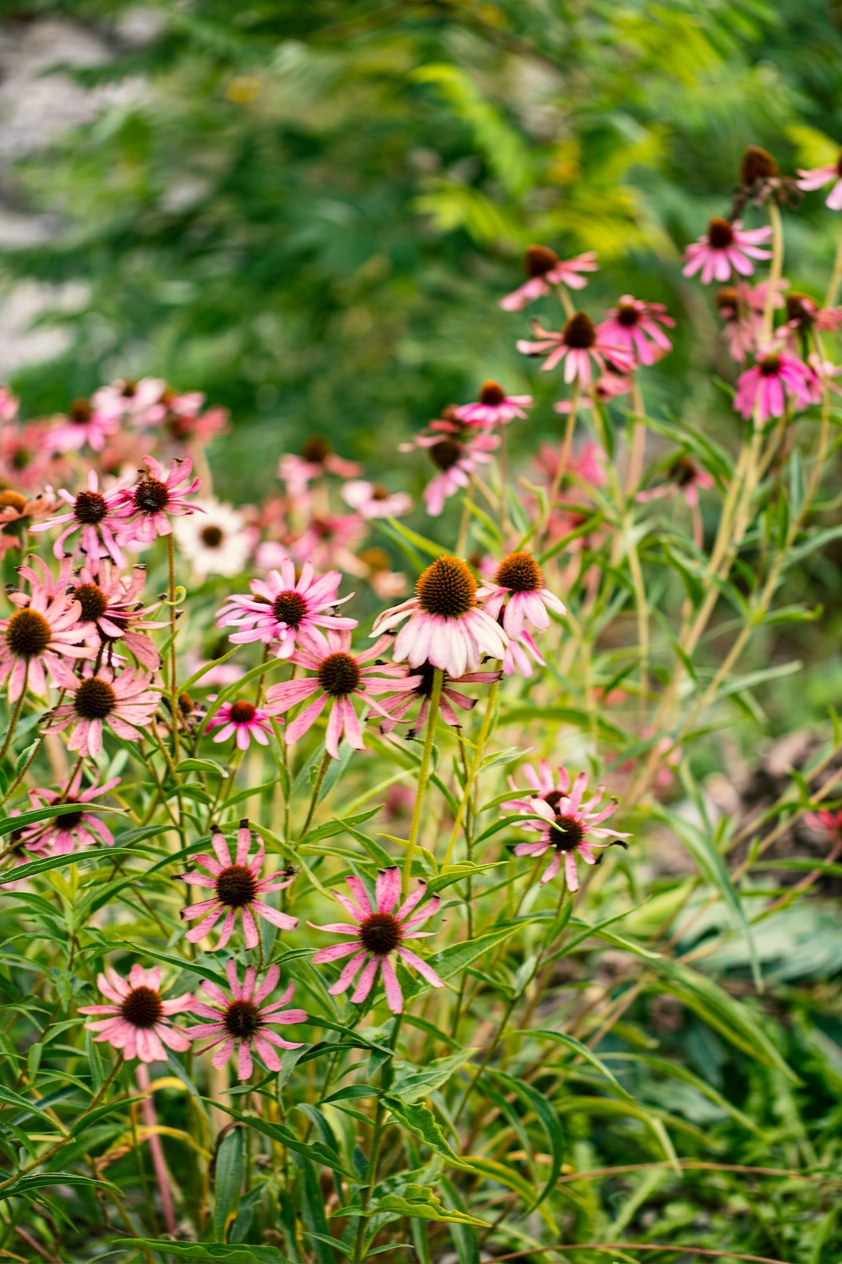
The flowers are unmistakable. Broad petals radiate from a prominent cone-shaped centre composed of hundreds of tiny individual florets. Traditional forms display rich purple-pink petals, although modern cultivars offer shades of white, yellow, orange, coral, red, and lime green. The central cone gradually becomes more pronounced as the flowers mature, adding texture and architectural interest.
After flowering, the seed heads remain upright well into autumn and winter. Their sculptural form provides lasting visual interest while supporting birds and other wildlife, extending the plant’s contribution far beyond the flowering season.
Growing Conditions
Echinacea thrives in full sun, where it receives at least six hours of direct light each day. Bright, open positions encourage sturdy stems, abundant flowering, and the compact growth habit for which the plant is valued.
It grows best in fertile, well-drained soil but is remarkably adaptable once established. Sandy, loamy, and moderately fertile soils all support healthy growth, provided drainage remains good. The plant is particularly tolerant of summer heat and periods of drought, reflecting its prairie heritage.
Although young plants appreciate consistent moisture during establishment, mature specimens require relatively little supplementary watering except during extended dry periods.
Echinacea combines beautifully with ornamental grasses, salvias, rudbeckias, verbenas, asters, and many other late-season perennials, creating naturalistic plantings that remain attractive over many months.
Care & Maintenance
Echinacea is an uncomplicated perennial that rewards relatively modest care. Regular watering during its first growing season encourages the development of a strong, deep root system, after which the plant becomes increasingly drought tolerant.
An annual application of compost in spring usually provides sufficient nutrients for healthy growth. Excessive fertiliser is unnecessary and may encourage soft growth at the expense of flowering.
Removing spent flowers during summer encourages additional blooms and prolongs the flowering display. Alternatively, allowing flowers to mature naturally provides attractive seed heads that remain valuable for wildlife throughout autumn and winter.
The stems are best left standing until late winter or early spring. Besides providing seasonal structure, they offer shelter for beneficial insects and food for seed-eating birds during the colder months.
Established clumps benefit from division every four to five years if flowering begins to decline or the centre of the plant becomes less vigorous. Division also provides an opportunity to expand plantings elsewhere in the garden.
Seasonal Notes
Spring begins quietly as fresh shoots emerge from the soil, gradually forming compact clumps of healthy green foliage. The pace of growth is steady, with sturdy stems developing as temperatures rise.
Summer marks the beginning of the flowering season. Buds gradually open into colourful blooms that attract a constant procession of bees, butterflies, hoverflies, and other pollinating insects. The garden becomes noticeably more active as these visitors move from flower to flower.
Autumn brings subtle changes. The petals gradually fade while the prominent seed heads remain standing, catching low sunlight and introducing warm textures to the garden. Goldfinches and other seed-eating birds frequently visit mature plants, extending the season of interest well beyond flowering.
Winter reveals the enduring structure of the plant. Frost settles across the seed heads, highlighting their intricate form against quieter landscapes. Even in dormancy, Echinacea continues to contribute to the garden, patiently waiting beneath the soil for another spring.
Uses
Echinacea is one of the most valuable perennials for sunny borders, cottage gardens, prairie-style plantings, wildlife gardens, and naturalistic landscapes. Its upright habit allows it to combine harmoniously with grasses and other late-flowering perennials while providing colour from mid-summer into autumn.
The flowers are highly attractive to bees, butterflies, and many other beneficial insects, making Echinacea an important addition to pollinator-friendly gardens. As flowering concludes, the seed heads continue to support birds while also contributing lasting architectural interest during the colder months.
Fresh and dried flowers are also valued in floral arrangements, where their distinctive cones provide texture and structure. The plant has a long history in traditional herbal practice, although many gardeners now grow it primarily for its ornamental beauty and ecological value.
Echinacea is a plant that changes gracefully with the seasons. The flowers first invite pollinators, then gradually give way to seed heads that nourish birds and quietly hold their place through winter. Nothing is hurried or wasted. Each stage contributes to the next, revealing that a plant’s greatest beauty is often found not in a single moment of flowering, but in the many ways it continues to enrich the garden throughout the year.