DAFFODIL
Narcissis spp.

Plant Overview
Daffodils are iconic spring flowering bulbs admired for their cheerful blooms, seasonal reliability, and ability to naturalise beautifully within gardens and landscapes over time. As one of the earliest signs of spring, daffodils bring brightness, renewal, and seasonal optimism into outdoor spaces following the quieter winter months.
Widely planted in borders, meadows, woodland gardens, containers, and beneath deciduous trees, daffodils are valued for both their ornamental beauty and low-maintenance nature. Their flowers appear in a broad range of forms and colours, from traditional golden yellow trumpet varieties to elegant white, cream, apricot, and bi-coloured cultivars.
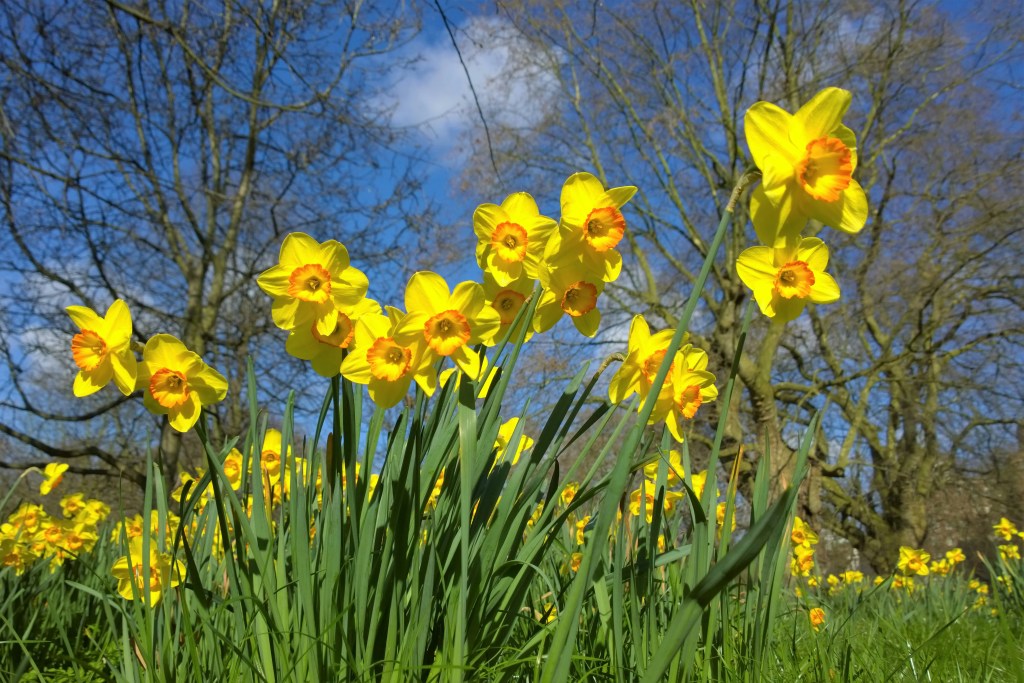
Daffodils are especially effective when planted in drifts or large groups where they create strong seasonal impact and naturalistic movement throughout the spring garden.
Appearance & Growth Habit
Daffodils emerge from underground bulbs during late winter and early spring, producing upright strap-like foliage followed by flowering stems carrying one or multiple blooms depending on the cultivar.
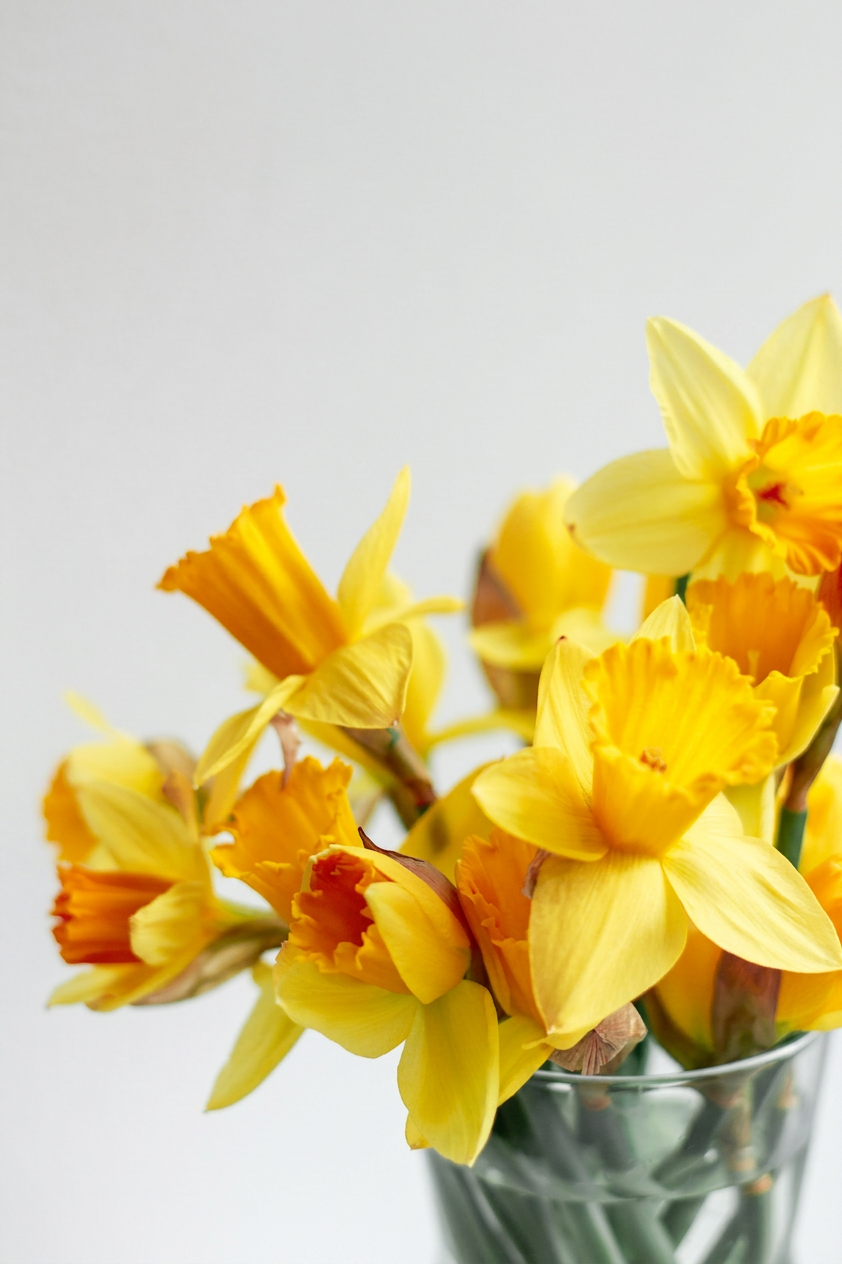
Flowers vary greatly in shape and size, including trumpet, double, split-cup, and miniature forms. Most blooms feature a central corona surrounded by outer petals, creating their instantly recognisable appearance.
Plants typically grow between 15 centimetres and 60 centimetres in height depending on the species and cultivar.
Their upright foliage and bright flowers bring structure and seasonal colour into the garden at a time when many plants are only beginning to re-emerge from winter dormancy.
When planted en masse, daffodils create sweeping seasonal displays that help soften lawns, pathways, woodland edges, and mixed perennial borders.
Growing Conditions
Daffodils grow best in full sun to partial shade with fertile, well-drained soil enriched with organic matter.
Bulbs are generally planted during autumn before winter dormancy, allowing roots to establish before spring flowering begins.
They are highly adaptable and suitable for borders, containers, meadow planting, woodland gardens, rockeries, and beneath deciduous trees where spring sunlight is available before canopy growth develops.
Good drainage is especially important, as bulbs may decline in persistently wet soils during dormancy.
Daffodils also naturalise particularly well in suitable conditions, gradually forming larger clumps over time.
Care & Maintenance
Daffodils are considered very low maintenance once established.
Regular watering during active growth and flowering supports healthy blooms, although established bulbs are generally tolerant of seasonal fluctuations in moisture.
After flowering, spent blooms may be removed to prevent seed production, however foliage should be left intact until it naturally yellows and dies back. This allows energy to return to the bulb and supports strong flowering the following season.
Clumps may eventually become crowded over time and can be lifted and divided during dormancy if flowering performance begins to decline.
Applying compost or bulb fertiliser during autumn or after flowering can help maintain healthy bulb development.
Seasonal Notes
Daffodils are strongly associated with late winter and spring, often flowering from late winter through mid-spring depending on the cultivar and climate.
Their emergence marks an important seasonal transition within the garden, bringing colour and renewed energy after winter dormancy.
As temperatures warm later in spring, foliage gradually dies back before bulbs enter dormancy through summer and autumn.
Naturalised plantings often become more impressive each year as bulbs slowly multiply under suitable conditions.
Uses
Daffodils are widely used in spring borders, woodland gardens, naturalistic meadow planting, containers, and seasonal mass displays where their flowers provide strong seasonal impact and brightness.
They pair beautifully with other spring bulbs, flowering perennials, and emerging deciduous foliage, helping create layered and evolving spring planting combinations.
Daffodils are also valuable for naturalising beneath deciduous trees and throughout larger landscapes where they can establish long-term seasonal displays with minimal maintenance.
Beyond their ornamental beauty, daffodils contribute a strong sense of renewal, optimism, and seasonal rhythm within the garden, helping create spaces that feel uplifting, restorative, and deeply connected to the arrival of spring.