COMFREY
Symphytum officinale
PLANT OVERVIEW
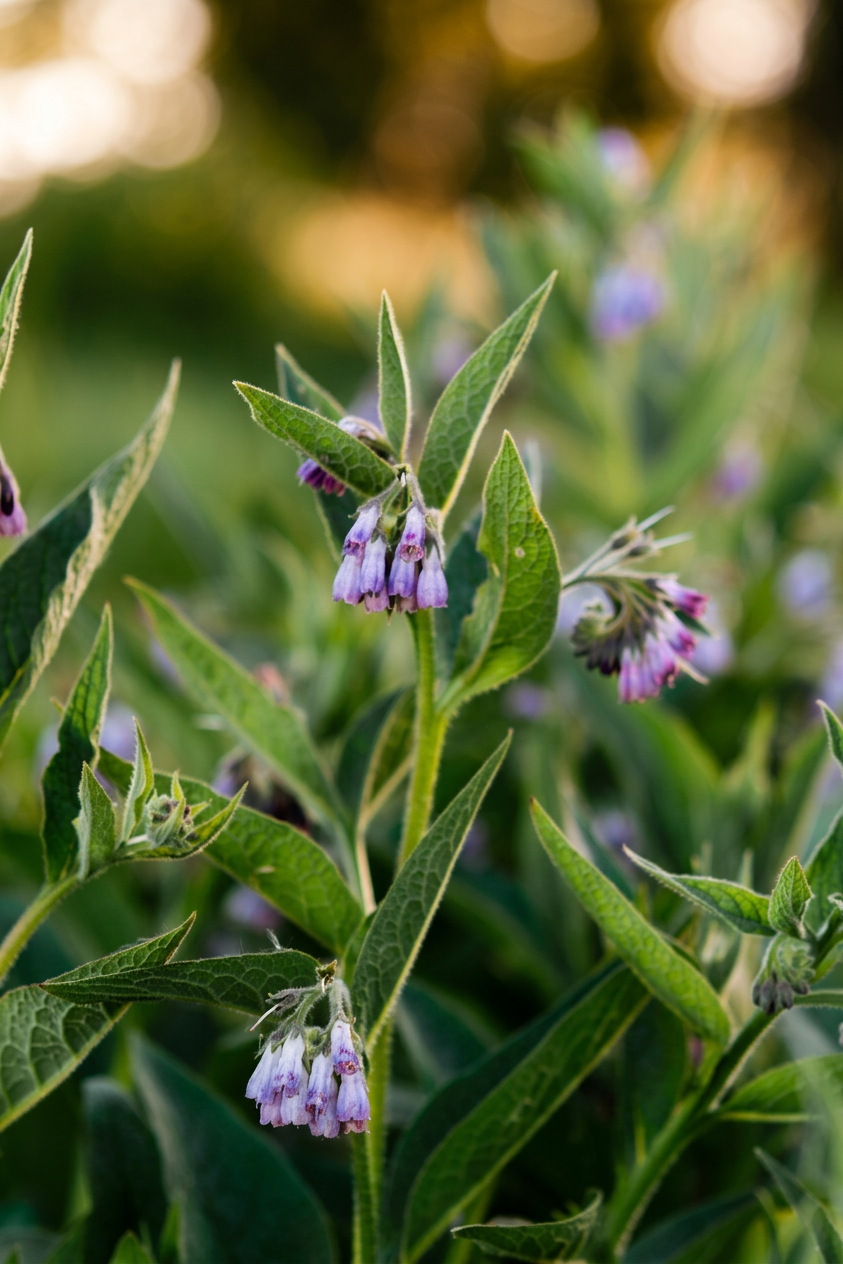
Comfrey is a vigorous herbaceous perennial valued for its lush foliage, pollinator-friendly flowers, and important role within productive and wildlife-focused gardens. Often grown as a companion plant, mulch plant, or within permaculture and regenerative gardening systems, Comfrey is widely appreciated for its ability to produce abundant leafy growth throughout the growing season.
Its deep root system helps draw nutrients from lower soil levels, making the plant particularly useful for composting, mulching, and creating nutrient-rich liquid feeds for the garden. Alongside its practical uses, Comfrey also contributes texture, movement, and seasonal softness within naturalistic and cottage-style planting schemes.
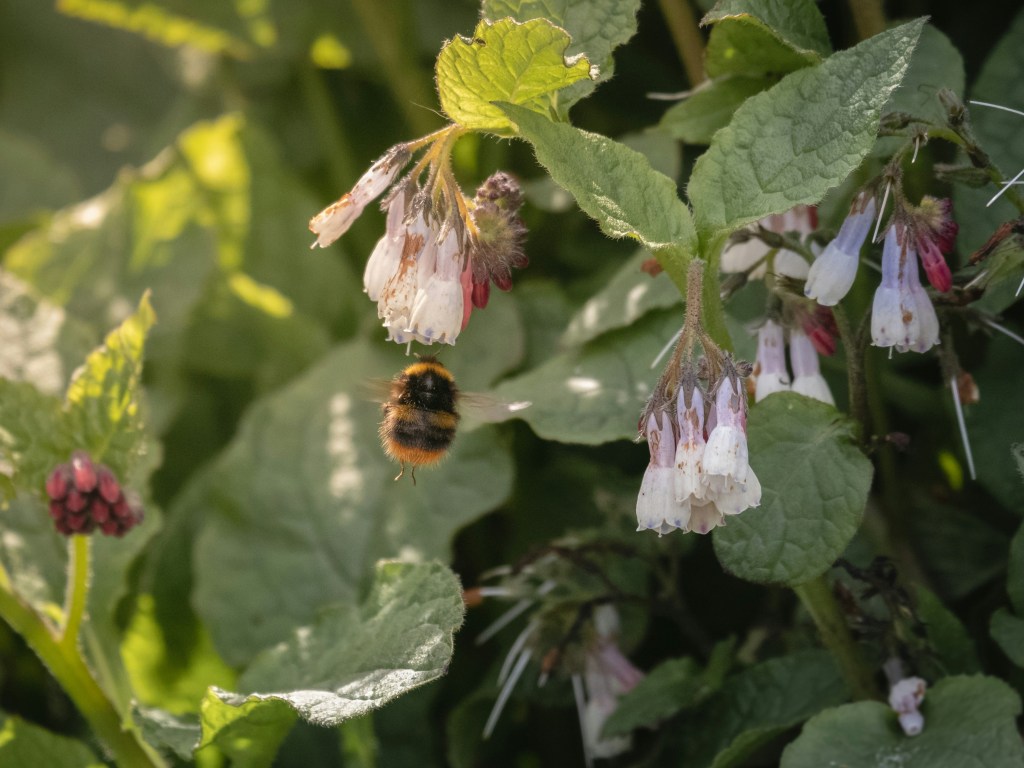
The bell-shaped flowers are highly attractive to bees and beneficial pollinators, bringing movement and biodiversity into the garden during late spring and summer.
Appearance & Growth Habit
Comfrey forms large clumping plants that typically grow between 60 centimetres and 1 metre in height depending on growing conditions and cultivar.
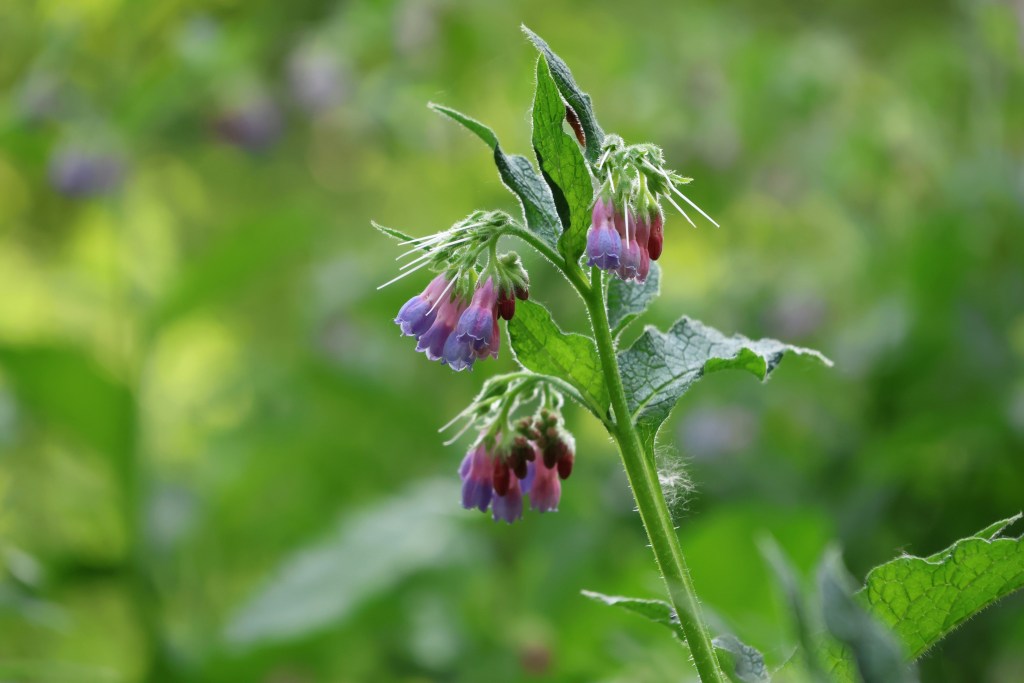
Plants produce broad textured green leaves covered in fine hairs, creating a dense and lush appearance throughout the growing season. The foliage emerges vigorously in spring and gradually expands into substantial leafy mounds that help provide strong ground coverage.
During late spring and summer, arching flower stems emerge carrying clusters of tubular bell-shaped flowers in shades of purple, pink, cream, or blue depending on the species and variety. These flowers gently nod downward and are highly attractive to bees and other pollinating insects.
Its spreading habit and vigorous growth make Comfrey particularly effective in productive gardens, wildlife planting schemes, and informal borders where space allows for natural expansion.
Growing Conditions
Comfrey grows best in full sun to partial shade positions with fertile, moisture-retentive soil enriched with organic matter. Once established, it is highly adaptable and tolerant of a wide range of growing conditions.
The plant performs especially well in productive gardens, orchard systems, wildlife gardens, and permaculture-inspired spaces where its nutrient-accumulating properties can be utilised more effectively.
Due to its deep root system, Comfrey becomes drought tolerant once established, although regular moisture encourages more vigorous leafy growth and repeated harvesting throughout the season.
Because mature plants can become difficult to remove once established, careful positioning is recommended before planting.
Care & Maintenance
Comfrey is considered a low-maintenance perennial once established. Regular watering during establishment helps encourage strong root development, while mature plants generally require minimal intervention.
The foliage can be cut multiple times throughout the growing season for use as mulch, compost material, or liquid fertiliser feed. Frequent cutting encourages fresh new growth and helps maintain a tidier appearance.
Applying compost around the base of plants during spring supports vigorous seasonal growth. Flower stems may also be removed after flowering if self-seeding is undesirable in certain garden settings.
As plants mature, large clumps may be divided during cooler seasons if propagation or rejuvenation is required.
Seasonal Notes
Comfrey emerges vigorously during spring, producing rapid leafy growth followed by flowering from late spring into summer. Multiple foliage harvests may be taken throughout the growing season depending on climate and growing conditions.
During autumn and winter, the foliage gradually dies back as the plant enters dormancy before re-emerging the following spring.
Its strong seasonal growth cycle makes Comfrey especially valuable within productive gardens where ongoing mulch material and organic matter are beneficial throughout the growing season.
Uses
Comfrey is widely used in productive gardens, permaculture systems, wildlife gardens, orchard planting, and regenerative gardening schemes due to its multifunctional role within the landscape.
The nutrient-rich foliage is commonly used for composting, mulching, and creating natural liquid fertilisers that can support surrounding plants and improve soil health. Its dense growth habit can also help suppress weeds and protect exposed soil.
The flowers are highly attractive to bees and pollinators, contributing biodiversity and seasonal movement within the garden.
Beyond its practical uses, Comfrey brings a lush and naturalistic character into outdoor spaces through its large foliage, soft flowering stems, and strong seasonal presence. It is particularly effective within layered planting schemes where productivity, biodiversity, and ecological gardening practices are central to the garden design.