BRUSSEL SPROUTS
Brassica oleraceae var. gammifera


Plant Overview
Brussels Sprouts are cool-season brassicas valued for their compact edible buds, strong vertical growth habit, and ability to provide productive harvests throughout autumn and winter. Closely associated with traditional seasonal kitchen gardening, they are especially appreciated for extending fresh harvests into the colder months when many other crops slow or become dormant.
Their tall architectural stems and broad foliage contribute strong structure and texture within the edible garden, helping create productive spaces that remain visually engaging well beyond summer. Brussels Sprouts are particularly rewarding for gardeners seeking reliable winter crops that combine productivity with strong seasonal presence.
Although often grown primarily for food production, their upright habit and repeating sprout formation create a highly distinctive appearance that contributes rhythm and vertical interest within cool-season planting schemes.
Appearance & Growth Habit
Brussels Sprouts form tall upright stems that typically grow between 60 centimetres and 1.2 metres in height depending on the cultivar and growing conditions.
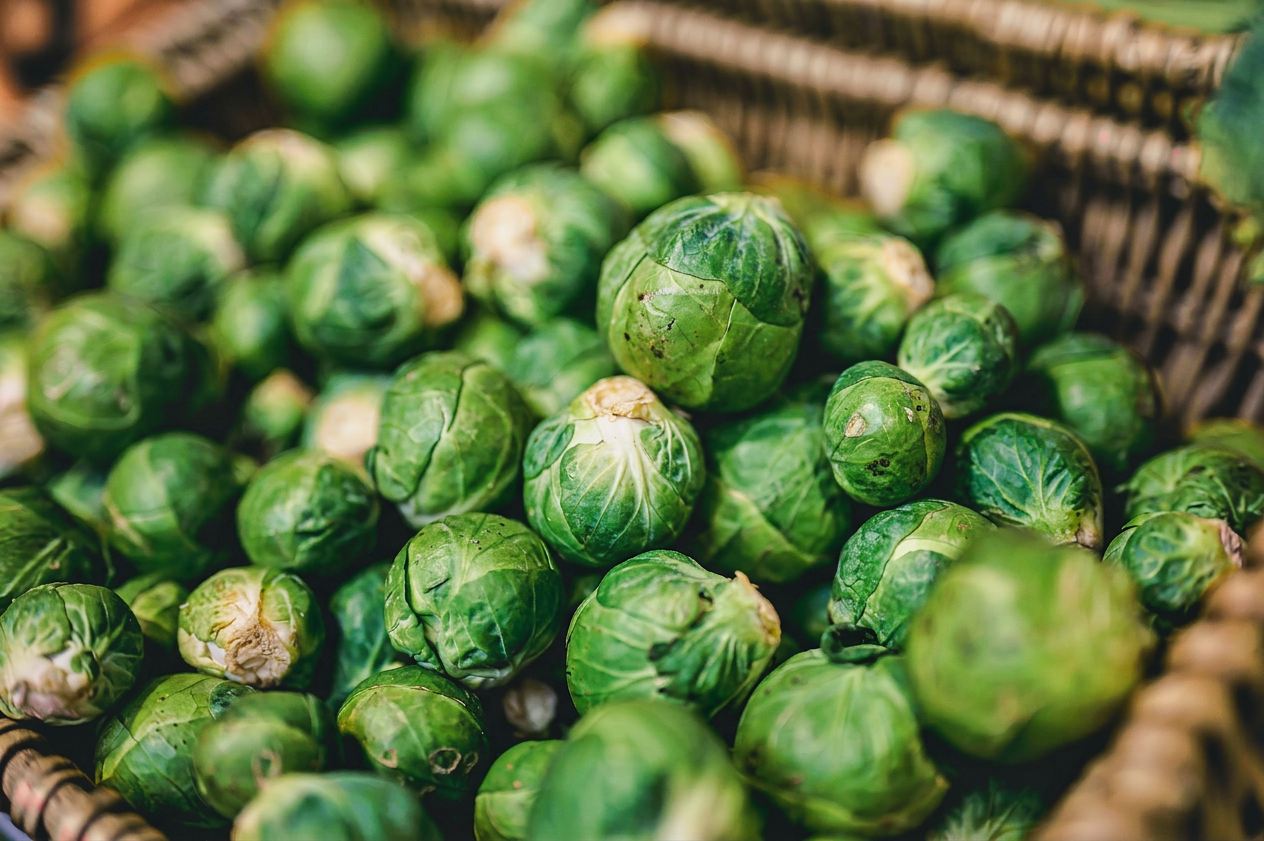
Broad blue-green leaves emerge along the central stem, while compact rounded edible sprouts gradually develop in the leaf axils from the base upward. As plants mature, the repeating formation of sprouts along the stem creates a highly sculptural and architectural appearance within the garden.
The foliage is bold and textured, contributing strong visual contrast when planted alongside softer leafy greens, herbs, and root vegetables.
Late in the season, mature plants develop a striking structural quality that helps maintain interest within productive gardens during autumn and winter.
Growing Conditions
Brussels Sprouts grow best in full sun with fertile moisture-retentive but well-drained soil enriched with compost or well-rotted organic matter.
Cool growing conditions are essential for healthy sprout development and improved flavour, making them especially suitable for autumn and winter harvesting.
Seeds are commonly sown during spring or early summer to allow sufficient time for plants to mature before cooler weather arrives.
Due to their extended growing season and eventual height, Brussels Sprouts are best suited to larger kitchen gardens, raised beds, and productive crop rotation systems where they can remain in place for many months.
Firm fertile soil encourages stronger upright growth and better sprout formation throughout the season.
Care & Maintenance
Regular watering throughout active growth is important for healthy foliage and evenly developed sprouts.
Applying mulch around plants helps conserve moisture, suppress weeds, and regulate soil temperatures during seasonal transitions.
Brussels Sprouts benefit from nutrient-rich growing conditions and regular feeding with compost or balanced fertiliser during the growing season.
Because plants become tall and top heavy as they mature, staking may be beneficial in exposed locations to prevent wind damage during autumn and winter.
Lower yellowing leaves are often removed gradually during the season to improve airflow and support sprout development.
Protection from caterpillars, aphids, and brassica pests may also be required depending on local conditions.
Seasonal Notes
Brussels Sprouts are strongly associated with autumn and winter harvesting, with sprouts typically improving in flavour after exposure to cooler weather and light frosts.
Harvesting usually begins from the lower portion of the stem upward as sprouts mature progressively over time.
Their long growing season and cold tolerance make Brussels Sprouts especially valuable for maintaining productivity and fresh harvests deep into winter.
As surrounding seasonal growth declines, their tall stems and structured foliage continue contributing architectural presence within the productive garden.
Uses
Brussels Sprouts are widely roasted, steamed, sautéed, braised, and incorporated into seasonal winter dishes.
Harvested sprouts are valued for their dense texture, earthy flavour, and nutritional qualities, particularly during colder months when fresh garden harvests become more limited.
Beyond their culinary value, Brussels Sprouts contribute strong vertical structure, cool-season texture, and long-term productivity within edible gardens.
Their sculptural stems, repeating sprout formation, and connection to winter seasonal harvesting make them one of the most visually distinctive and rewarding cool-season crops within the kitchen garden.