BORAGE
Borago officinalis

Plant Overview
Borage is a fast-growing annual herb valued for its vibrant blue star-shaped flowers, pollinator-friendly nature, and role within productive and wildlife-focused gardens. Often grown in kitchen gardens, cottage gardens, and companion planting schemes, Borage is appreciated for both its ornamental beauty and practical contribution to biodiversity within the landscape.
Its nectar-rich flowers are highly attractive to bees and beneficial insects throughout the growing season, helping create gardens filled with movement and seasonal activity. Borage is also commonly associated with companion planting due to its ability to attract pollinators and beneficial insects into productive growing spaces.
Beyond its ecological value, Borage contributes softness and a more naturalistic atmosphere through its relaxed growth habit, textured foliage, and delicate flowers that gently sway above surrounding planting.
Appearance & Growth Habit
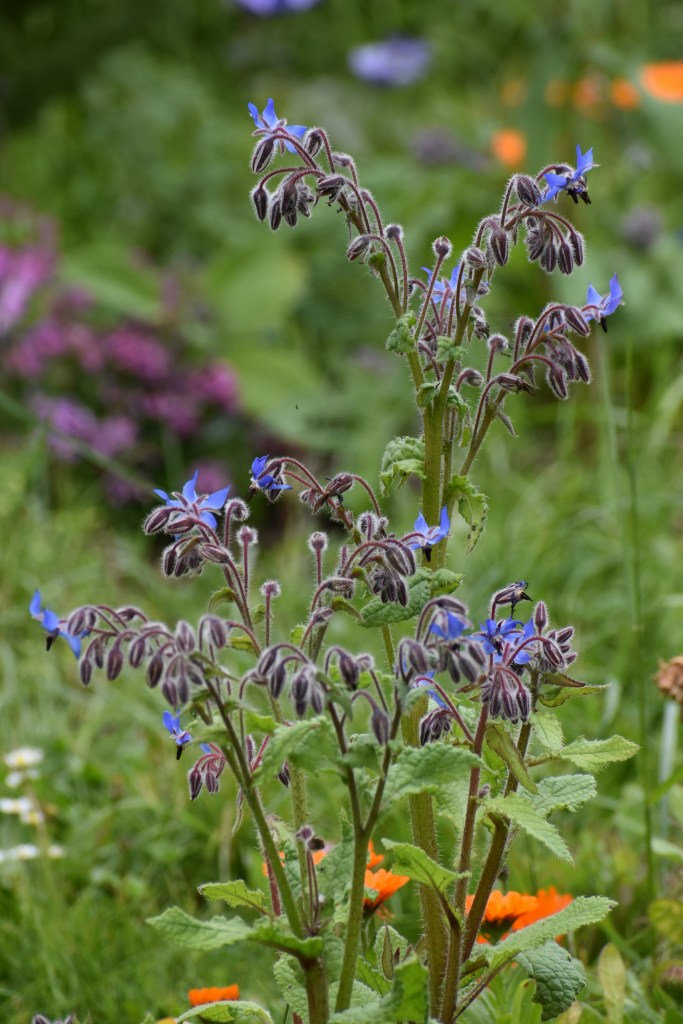
Borage forms upright bushy plants that typically grow between 60 centimetres and 1 metre in height depending on growing conditions.
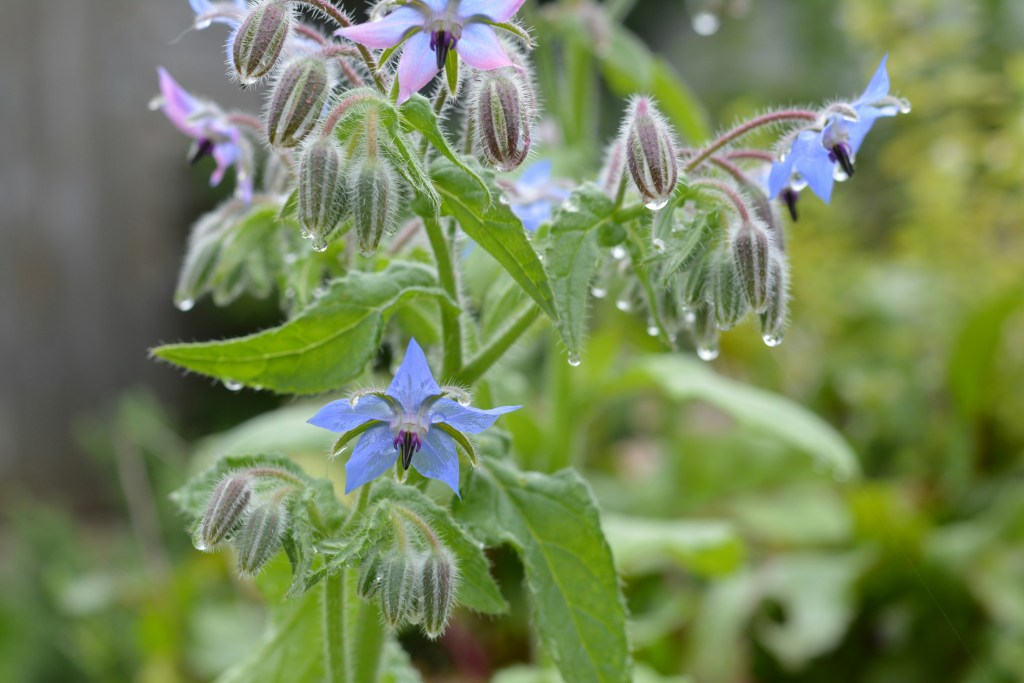
Plants produce coarse textured green foliage covered in fine silvery hairs, giving the plant a soft and slightly rustic appearance. During spring and summer, clusters of nodding star-shaped flowers emerge in shades of vivid blue, although white flowering cultivars are also occasionally available.
The flowers are held on branching stems above the foliage and continuously bloom throughout the growing season, often attracting large numbers of bees and pollinators.
Its informal and lightly sprawling growth habit allows Borage to integrate naturally into cottage gardens, kitchen gardens, pollinator borders, and meadow-style planting schemes.
Growing Conditions
Borage grows best in full sun positions with fertile, well-drained soil enriched with organic matter. Once established, it is relatively adaptable and tolerant of a range of soil conditions provided drainage remains adequate.
Seeds are commonly sown directly into the garden during spring once frost risk has passed. Plants establish quickly and generally require minimal intervention throughout the growing season.
Borage is particularly effective planted within kitchen gardens, productive borders, pollinator-friendly spaces, and companion planting schemes where its flowers can support surrounding crops and biodiversity.
Care & Maintenance
Borage is considered a relatively low-maintenance annual once established. Regular watering during prolonged dry periods helps maintain healthy growth and flowering, although mature plants tolerate short periods of dryness reasonably well.
Deadheading is generally not necessary as plants naturally flower continuously across the season. However, removing spent flowers before seed develops can help limit excessive self-seeding where required.
Borage readily self-seeds under favourable conditions, often reappearing naturally in following growing seasons.
Applying compost during planting supports vigorous growth and abundant flowering throughout summer.
Seasonal Notes
Borage flowers prolifically from late spring through summer and often continues flowering into autumn under favourable conditions.
Its nectar-rich flowers provide an important food source for bees, butterflies, and beneficial insects throughout the warmer months, helping maintain pollinator activity within the garden over an extended period.
As the season progresses, mature plants may self-seed naturally, contributing to a more informal and evolving planting style within productive and wildlife-focused gardens.
Uses
Borage is widely used in kitchen gardens, pollinator gardens, wildlife planting schemes, cottage gardens, and companion planting systems where its flowers and ecological benefits can be appreciated more fully.
The edible flowers are commonly used as garnishes and decorative additions to summer drinks and salads, while the plant itself is often grown alongside vegetables and fruiting crops to encourage pollinator activity.
Borage is especially valued for attracting bees into the garden, helping create outdoor spaces that feel vibrant, dynamic, and ecologically connected throughout the growing season.
Beyond its practical uses, Borage contributes softness, movement, and natural seasonal beauty through its airy blue flowers and relaxed growth habit, helping create gardens that feel expressive, abundant, and closely connected to nature.