ARTICHOKE
Cynara cardunculus var. scolymus

PLANT OVERVIEW
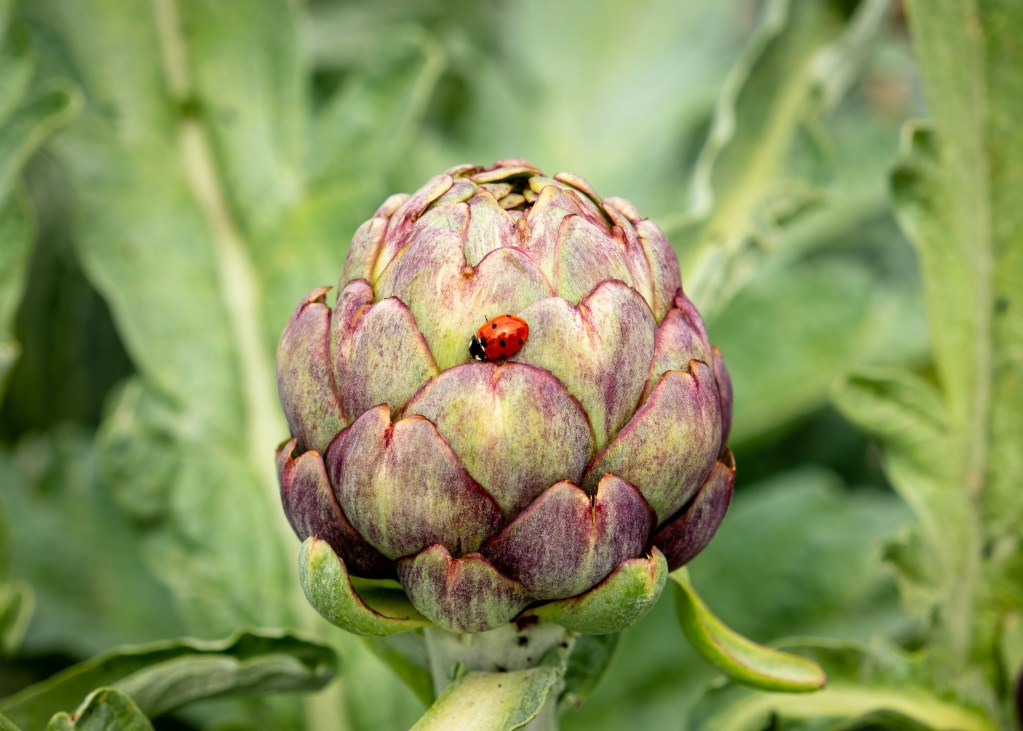
Artichokes are bold perennial edible plants admired for their dramatic architectural foliage, edible flower buds, and striking ornamental presence within productive and Mediterranean-style gardens.
Unlike many traditional vegetables, Artichokes blur the line between edible and ornamental planting, bringing both productivity and sculptural beauty into the landscape.
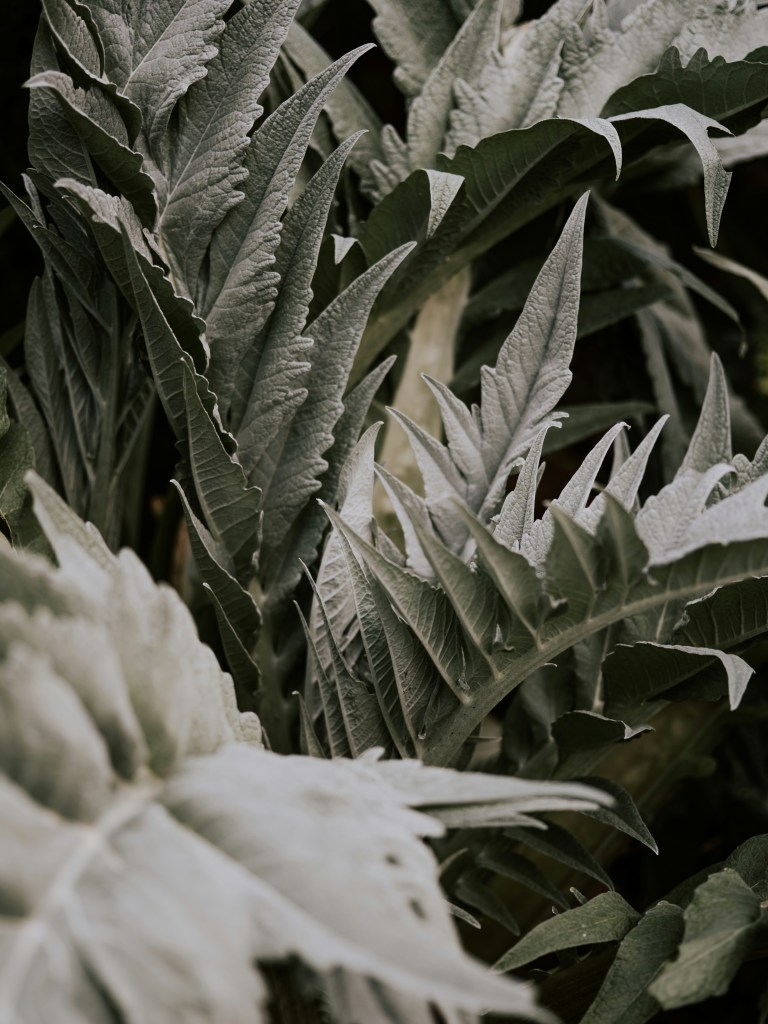
Their large silvery foliage and impressive flower stems create strong focal points within kitchen gardens and naturalistic planting schemes, while the edible buds are considered a prized seasonal harvest.
Artichokes are especially effective in gardens that combine productive growing with a softer editorial and Mediterranean-inspired planting style.
Appearance & Growth Habit
Artichokes form large spreading clumps of deeply divided silvery-green foliage that can reach over 1 metre in height and width.
The broad textured leaves create strong structural contrast within the garden and contribute a soft muted Mediterranean colour palette.
Tall flower stems emerge during spring and summer carrying rounded edible buds. If left unharvested, the buds open into spectacular purple thistle-like flowers highly attractive to bees and pollinators.
Their bold upright form and sculptural foliage make Artichokes highly effective as feature plants within productive and ornamental spaces alike.
Growing Conditions
Artichokes grow best in full sun with fertile well-drained soil enriched with compost or organic matter.
Warm sheltered growing positions encourage stronger growth and reliable bud production.
Although relatively drought tolerant once established, regular moisture supports healthier foliage and improved harvests.
Artichokes are especially suited to Mediterranean-style gardens, productive borders, and larger kitchen gardens where their architectural growth can be fully appreciated.
Care & Maintenance
Regular watering during establishment is important for strong root development.
Applying mulch around the base helps conserve moisture and suppress weeds.
Spent flower stems should be removed after flowering or harvesting to encourage healthy regrowth.
In colder climates, crowns may benefit from winter protection during severe frosts.
Mature clumps can be divided every few years during cooler seasons to rejuvenate plants and encourage ongoing productivity.
Seasonal Notes
Artichokes produce edible buds during spring and summer before flowers begin opening.
If flowers are allowed to mature fully, they create dramatic pollinator-friendly displays throughout summer.
During winter, foliage may partially die back depending on climate conditions before vigorous regrowth begins again during spring.
Their strong seasonal structure makes them valuable for maintaining visual interest across multiple seasons.
Uses
Artichokes are harvested for their immature flower buds which are widely steamed, grilled, roasted, or incorporated into Mediterranean-style cooking.
Beyond their edible value, Artichokes are highly prized as ornamental feature plants due to their dramatic foliage, architectural form, and striking flowers.
They contribute a strong sense of abundance, structure, and Mediterranean atmosphere into productive gardens while also supporting pollinators when flowers are allowed to bloom.
Their ability to combine productivity with bold visual impact makes Artichokes one of the most distinctive and rewarding plants within the edible garden.