HYACINTH
Hyacinthus orientalis


Plant Overview
Hyacinths are highly fragrant spring flowering bulbs admired for their dense flower spikes, vibrant colour range, and strong seasonal presence within the garden. Widely associated with the arrival of spring, Hyacinths bring colour, fragrance, and freshness into outdoor spaces following the quieter winter months, helping create gardens that feel uplifting, expressive, and full of seasonal renewal.
Their richly scented flowers and compact upright form make them favourites for borders, containers, pathways, courtyard gardens, and indoor seasonal displays. Hyacinths are especially valued for their ability to create strong sensory impact within relatively small spaces, with fragrance often becoming one of their most memorable qualities during spring flowering.
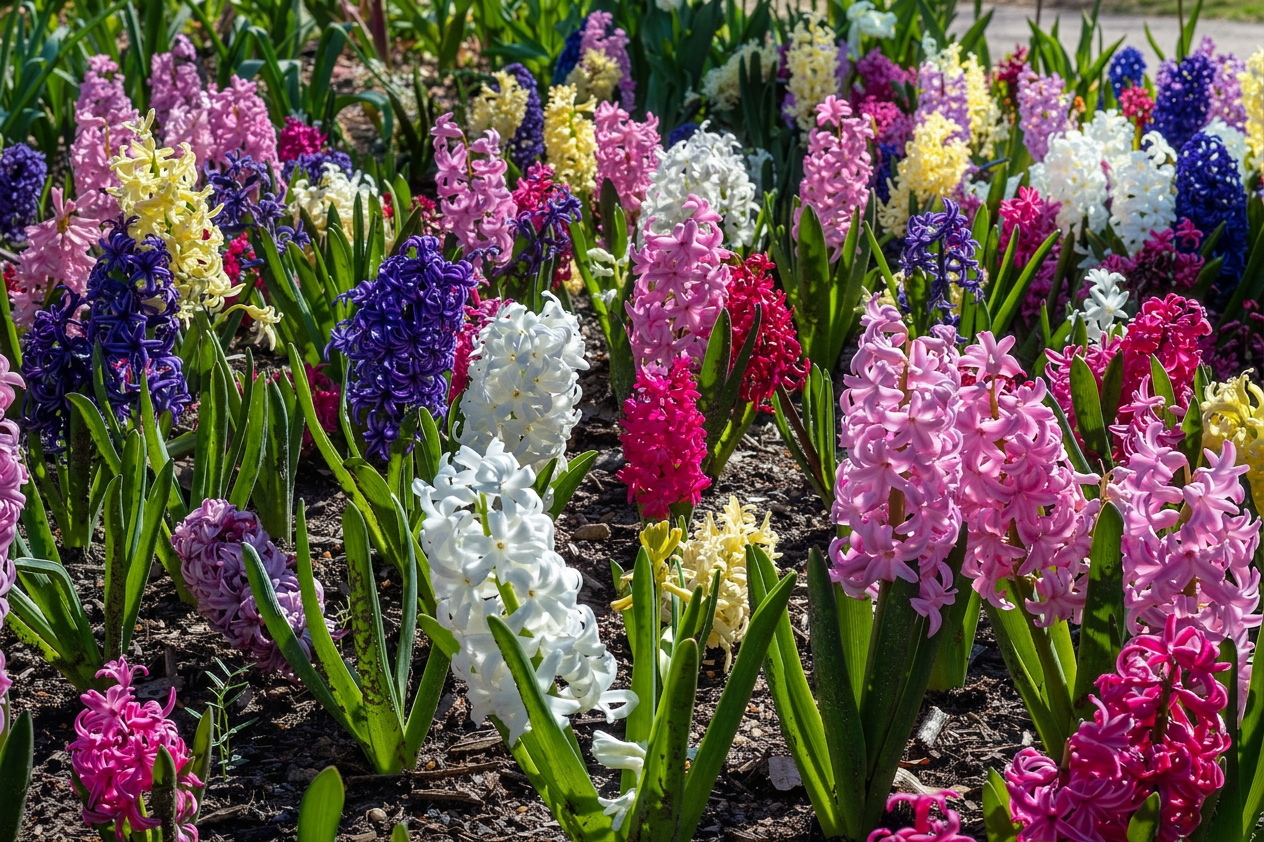
Available in shades of white, soft pink, lavender, blue, apricot, crimson, yellow, and deep purple, Hyacinths blend beautifully into both soft pastel planting palettes and more vibrant spring garden displays.
Appearance & Growth Habit
Hyacinths emerge from underground bulbs during late winter and early spring, producing upright strap-like foliage followed by dense flower spikes carried on sturdy stems.
Plants typically grow between 20 and 35 centimetres in height depending on the cultivar and growing conditions.
Their flowers are closely packed together along the stem, creating bold clustered blooms that provide strong visual texture and colour within the spring garden. Many varieties also release an intense sweet fragrance that becomes especially noticeable during warmer spring days.
The lush green foliage provides a fresh backdrop to the flowers while helping create structure and softness within seasonal bulb plantings.
Growing Conditions
Hyacinths grow best in full sun to partial shade with fertile, well-drained soil enriched with compost or organic matter.
Bulbs are generally planted during autumn before winter dormancy, allowing roots to establish before spring flowering begins.
Good drainage is especially important, as excessively wet soils may cause bulbs to rot during dormancy or periods of heavy rainfall.
Hyacinths perform beautifully in borders, containers, rockeries, cottage gardens, formal spring displays, and beneath deciduous trees where spring sunlight is available before canopy growth develops.
Their compact size also makes them highly suitable for smaller gardens, balconies, and decorative indoor forcing allowing to enjoy blooms out of season during the winter months.
Care & Maintenance
Hyacinths are considered relatively low maintenance once established.
Regular watering during active growth and flowering supports healthy blooms, although soils should remain free-draining and never waterlogged.
After flowering, spent blooms may be removed to maintain a tidy appearance and prevent unnecessary seed production. Foliage should be left intact until it naturally yellows and dies back, allowing energy to return to the bulb for future flowering.
Bulbs may remain in the ground in many climates, while warmer regions sometimes benefit from lifting and storing bulbs during dormancy if flowering performance declines over time.
Applying compost or bulb fertiliser during autumn or after flowering can help support healthy bulb development and future seasonal displays.
Seasonal Notes
Hyacinths are strongly associated with spring gardens, often flowering from late winter through mid-spring depending on climate and planting time.
Their appearance marks an important seasonal transition within the garden, bringing colour, fragrance, and renewed energy following winter dormancy.
As temperatures rise later in spring, foliage gradually dies back before bulbs enter dormancy through summer and autumn.
Their fragrance, vivid colour, and compact flowering habit make Hyacinths especially effective for creating strong seasonal atmosphere during the early gardening season.
Uses
Hyacinths are widely used in spring borders, containers, formal bulb displays, cottage gardens, pathways, and indoor seasonal arrangements where their flowers provide colour and fragrance close to living spaces.
They pair beautifully with Tulips, Daffodils, Ranunculus, Dutch Crocus, and other spring flowering bulbs to create layered and evolving seasonal planting combinations.
Hyacinths are also highly valued for indoor forcing, allowing flowering displays and fragrance to be enjoyed inside the home during late winter and early spring.
Beyond their ornamental beauty, Hyacinths contribute fragrance, softness, and strong seasonal expression into the garden, helping create spaces that feel immersive, joyful, and deeply connected to the renewal and energy of spring.