Cattleya Orchid
Cattleya spp.


Plant Overview
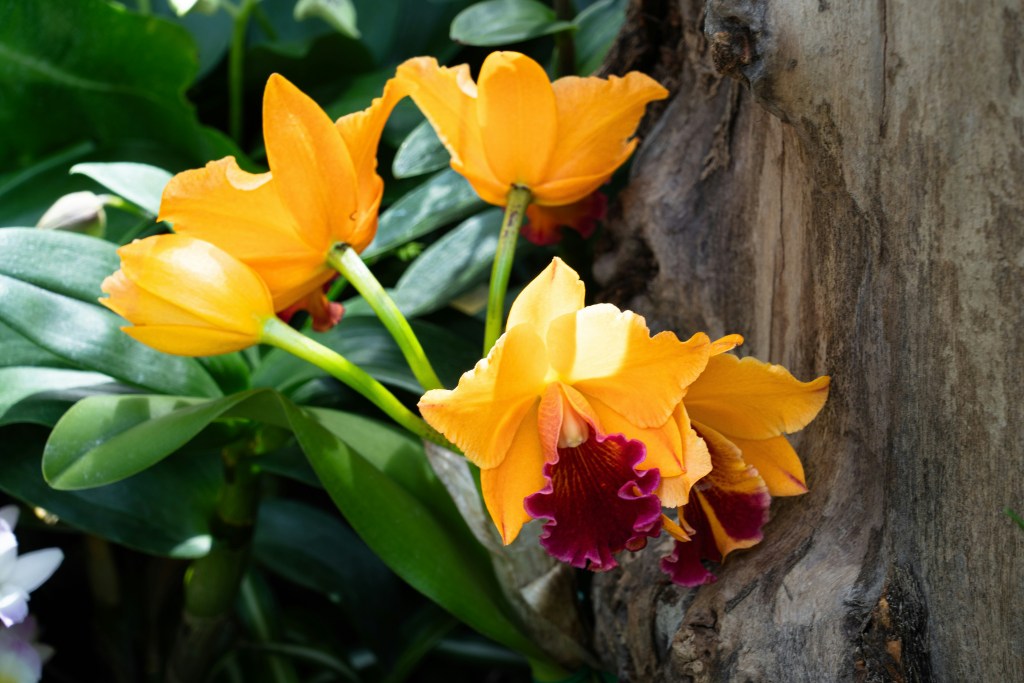
Cattleya Orchid (Cattleya spp.) is one of the most celebrated flowering tropical indoor houseplants, admired for its large, exquisitely formed blooms and captivating fragrance. Native to the tropical forests of Central and South America, Cattleyas grow naturally as epiphytes, anchoring themselves to tree branches where their roots are exposed to moving air, filtered sunlight, and regular tropical rainfall. These elevated habitats provide the warmth, humidity, and excellent drainage that have shaped the plant’s distinctive growth habit.
For more than a century, Cattleyas have been regarded as some of the finest ornamental orchids in cultivation. Their flowers are often associated with elegance and celebration, once appearing regularly in corsages and floral displays because of their impressive size, colour, and lasting beauty. Modern breeding has expanded the range of available colours to include white, lavender, pink, magenta, yellow, orange, and richly patterned combinations, ensuring there is a Cattleya to suit almost every collection.
Unlike many flowering plants that bloom repeatedly throughout the year, Cattleyas invest considerable energy into producing a relatively small number of magnificent flowers. Their blooms are all the more treasured because they arrive after months of patient growth, each flowering season marking the completion of another stage in the plant’s quiet annual cycle.
Growing a Cattleya Orchid is as much about appreciating the journey as anticipating the flowers. Every new leaf, root, and pseudobulb contributes to a display that unfolds only when the plant has gathered sufficient strength, reminding us that enduring beauty often develops through steady preparation rather than sudden abundance.
Appearance & Growth Habit
Cattleya Orchids are evergreen perennial orchids that grow from creeping rhizomes, producing a series of swollen stems known as pseudobulbs. These structures store water and nutrients, allowing the plant to withstand short periods of dryness while supporting future growth and flowering.
Most plants reach between 30 and 60 centimetres in height, although larger species and hybrids may become more substantial with age. Each pseudobulb produces one or two thick, leathery leaves that remain attractive throughout the year, forming neat clumps of upright foliage.
Flower spikes emerge from the upper portion of mature pseudobulbs, often enclosed within a protective sheath before gradually extending. Depending on the variety, each spike may carry one to several exceptionally large flowers. Broad petals and sepals surround the characteristic ruffled lip, which is often boldly coloured or intricately patterned, creating the dramatic appearance for which the genus is renowned.
Many Cattleya flowers are also delightfully fragrant, particularly during the warmer hours of the day. Their perfume varies considerably between species and hybrids, adding another dimension to their appeal.
Growing Conditions
As a flowering tropical indoor houseplant, Cattleya Orchid thrives in bright, filtered light. It generally requires more light than Moth Orchids but should still be protected from harsh midday sun, which may scorch the foliage.
The plant is best grown in a coarse orchid mix containing materials such as bark, charcoal, and perlite that provide excellent drainage while allowing abundant air movement around the roots. Healthy roots are essential, reflecting the epiphytic conditions of its native rainforest habitat.
Warm daytime temperatures between 20°C and 28°C, combined with slightly cooler nights, encourage healthy growth and flower initiation. Moderate to high humidity supports vigorous root development, although good air circulation is equally important to prevent fungal problems.
Many gardeners grow Cattleyas successfully indoors near bright windows, while others cultivate them in conservatories or greenhouses where light and humidity can be more easily managed.
Care & Maintenance
Cattleya Orchids benefit from a regular yet measured approach to care. Water thoroughly during active growth, allowing excess moisture to drain freely before the growing medium begins to dry again. The pseudobulbs provide a reserve of stored moisture, making the plant more tolerant of brief dry periods than constantly wet conditions.
During spring and summer, applying a balanced orchid fertiliser every two to four weeks supports the development of healthy pseudobulbs and future flowers. Feeding can be reduced once growth slows following flowering.
Repotting is generally required every two or three years, ideally when fresh roots begin to emerge. Replacing the ageing orchid bark maintains healthy aeration while encouraging vigorous root development.
Spent flower spikes may be removed once flowering has concluded, while healthy pseudobulbs should be retained, as they continue to store energy that supports future growth. Mature plants may also be divided during repotting, provided each division retains several healthy pseudobulbs.
Consistent observation often proves more valuable than frequent intervention. Firm pseudobulbs, healthy roots, and fresh shoots provide reliable indications that the plant is thriving.
Seasonal Notes
The annual rhythm of a Cattleya Orchid unfolds gradually through the seasons. Spring often begins with the appearance of fresh shoots emerging from the base of mature pseudobulbs, accompanied by vigorous root growth as the plant enters its active phase.
Summer is devoted to building strength. New pseudobulbs expand steadily, storing the water and nutrients required to support future flowering. Bright light and warm temperatures encourage robust development during this period.
Autumn frequently brings the anticipation of flowering. Protective sheaths begin to swell before flower buds gradually emerge, each stage unfolding patiently over several weeks.
Winter or early spring is often the season of greatest reward, although flowering times vary among species and hybrids. Large, fragrant blooms open one after another, filling indoor spaces with colour and perfume. Once flowering has finished, the plant quietly begins preparing for another cycle of growth, carrying the promise of future blooms within each developing pseudobulb.
Uses
Cattleya Orchids are among the most admired flowering tropical indoor houseplants, bringing elegance and colour to homes, conservatories, bright living spaces, and specialist orchid collections. Their spectacular flowers make them exceptional feature plants, particularly when displayed individually where each bloom can be appreciated in detail.
The flowers are also highly prized for floral arrangements because of their size, fragrance, and remarkable longevity. Indoors, the combination of sculptural foliage and occasional spectacular flowering creates a sense of anticipation that few houseplants can equal.
Although Cattleya Orchids are not generally regarded as air-purifying plants, they enrich indoor environments in another way. Their flowers encourage closer observation, inviting attention to subtle details of colour, form, texture, and fragrance that are easily overlooked in everyday life.
A Cattleya Orchid never seems to hurry its flowering. Months may pass while the plant quietly strengthens itself, producing leaves and pseudobulbs that reveal little of what is to come. Then, almost unexpectedly, a sheath begins to swell, a bud emerges, and a flower opens with extraordinary confidence. Its beauty is not the result of a single season, but of every quiet day that came before it, reminding us that the most memorable moments in a garden are often prepared long before they are seen.