Fiddle-Leaf Fig
Ficus lyrata

Plant Overview
The Fiddle-leaf Fig (Ficus lyrata) is one of the most iconic tropical indoor houseplants grown today. Native to the lowland rainforests of western Africa, it naturally develops into a large evergreen tree, growing beneath and eventually above the rainforest canopy in warm, humid conditions. Indoors, its striking foliage, sculptural form, and impressive stature have made it one of the world’s most admired ornamental houseplants.
The plant takes its common name from its distinctive leaves, whose broad, violin-shaped form immediately captures attention. Their generous size and rich green colour give the Fiddle-leaf Fig a bold architectural presence, allowing it to transform an interior space with relatively little ornamentation. While many houseplants blend quietly into their surroundings, this species often becomes a natural focal point.
Despite its reputation for being somewhat particular about its growing conditions, the Fiddle-leaf Fig rewards consistency rather than perfection. Once settled into a suitable position, it develops steadily, producing one new leaf after another in a slow but satisfying rhythm. Each emerging leaf unfolds from the growing tip, gradually expanding until it joins the layered canopy above.
Growing a Fiddle-leaf Fig is often an exercise in patience. It encourages an appreciation for gradual change, reminding us that even the most dramatic plants reveal their character through steady, almost imperceptible growth over time.
Appearance & Growth Habit
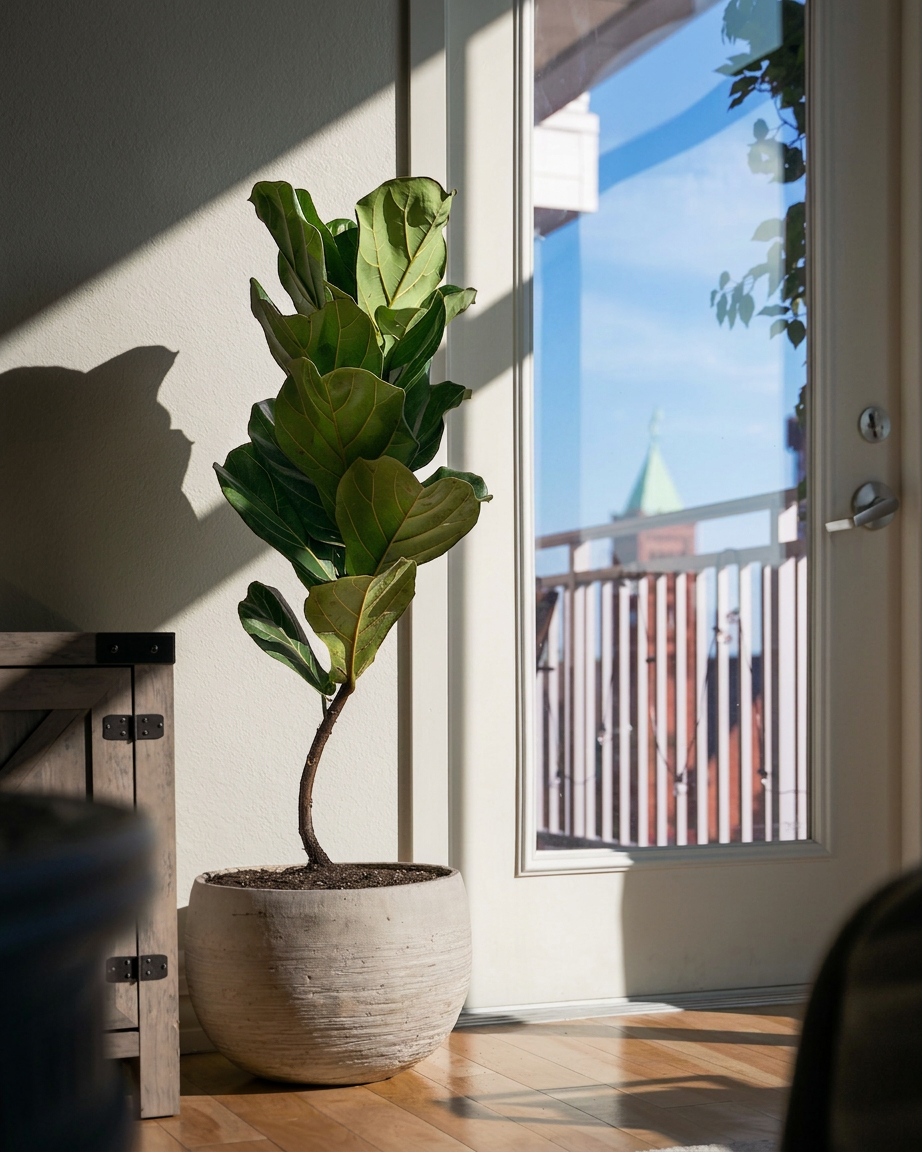
Fiddle-leaf Fig is an evergreen tropical tree with a naturally upright growth habit. In its native habitat it may exceed 15 metres in height, but when grown indoors it typically reaches between 2 and 3 metres, making it an impressive yet manageable feature plant.
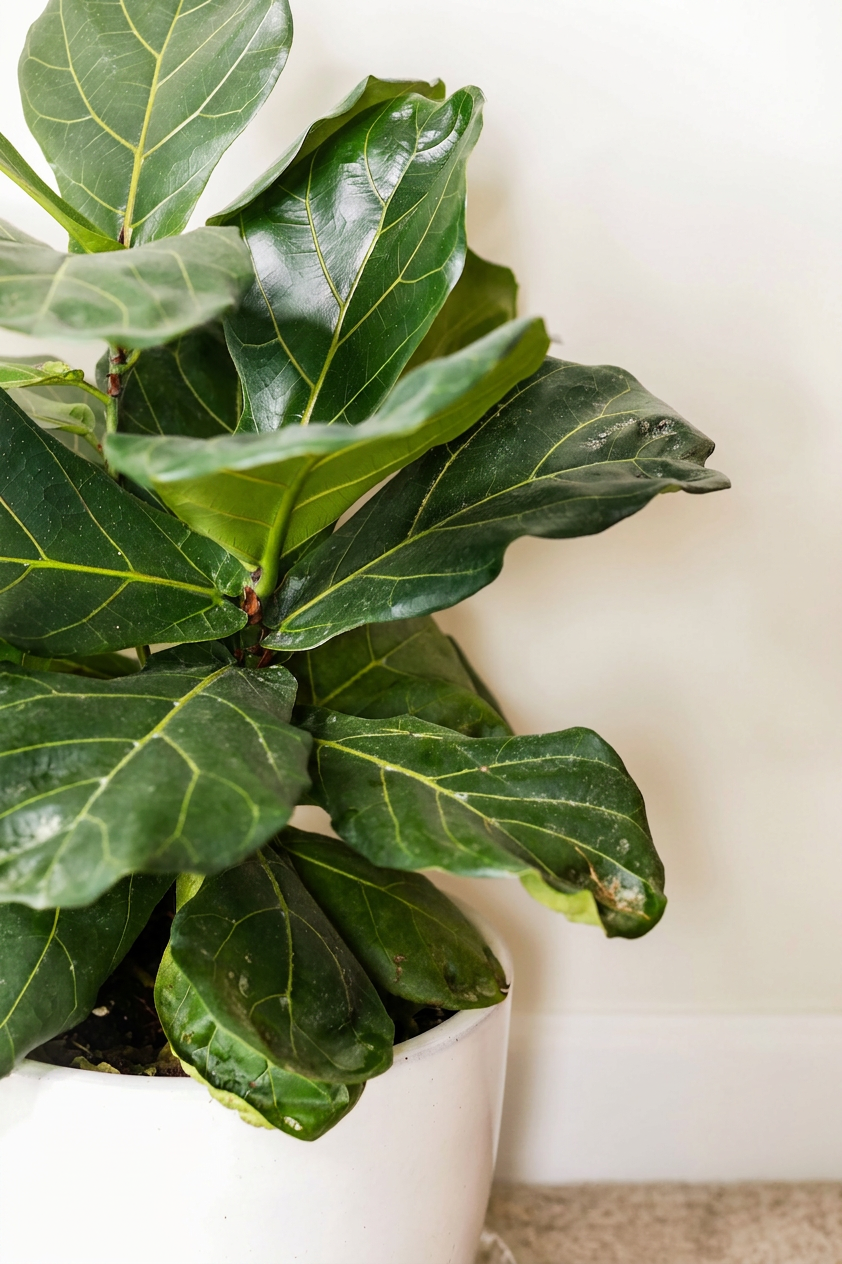
Its large, leathery leaves are the defining characteristic of the species. Individual leaves commonly measure between 20 and 45 centimetres long and possess a distinctive violin or fiddle shape with gently undulating margins. Their glossy deep green surface is highlighted by prominent pale veins, creating an attractive contrast that adds texture and visual depth.
Young plants often develop as a single upright stem topped with foliage, while mature specimens gradually form branching frameworks that create a fuller canopy. The trunk becomes increasingly woody with age, adding character and reinforcing the plant’s tree-like appearance.
Flowering and fruit production are extremely rare indoors. In nature, the tree produces small figs that support specialised fig wasps and numerous rainforest animals, but cultivated houseplants are grown almost exclusively for their remarkable foliage.
The combination of bold leaves, upright form, and measured growth gives the plant a confident yet balanced presence that remains attractive throughout the year.
Growing Conditions
As a tropical indoor houseplant, the Fiddle-leaf Fig thrives in bright, indirect light. A position near a large window where it receives abundant filtered daylight usually produces the healthiest growth. While it tolerates gentle morning sun, prolonged exposure to intense afternoon sunlight may scorch the leaves.
The plant grows best in a fertile, free-draining potting mix that retains moderate moisture without remaining saturated. Healthy root development depends on excellent drainage, making containers with drainage holes essential.
Consistent growing conditions are particularly important. The Fiddle-leaf Fig dislikes frequent relocation, sudden temperature changes, and cold draughts. Warm indoor temperatures between 18°C and 27°C provide ideal conditions, while moderate to high humidity encourages healthy foliage development.
Although adaptable once established, the plant responds best when its environment remains stable. A consistent position with reliable light and regular care often results in stronger growth and healthier leaves.
Care & Maintenance
Successful care begins with establishing a regular routine. Water thoroughly when the upper few centimetres of the potting mix become dry, allowing excess water to drain freely. Overwatering is one of the most common causes of poor health, while prolonged dryness may result in leaf drop.
A balanced liquid fertiliser applied every four weeks during spring and summer supports healthy foliage and steady growth. Feeding can be reduced during autumn and winter as development naturally slows.
The large leaves benefit from occasional cleaning with a soft, damp cloth to remove dust. Clean foliage enhances the plant’s appearance while allowing maximum exposure to available light.
Rotating the container every few weeks encourages even growth, helping prevent the plant from leaning towards its primary light source. If necessary, selective pruning may be used to encourage branching and maintain a balanced shape.
The Fiddle-leaf Fig may occasionally experience spider mites, scale insects, or leaf spot if growing conditions become unsuitable. Regular observation and consistent care usually prevent significant problems.
Like other members of the Ficus genus, the plant produces a milky sap when cut, which may irritate sensitive skin. It is also considered toxic if ingested by pets.
Seasonal Notes
Although grown indoors, the Fiddle-leaf Fig continues to follow the changing rhythm of the seasons.
Spring usually marks the beginning of renewed growth. New leaves emerge tightly wrapped before gradually unfurling into their characteristic broad shape, each one slightly larger than the last under favourable conditions.
Summer is the period of greatest activity. Warm temperatures and abundant daylight support the development of fresh foliage, gradually increasing the height and fullness of the plant.
Autumn brings a slower pace as natural light begins to decrease. Growth often becomes less frequent, although the existing foliage continues to provide strong architectural interest.
Winter is a time of quiet stability. While little new growth may occur, the evergreen canopy remains vibrant, bringing colour and structure indoors when outdoor landscapes have become more subdued. Even during this resting period, careful observation reveals subtle changes as individual leaves adjust their orientation to capture the available light.
Uses
Fiddle-leaf Fig is primarily grown as a statement tropical indoor houseplant, valued for its sculptural form and dramatic foliage. Its upright habit makes it an excellent feature plant for living rooms, entrance halls, offices, studios, and conservatories where it can become a natural focal point without overwhelming the surrounding space.
Its broad leaves introduce bold texture into interior design, pairing beautifully with timber, stone, natural fibres, and contemporary furnishings. Whether displayed in a simple ceramic pot or a decorative planter, the plant contributes both height and visual balance to indoor environments.
The Fiddle-leaf Fig is also recognised as one of the many indoor foliage plants that have been studied for their ability to remove selected airborne compounds under controlled conditions. While individual plants have only a modest influence on the air quality of a typical home, incorporating healthy tropical houseplants into indoor spaces can help create a fresher, more welcoming atmosphere while strengthening our connection with the natural world.
Perhaps the greatest appeal of the Fiddle-leaf Fig lies in the way it gradually becomes part of a room. New leaves appear only occasionally, yet each one subtly changes the character of the plant. Over months and years, its canopy expands, its trunk gains presence, and its familiar silhouette quietly becomes woven into everyday life, offering a lasting reminder that growth is often measured not in dramatic moments, but in the steady accumulation of small changes patiently observed.